Top 7 App Development Companies USA for 2026
- app development companies usa
- mobile app development
- hire app developers
- top app agencies
- custom app development
Launched
June, 2026
You've got approval to build the app. The roadmap is forming, stakeholders are impatient, and now the risky part starts. Choosing from the many app development companies in the USA. Most firms sound similar in a sales call, but they're not similar once discovery starts, invoices land, and delivery slips.
The hard truth is that agency selection is rarely a design problem or a pure engineering problem. It's a business model problem. Some firms are built for long enterprise programmes. Some are built for fast-moving commerce work. Some are strongest when they augment an internal team. Others do best when they own delivery end to end.
That matters because the US remains one of the largest app-development markets by revenue, with Business of Apps estimating $108.10 billion in 2022 and projecting 8.77% CAGR from 2022 to 2026. Buyers in the UK often benchmark against that level of scale and polish, especially for mobile-first commerce and subscription products. If you're comparing app development companies USA buyers commonly shortlist, you need a sharper filter than “good portfolio” or “nice team”.
One more practical issue gets overlooked during testing, onboarding, and account verification. If your product uses SMS flows, think early about avoiding spam with virtual numbers, because weak verification planning can distort QA and support from day one.
Below are seven firms worth serious consideration, with the business model, ideal client profile, and trade-offs laid out plainly.
1. Grumspot
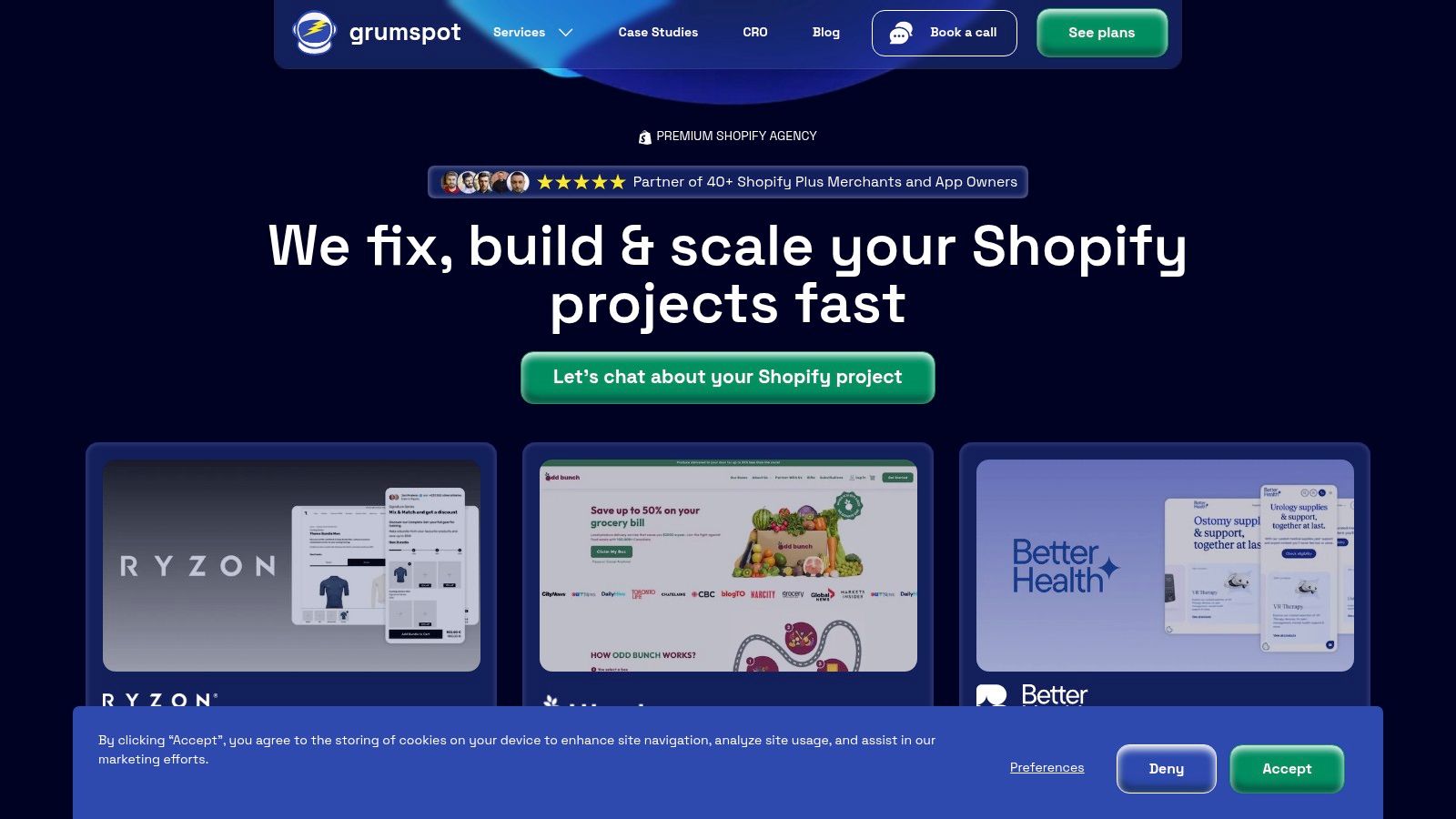
If your app project sits close to commerce, Grumspot is the most specialised name on this list. That focus matters. A lot of agencies say they build e-commerce apps, but many are really general product shops that also work on stores. Grumspot is different. Its core business is Shopify Plus design and development, including storefront rebuilds, custom apps, migrations, and conversion rate optimisation.
The business model is built for speed and accountability. Clients can hire Grumspot for a defined launch project or use a retainer that works like an on-demand senior team. In practice, that suits brands that don't want to manage separate UX, front-end, back-end, SEO, and CRO vendors just to ship one product improvement.
Best fit and delivery style
Grumspot is strongest for DTC brands, scaling Shopify merchants, and app founders building inside the Shopify ecosystem. If your priority is a high-velocity storefront, a custom bundle tool, Shopify 2.0 migration, or a public or private Shopify app, the agency's model lines up well with such projects.
A useful entry point is Grumspot's perspective on choosing a Shopify development agency. It reflects how they operate: platform-specific, technically detailed, and commercially focused.
Practical rule: Don't hire a general app agency for Shopify-heavy work unless they can explain theme architecture, app extensions, checkout constraints, data flows, and SEO migration risk without hand-waving.
Why buyers choose them
Grumspot combines conversion-first UX/UI with engineering and CRO. That mix is valuable because many commerce projects fail in the gap between “works technically” and “converts commercially”. Their service set covers ERP, CRM, and fulfilment integrations, which is often where otherwise solid app projects get stuck.
They also offer SEO-safe migration work, including redirects, structured data, and sitemap handling. That's important when an app or storefront rebuild touches organic acquisition, not just front-end polish.
A real case study helps separate positioning from execution. Grumspot cites a bundle creator for Emma & Noah that lifted AOV by 61%. That's the kind of narrow, concrete commerce outcome buyers should ask every agency to show, rather than generic claims about innovation.
Trade-offs to know upfront
Grumspot isn't the right fit for every app brief. If you need a broad enterprise transformation partner spanning internal systems, mobile, data, and change management, other firms on this list are better aligned.
The practical limitations are clear:
- Project pricing is scoped: There's no public rate card, so you need a quote before you can compare total cost.
- Availability can tighten: Popular months may require earlier booking, especially if you want a fast start.
- Platform focus is deliberate: That specialisation is a strength for Shopify work, but less useful if commerce isn't central to the product.
For commerce-led app development in the USA, though, specialisation often beats breadth.
2. WillowTree
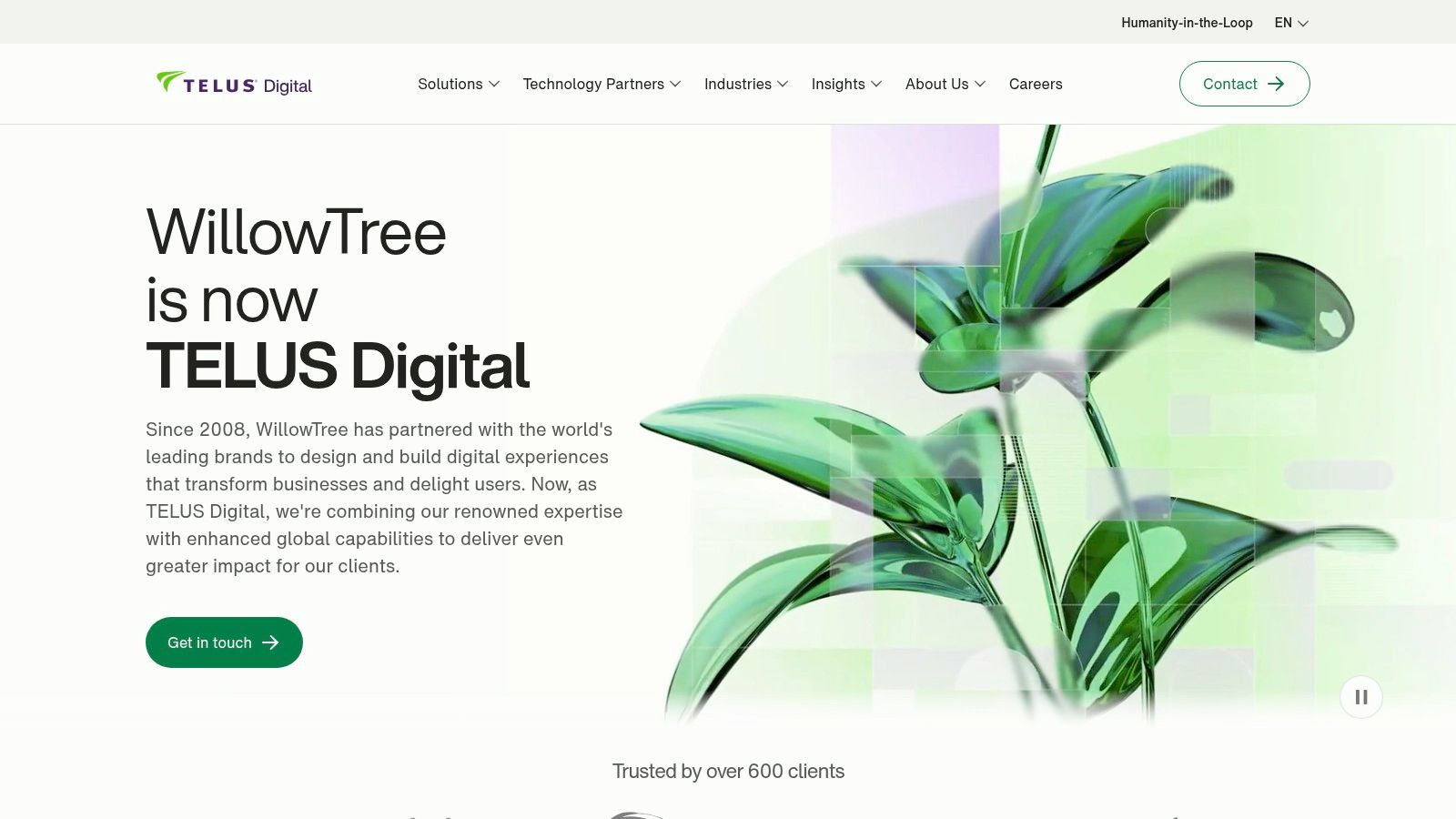
WillowTree sits at the enterprise end of the market. If Grumspot is focused and commerce-native, WillowTree is broad, process-heavy, and built for organisations that need strategy, design, engineering, and operational support under one roof. Since joining TELUS International, it also has the delivery depth to support large programmes across multiple teams and regions.
This is the sort of partner you bring in when the app isn't just a product. It's part of a wider customer experience, internal operations stack, analytics programme, or regulated service environment.
Who should shortlist WillowTree
WillowTree is a strong fit for large brands, regulated sectors, and companies replacing fragmented digital experiences with a more unified product strategy. It handles native and hybrid development, CX-led design, analytics, AI enablement, and post-launch growth.
If your brief includes stakeholder alignment, governance, accessibility, customer journey mapping, and ongoing optimisation, WillowTree will likely feel familiar and mature. For retail and digital commerce leaders comparing specialist and generalist options, this broader view pairs well with thinking about an ecommerce website development company versus a more product-led app partner.
Large firms like WillowTree usually reduce execution risk for complex organisations, but they can increase process overhead for simple builds.
Trade-offs
The upside is delivery maturity. The downside is cost and momentum. WillowTree generally makes sense for mid-market and enterprise clients that need a long-term partner, not a cheap MVP shop.
What tends to work well:
- Complex programmes: Cross-functional work with many stakeholders.
- Regulated products: Stronger process discipline and documentation.
- Longer horizons: Teams that need support beyond launch.
What doesn't work as well:
- Tiny budgets: You'll pay for the machine, not just the sprint team.
- One-off experiments: Procurement and discovery can feel heavy if you only need a narrow build.
- Founder-led urgency: Start-ups often want faster decisions than enterprise rhythms allow.
For buyers scanning app development companies USA enterprises retain for serious programmes, WillowTree belongs near the top of the list. Just go in knowing you're buying structure as much as code.
3. ArcTouch
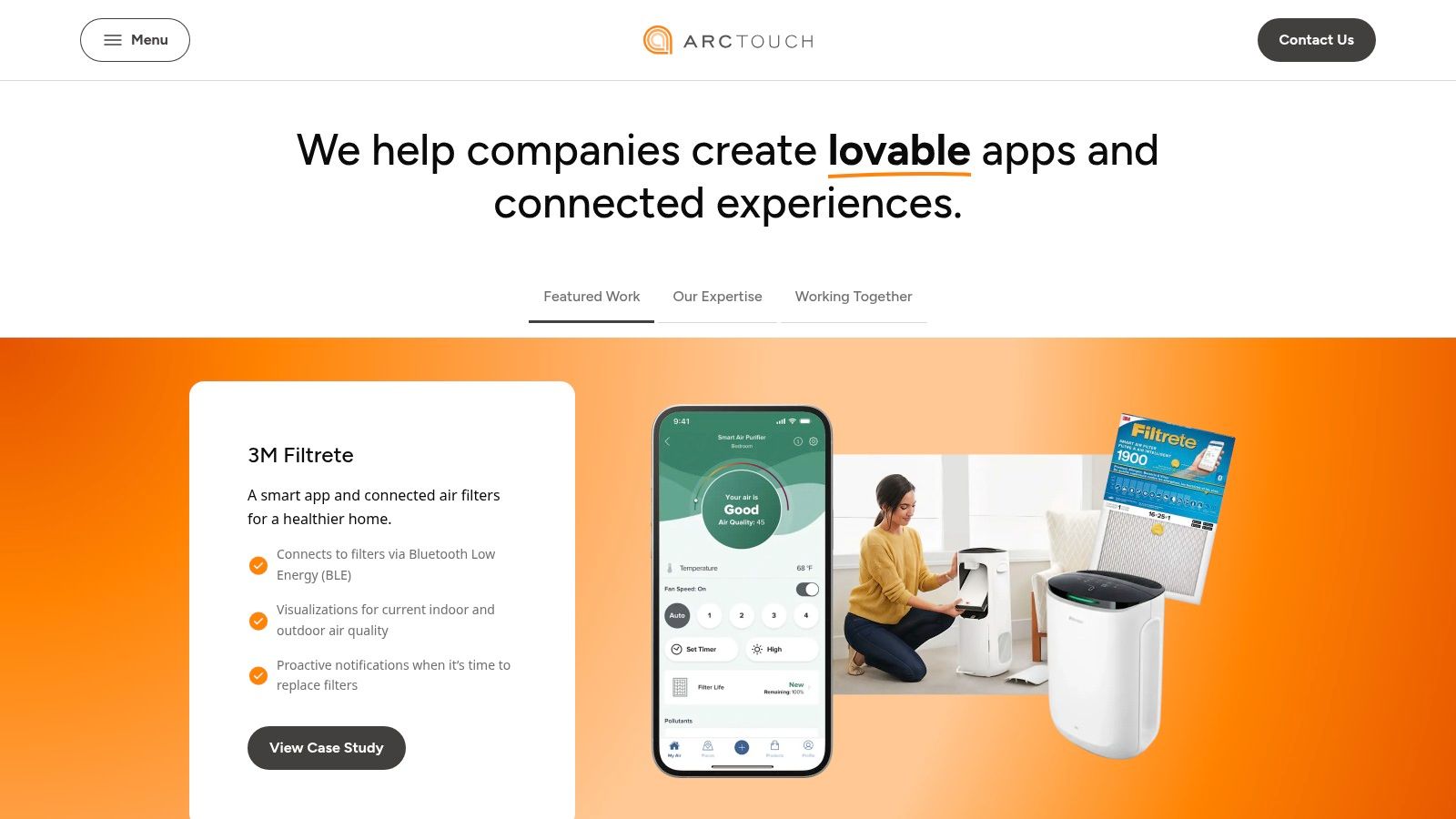
ArcTouch works well when your app touches more than one surface. Mobile, web, wearables, TV, connected devices, and enterprise systems. That range is where the company stands out. It isn't just a mobile studio that added web later. Its positioning is closer to a product engineering partner that can handle channel complexity without falling apart operationally.
Being part of WPP also changes the client profile. You're not just buying development capability. You're also buying access to a larger creative and brand network when the brief demands it.
Where ArcTouch is strongest
ArcTouch is a smart choice for brands modernising older systems while also launching polished customer-facing experiences. That blend is harder than it sounds. Plenty of agencies can make a new interface look good. Fewer can connect it cleanly to legacy services, internal tools, and evolving architecture decisions.
Its work across modern architectures, DevOps, and enterprise integrations makes it relevant for companies that need more than screens and APIs. If your commerce programme also needs custom platform work, Grumspot's take on Shopify development services is more specialised, while ArcTouch is better suited to broader multi-platform estates.
Business model and fit
ArcTouch generally suits established companies with meaningful product budgets. The firm can support strategy, UX/UI, engineering, and modernisation, but that breadth usually comes with enterprise-style planning and coordination.
Buyers should expect:
- Broad platform support: Useful when the app is one part of a connected product family.
- Enterprise integration strength: Better fit for established stacks than greenfield-only shops.
- Parent-company resources: Helpful if product, brand, and campaign work need tighter alignment.
Ask who owns architecture decisions after launch. In larger agency structures, strategic clarity at the start can fade once delivery shifts across teams.
The main caution is overhead. WPP backing brings capability, but also layers. That can slow decisions, especially if your internal team is lean and wants a direct line to senior engineers. ArcTouch also isn't built for very small budgets or founder-led prototypes where speed matters more than organisational resilience.
Among app development companies in the USA, ArcTouch is a strong middle path between pure enterprise consultancy and boutique product studio.
4. Utility
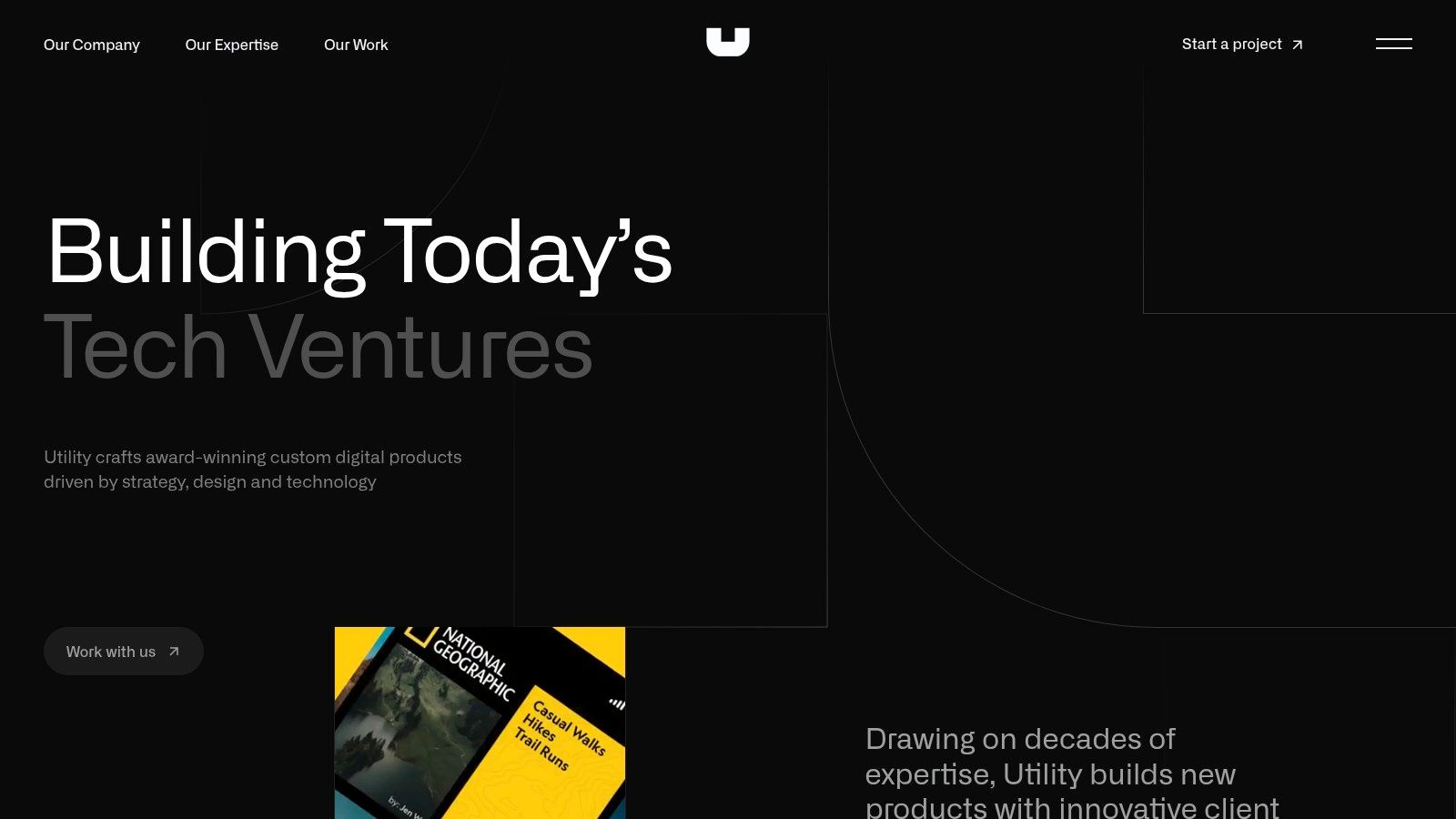
Utility is the kind of agency buyers often like immediately in a first meeting. The work feels polished, the team tends to speak product rather than just delivery, and the design sensibility is strong. That matters if you're building a consumer-facing app where trust, clarity, and brand feel are part of the product, not decoration.
The company works across mobile and web, with a design-driven approach and growing interest in AI-enabled features. In practice, that makes it a good fit for venture-backed start-ups and larger brands that care about craft.
What Utility does well
Utility is strongest when the app experience itself is the differentiator. If you need crisp onboarding, thoughtful interaction design, and a product team that can turn a rough concept into something investors, customers, or internal stakeholders can understand quickly, this is the right kind of partner.
Its model suits companies that want senior attention rather than a giant bench. That usually improves quality, but it also means you should ask directly about capacity if you need multiple parallel workstreams.
Where buyers get value
Three things usually justify a firm like Utility:
- Product interpretation: They can shape ambiguous ideas into a shippable product direction.
- High-end UX execution: Useful for branded consumer products and premium experiences.
- Collaborative working style: Good for teams that want strategic input, not just ticket completion.
The trade-off is simple. Boutique quality rarely comes cheap. Utility isn't a bargain option, and it's not the agency to hire if your main goal is inexpensive development throughput. It also may not be ideal if you need a very large team spun up quickly across several departments.
I'd shortlist Utility when the app has to look credible fast, feel premium, and support a wider product story. I'd be more cautious if the challenge is deep back-office integration or enterprise governance rather than front-end experience.
5. BlueLabel
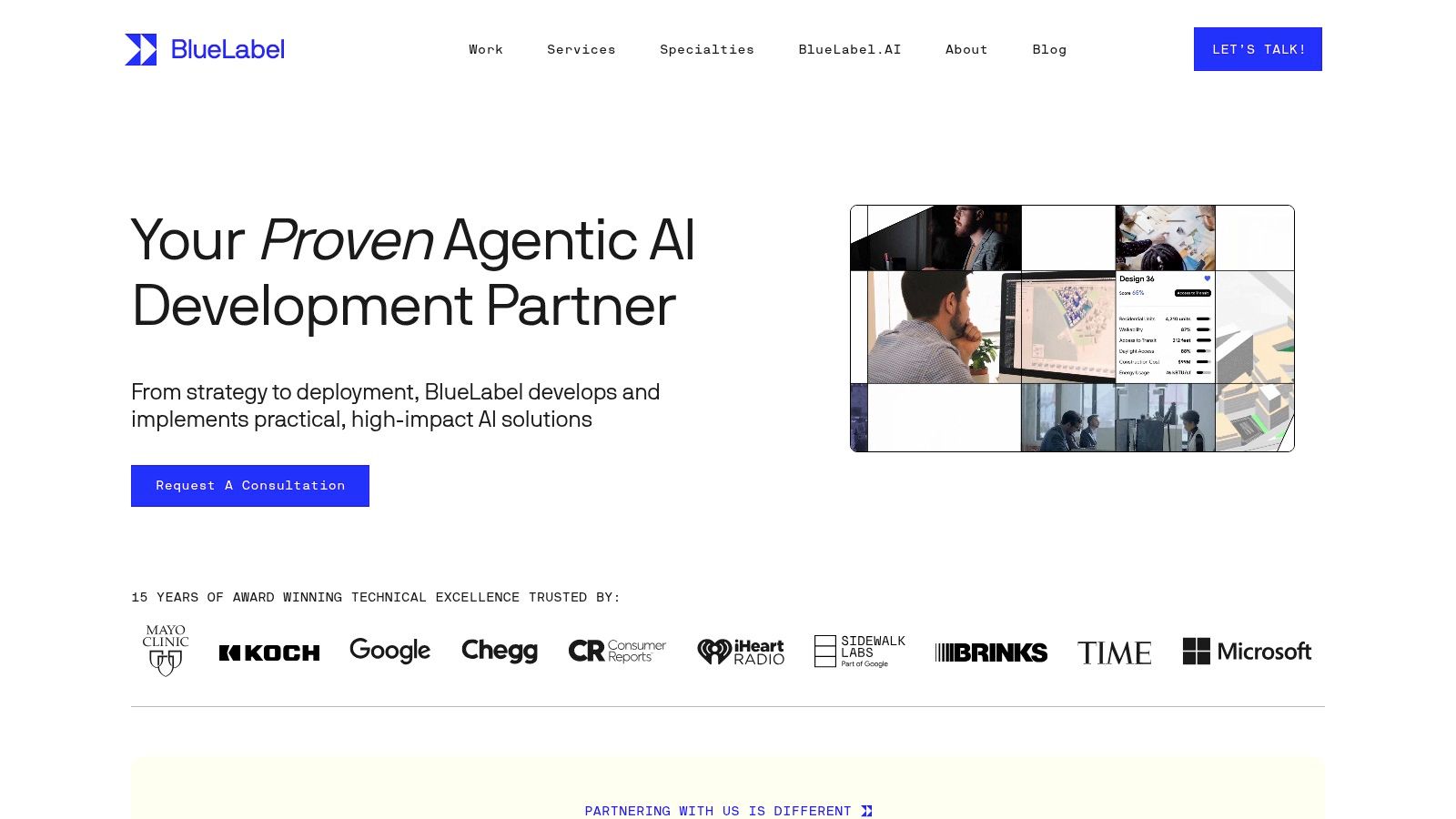
BlueLabel sits in a useful middle ground. It does strategy, design, and engineering, but its recent positioning leans harder into AI-driven products and multi-agent systems. That makes it relevant for companies that don't just want an app interface. They want workflow automation, smarter internal tooling, or customer-facing features shaped by AI.
That sounds attractive, but it also changes the buying decision. AI-heavy work raises data, privacy, model governance, and support questions that a normal mobile build won't.
Ideal client profile
BlueLabel is a better fit for mid-market and enterprise teams than for cash-constrained start-ups. It works well when a company has a clear business case, an existing product to modernise, or internal operations that can benefit from new automation layers.
It's also one of the more practical options if you need a partner that can extend an existing app rather than start from zero. That's a common need, and many agencies prefer greenfield work because it's cleaner and easier to showcase.
What to press on in the sales process
Ask direct questions about how BlueLabel handles:
- AI data boundaries: What client data enters model workflows, and where?
- Operational ownership: Who monitors outputs, edge cases, and post-launch behaviour?
- Legacy extension work: How much of the proposal assumes a rebuild versus a staged modernisation?
If an agency leads with AI before it understands your process, that's usually positioning, not product judgement.
The value in BlueLabel's model is its business orientation. It doesn't present engineering as an isolated service. It connects product work to operational outcomes, which is exactly how most internal buyers need to justify spend. The constraint is that these programmes need a mature client counterpart. If your team can't define data policy, stakeholder ownership, or decision speed, the engagement can stall regardless of agency quality.
For companies reviewing app development companies USA buyers trust for modern product work with AI in scope, BlueLabel is worth a serious look.
6. Sidebench
Sidebench is the specialist on this list for healthcare and other tightly regulated environments. That specialism isn't cosmetic. Healthcare app work has different failure modes from retail or media. Data sensitivity, clinical workflows, payer logic, provider systems, and compliance expectations change everything from discovery to QA.
If your app touches telehealth, remote monitoring, secure messaging, claims, or EHR integration, domain familiarity will save time and prevent expensive mistakes.
Why Sidebench gets shortlisted
Sidebench tends to be strongest in complex organisations where software has to fit real operational workflows, not just market expectations. It brings product strategy, UX, and engineering together, but with clear experience in healthcare delivery models.
That matters because healthcare projects often collapse in one of two places. Either the app is technically sound but unusable in practice, or the product vision is clear but integration reality gets ignored until late delivery.
When it's the right choice
Sidebench is a strong fit for:
- Providers and payers: Teams working around sensitive patient or claims data.
- Digital health products: Especially where service design matters as much as interface design.
- Integration-heavy platforms: When the app must connect to EHRs, analytics systems, or secure communications tools.
The likely trade-offs are premium pricing and a more deliberate pace. That isn't necessarily a negative. In regulated work, fast and careless is usually more expensive than steady and precise.
I wouldn't choose Sidebench for a throwaway MVP or a low-budget founder experiment. I would choose it if failed assumptions around privacy, workflow, or integration could create real business or compliance risk. In that sense, you're paying for judgement as much as delivery.
7. Atomic Object
Atomic Object has one quality many buyers say they want and few agencies really offer. Transparency. Not performative transparency in sales decks, but a delivery model that openly addresses budget, scope, and governance. That's a major strength when you're building something complex and don't want the usual ambiguity around what changed, why costs moved, or who approved what.
The company is employee-owned and works across research, design, and full-stack development for mobile, web, and embedded products. That breadth makes it useful for organisations with products that span more than a standard app stack.
The model that sets it apart
Atomic Object's Fixed-Budget, Scope-Controlled approach is one of its clearest differentiators. It won't appeal to every buyer. Some teams hear “scope-controlled” and worry it means compromise. In practice, it usually means trade-offs are surfaced earlier and discussed more openly.
That only works if the client is engaged. If your team won't make timely decisions, prioritise features, or participate in governance, this model can feel demanding.
Best fit and limitations
Atomic Object is a good fit for companies that value disciplined collaboration and want fewer surprises during delivery. It suits multi-platform products, sustained iteration, and teams willing to treat scope as a business decision rather than a promise made in a pitch deck.
What usually works:
- Active client teams: Product owners who will engage weekly.
- Complex builds: Where requirements will evolve and need structured control.
- Multi-disciplinary products: Especially when mobile, web, or embedded elements overlap.
What doesn't:
- Very short prototypes: The governance model is heavier than a quick experiment needs.
- Hands-off clients: If you want to disappear and reappear at launch, this isn't the right setup.
The US labour market for app development is also deep enough to support this kind of specialist consultancy. IBISWorld reports 418,029 people employed in Smartphone App Developers in the US in 2025, up from 401,211 in 2024, with 6.7% CAGR from 2020 to 2025 and 4.2% growth in 2025. For buyers, that scale helps explain why firms like Atomic Object can maintain specialised delivery models rather than competing only on generic capacity.
Top 7 US App Development Companies Comparison
| Provider | Implementation complexity 🔄 | Resource requirements ⚡ | Expected outcomes ⭐📊 | Ideal use cases 💡 | Key advantages ⭐ |
|---|---|---|---|---|---|
| Grumspot | Medium, Shopify Plus migrations, custom apps, and integrations | Senior Shopify developers, UX/CRO specialists; moderate-to-high budget; flexible retainer | Rapid launches, SEO-safe rebuilds, measurable CRO lifts (e.g., AOV increases) | Scaling DTC brands, Shopify Plus migrations, app founders | Conversion-first design, fast iteration (48‑hr updates), end-to-end Shopify expertise |
| WillowTree (TELUS Intl.) | High, enterprise-grade, multi-team programs and regulated environments | Large cross-functional teams, enterprise budget, global delivery capacity | Scalable, resilient mobile/web apps with CX/AI enablement and operational support | Fortune 500, regulated industries, large-scale mobile programs | Proven at scale, mature delivery processes, global support |
| ArcTouch (WPP) | High, multi-platform (iOS/Android/web/TV) and legacy modernization | Enterprise teams with access to WPP brand/creative resources; higher budgets | Cross-platform products, modern architectures (MACH), enterprise integrations | Brands needing platform breadth and legacy modernization | Wide platform coverage, DevOps/architecture depth, WPP backing |
| Utility | Medium-high, design-driven, polished native apps with AI features | Senior boutique teams; top-tier pricing; limited parallel bench | Highly polished consumer experiences and scalable engineering | Venture-backed startups and enterprises seeking brand-fit products | Strong UX craft, collaborative product-minded teams |
| BlueLabel | Medium-high, end-to-end plus AI/multi-agent solutions | Experienced engineering and data teams; mid-market to enterprise budgets; clear data/privacy needs | Measurable ops impact, AI-enabled product features and post-launch ops | Mid-market/enterprise wanting long-term partners and AI solutions | Balanced strategy/design/engineering with product operations focus |
| Sidebench | High, regulated healthcare integrations and HIPAA-aware systems | Specialized clinical/healthcare teams; premium rates and longer timelines | Secure telehealth, EHR/claims integrations, compliant clinical workflows | Healthcare providers, payers, digital health platforms | Deep healthcare domain expertise and strong discovery/service design |
| Atomic Object | Medium, research, design, full‑stack and embedded with governance | Cross-functional teams; fixed-budget, scope-controlled model requiring client involvement | Predictable budgeting, sustained multi-platform delivery and iteration | Complex multi-platform products needing transparent governance | Transparent costs/tradeoffs, clear project governance and US tech-hub presence |
Your Next Steps Choosing Your Development Partner
The best agency isn't the one with the flashiest client list. It's the one whose business model matches your delivery risk. That's the lens most buyers skip. They compare portfolios, tech stacks, and rough budget ranges, but they don't test how the firm operates once requirements change, stakeholders disagree, or launch pressure rises.
Start with your project shape, not the agency's brand. If you're building a commerce-led app, platform depth matters more than broad enterprise credentials. If you're in healthcare, regulated workflow experience matters more than beautiful pitch decks. If you need a long-term enterprise partner, process maturity and governance matter more than startup energy.
Use the comparison matrix to score agencies against the factors that affect your project. Team seniority. Communication rhythm. Discovery depth. Integration capability. Post-launch support. Will they challenge weak assumptions, or just price them in? Will the senior people you meet stay on the account, or disappear after contract signature?
Ask every shortlisted firm for relevant case studies, not generic ones. If you run subscriptions, ask to see subscription work. If you need ERP integration, ask who handled that layer and what the client had to own internally. If your product depends on app store approval, analytics, or CRM sync, ask how those risks were managed in previous builds.
It also helps to look at market context. The UK application development software market was valued at USD 14.32 billion in 2025 and is projected to reach USD 20.58 billion by 2030, implying a 7.50% CAGR. For UK buyers hiring US agencies, that difference in scale often shows up in expectations around pace, specialisation, and pricing. US firms often bring sharper vertical focus, but you need to decide whether that focus maps to your business.
For e-commerce brands, this becomes even more specific. A specialist like Grumspot can bridge the gap between bespoke functionality and platform best practice in a way a generalist mobile shop often can't. That's particularly true when the brief includes Shopify Plus, custom app development, migrations, conversion work, and operational integrations in one programme.
The final test is simple. Choose the partner that understands what success looks like in your business, not just in their delivery process. If they can explain the trade-offs clearly, price the work transparently, and show how they'll reduce your actual risk, you're probably talking to the right team.
If your app project sits anywhere near e-commerce, Grumspot is worth a direct conversation. They combine Shopify Plus development, custom app engineering, conversion-focused UX, and fast delivery into one senior team, which is exactly what many brands need when generalist agencies feel too broad and internal teams are stretched.
Let's build something together
If you like what you saw, let's jump on a quick call and discuss your project
Related posts
Check out some similar posts.