Choosing the Best Shopify Support Retainer in 2026
- Shopify support retainer
- Shopify maintenance
- ecommerce support
- Shopify agency UK
Launched
May, 2026

Your Shopify store usually doesn't ask for help at a convenient moment. It breaks during a campaign launch, an app update knocks out a key template, checkout styling shifts after a theme change, or the site gets slower just as paid traffic ramps up. Most merchants don't struggle because they lack ideas. They struggle because every week gets consumed by maintenance, patching, and chasing small technical issues that block larger commercial work.
That's where a Shopify support retainer becomes useful. Not as a vague monthly fee for “support”, but as a working model that gives you continuity, priority, and a team that knows your store well enough to improve it without releading the same context every time.
The UK market makes that need sharper. Merchants often have to balance platform changes, app sprawl, speed issues, compliance requirements, and seasonal trading pressure all at once. A good retainer removes the stop-start pattern. It gives you a structured way to maintain the store, fix problems quickly, and keep pushing forward on conversion, UX, integrations, and performance.
What Is a Shopify Support Retainer
A Shopify support retainer is an ongoing agreement with a specialist team that handles your store's maintenance, improvements, and technical problem-solving month after month. The simplest way to think about it is this: instead of hiring help only when something breaks, you keep skilled people close enough to prevent problems, spot opportunities, and ship work consistently.
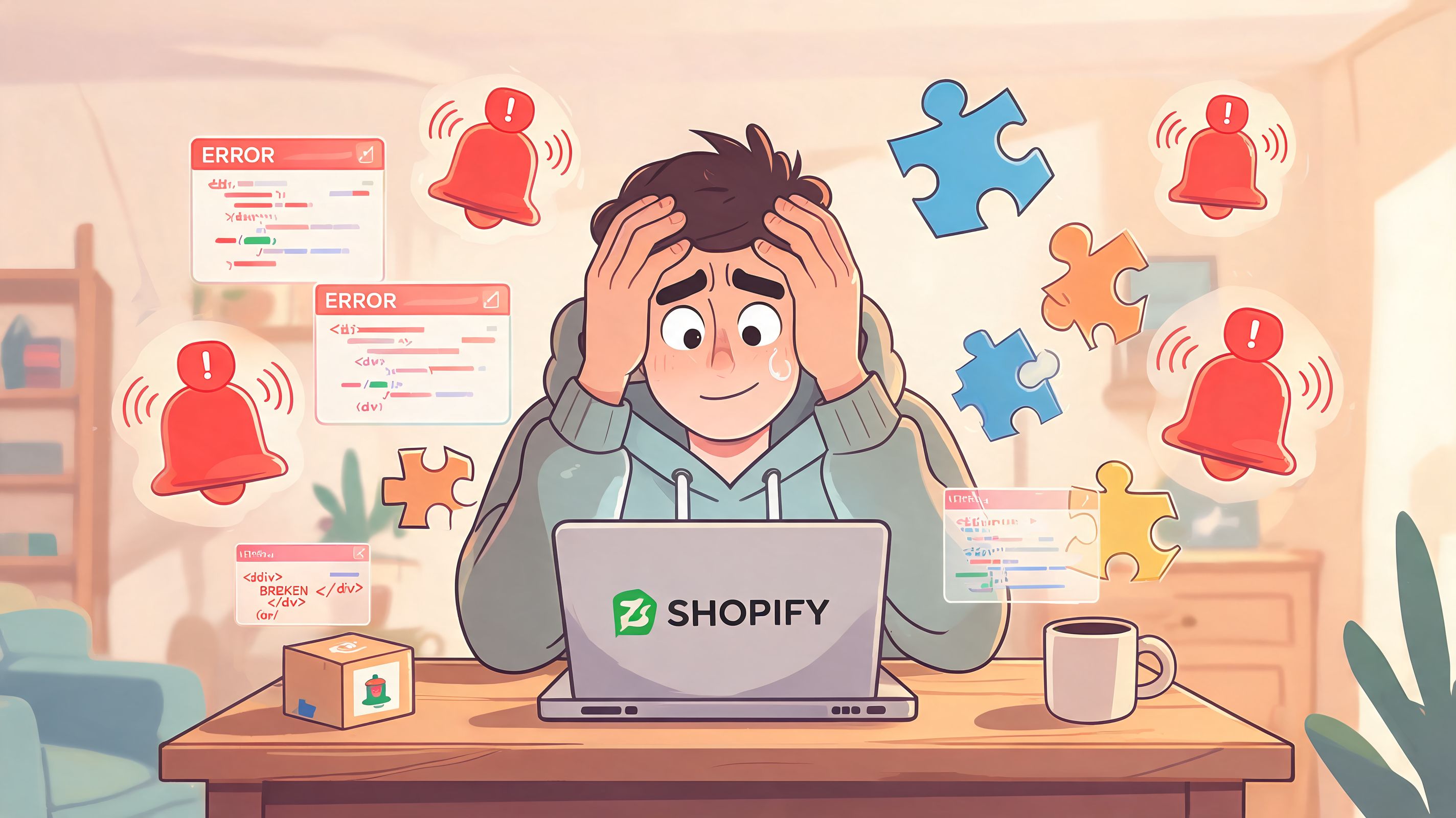
From firefighting to managed momentum
Most stores start in a reactive cycle. A bug appears, someone scrambles to fix it. A landing page needs a tweak, it goes into a queue. An app conflicts with the theme, and now a marketing launch has to wait. That cycle is expensive because it steals attention from growth work.
A retainer changes the operating model. It's closer to having a pit crew for a race car than calling a mechanic only after smoke comes out of the bonnet. The crew keeps the machine running, checks for weak points, and makes steady improvements while the race is still on.
That matters because retention and user experience are tightly connected. The average e-commerce store has a customer retention rate of just 30%, according to Rivo's Shopify customer retention benchmarks. If shoppers hit friction, they don't usually send a polite warning. They leave.
Practical rule: If your team spends more time reacting to theme issues, app conflicts, and emergency edits than improving conversion and customer experience, you're already operating like a retainer client without the benefits of one.
What it is not
A retainer isn't the same as hiring a freelancer for a one-off task. It also isn't just a prepaid block of developer hours, at least not when it's structured properly.
Continuity provides the primary value. The team learns your theme architecture, app stack, product catalogue quirks, checkout requirements, and internal workflows. Over time, that means fewer repeated explanations, fewer rushed decisions, and better technical judgement.
For early-stage brands trying to connect sales channels and customer journeys, it also helps to understand the wider commercial model around omnichannel ecommerce strategies for startups. Support only solves part of the problem. The stronger model links technical work to the way customers discover, compare, and buy.
The practical purpose
A good Shopify support retainer does three jobs at once:
- Protects revenue: It keeps the store stable, updated, and less vulnerable to preventable issues.
- Creates capacity: It removes technical clutter so your internal team can focus on merchandising, campaigns, and operations.
- Builds forward: It turns support from “fix this” into “improve this”.
That shift is the reason retainers work. Not because support sounds comforting, but because reactive development rarely gives a growing store enough control.
How Shopify Retainer Models Work
A retainer works because you're not only paying for output. You're paying for access, continuity, and readiness.
The wrong way to view it is as a monthly invoice for random fixes. The better way is to treat it like a standing operating resource for your store. You have people who already know the codebase, understand the trading calendar, and can move from bug resolution to feature work without starting from zero each time.
Access to a team, not a single pair of hands
Most growing merchants don't need one person who can sort of do everything. They need the right mix of skills at the right time. One month the pressure point is Liquid and app conflicts. Another month it's UX friction on collection pages. Then it shifts to checkout logic, SEO clean-up, or data integration.
A strong Shopify support retainer gives you access to that mix without hiring in-house across multiple roles. That is the fundamental commercial logic. You avoid the overhead of recruiting, onboarding, and managing separate specialists while still getting specialist input when it matters.
According to Ecommerce Pro's guide to Shopify retainers, retainer models are built to offer a dedicated team of experts for ongoing maintenance, development, and optimisation. The same source notes that 89% of consumers say a positive customer service experience makes them more likely to make another purchase. That doesn't mean support alone drives repeat revenue, but it does underline how strongly customers respond when the experience feels smooth and reliable.
Why the model suits operational reality
Think of ad-hoc development as paying for one-off personal training sessions. You book them when something hurts. You get temporary relief, then drift back until the next issue appears.
A retainer is closer to a gym membership. You have regular access to equipment, structure, and guidance. Results come from consistency, not rescue missions.
That consistency helps in a few practical ways:
- Budgeting becomes simpler: Finance teams prefer known monthly spend to a string of unpredictable emergency invoices.
- Context compounds: The team doesn't need to keep rediscovering how your theme, apps, and workflows fit together.
- Priority improves: Retainer clients usually sit ahead of casual one-off requests because the relationship is already active.
- Roadmaps become realistic: You can plan the next month's technical work instead of hoping there's time after the fires are out.
A retainer should reduce decision fatigue. If every task starts with vendor sourcing, scope clarification, and backlog reshuffling, the model isn't doing its job.
What usually happens month to month
Most retainers settle into a rhythm. Incoming requests get triaged. Urgent issues are handled first. Planned work is scheduled around trading priorities. Then the team reviews outcomes and queues the next set of actions.
That rhythm matters more than people realise. Stores rarely fail because of one giant technical problem. They lose ground through neglected small issues: outdated app settings, slow templates, clumsy mobile UX, and unshipped improvements that stay on the wishlist too long.
The hidden advantage
The best retainer relationships become operationally boring, and that's a compliment. Launches go live with fewer surprises. Theme edits stop feeling risky. The internal team knows who to ask. Technical debt gets dealt with before it starts blocking commercial work.
That's what merchants are really buying. Not just labour, but a calmer and more dependable way to run a revenue-critical platform.
Comparing Common Retainer Models and Pricing
Not every Shopify support retainer is structured the same way. That matters because the pricing model shapes behaviour. It influences how work gets prioritised, what gets included, how predictable your monthly spend feels, and whether the agency is incentivised to think beyond tickets and tasks.
In the UK, typical Shopify support retainers from mid-tier agencies range from £1,500 to £5,000 per month, according to Steven Vincent's overview of monthly Shopify support retainers. That range often reflects the extra complexity of UK-specific compliance, including GDPR and post-Brexit operational requirements. The awkward part is that many merchants still get proposals with vague deliverables and unclear ROI.
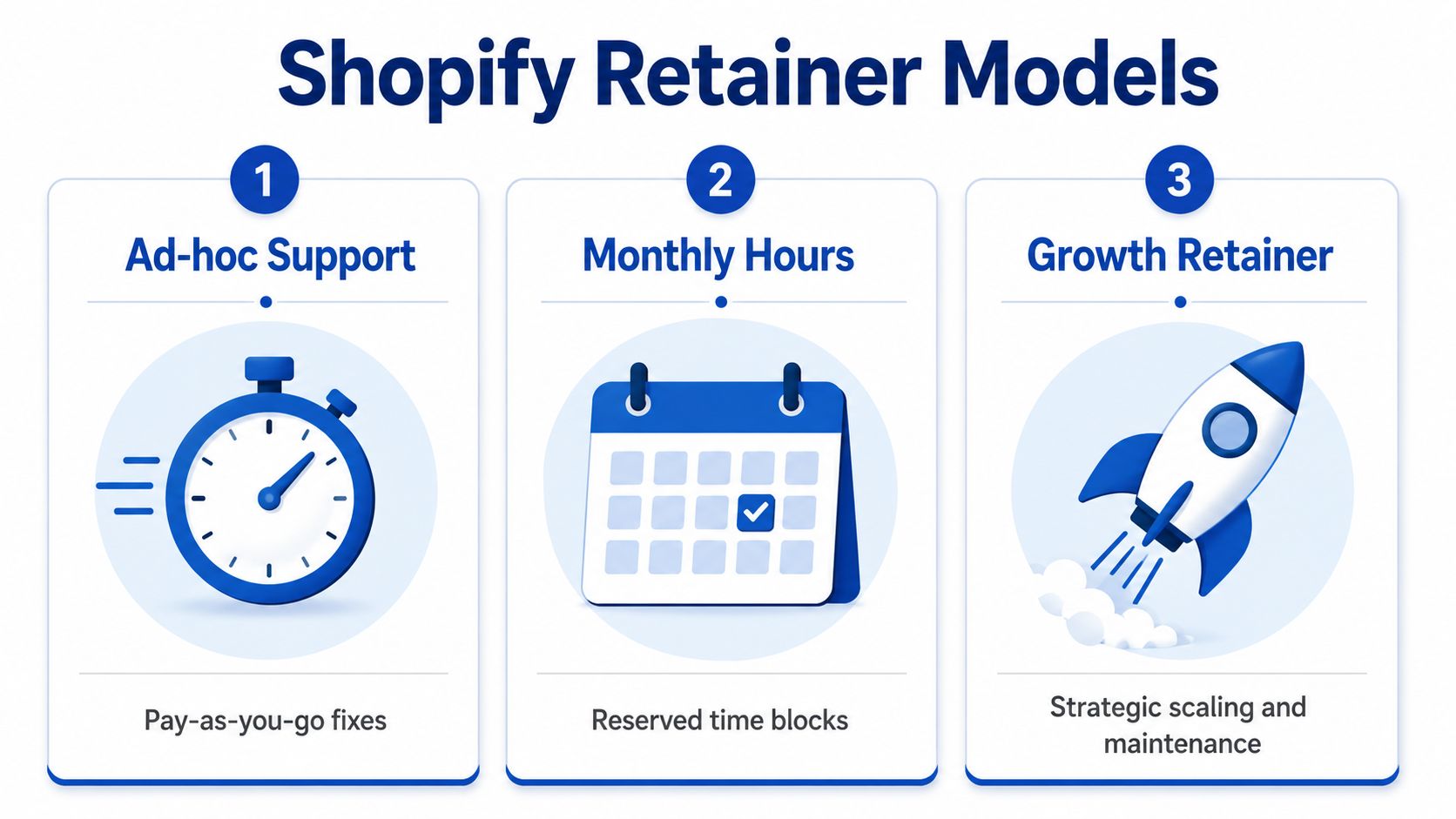
Shopify retainer model comparison
| Model | Pricing Structure | Best For | Pros | Cons |
|---|---|---|---|---|
| Ad-hoc support | Pay only when work is needed | Stores with rare, isolated issues | Flexible, no ongoing commitment | Slow response, no continuity, hard to plan |
| Monthly hours bank | Fixed monthly fee for a reserved number of hours | Merchants with regular but varied needs | Priority access, predictable spend, adaptable task mix | Can become transactional, may encourage hour-counting |
| Growth retainer | Fixed monthly fee tied to outcomes, support, and ongoing improvement | Brands that need both maintenance and commercial progress | Better alignment, proactive roadmap, broader skill access | Requires stronger agency process and clearer collaboration |
Ad-hoc support
Ad-hoc support looks attractive because it feels lean. If you only pay when something comes up, it seems efficient.
It works for stores with infrequent technical needs. A simple theme, low app complexity, and a team that handles most content changes internally can make this model workable. The problem starts when “occasional” becomes “constant”.
In practice, ad-hoc support creates friction at the worst time. You have to explain the issue, wait for availability, approve scope, then hope the person handling it understands the broader store setup. That lag can be harmless for a minor visual bug. It's much more painful during a sales event or a broken integration.
Monthly hours bank
This is probably the most common form of Shopify support retainer. You agree a set fee for a set number of hours each month, and the agency applies those hours across maintenance, fixes, and small development requests.
For many merchants, this is a sensible middle ground. It introduces predictability without forcing a heavyweight engagement model. You know support is available, and the agency can reserve capacity for your account.
The downside is behavioural. Hour-based retainers can turn into accounting exercises. Clients start asking whether a meeting “uses hours”. Agencies become defensive about scope. Important but unglamorous work, like codebase clean-up or QA discipline, can get deprioritised because it's harder to justify line by line.
If your retainer makes everyone obsess over timesheets, it will usually underperform. Good support needs accountability, but it also needs room for judgement.
Fixed monthly growth retainer
This is the model that tends to work best for merchants who want support to contribute to trading performance, not just site stability. Instead of buying a narrow bank of execution time, you're buying an operating cadence that blends support, optimisation, and strategic delivery.
A fixed growth retainer usually includes a standing scope. That might cover maintenance, bug fixes, light development, CRO input, design support, performance review, and regular planning. The strongest versions don't treat support and growth as separate departments. They manage the store as one commercial system.
This structure suits brands with active roadmaps, multiple stakeholders, or a store that changes often. It also works well when the internal team wants one partner to coordinate technical delivery instead of juggling several specialists.
Which model fits which business
The right answer depends less on company size and more on operating style.
- Choose ad-hoc support if your store is stable, your internal team is capable, and you only need occasional specialist input.
- Choose a monthly hours bank if requests are regular but inconsistent, and you want predictable support without a broad strategic layer.
- Choose a growth retainer if technical work, UX, speed, and conversion all need to move together.
Many merchants select a provider based on the headline cost and regret that choice later. Cheaper models often become expensive once delays, rework, and missed opportunities are factored in. The better question is whether the retainer structure matches the way your business runs.
What to look for in pricing proposals
Before you sign anything, look past the monthly figure and check these points:
- Clarity of scope: Does the proposal distinguish maintenance, development, and strategy?
- Treatment of overflow work: What happens if a bigger feature lands mid-month?
- Senior involvement: Who performs the work day to day?
- Reporting logic: Will you get outcomes, or only a task log?
- Flexibility: Can the plan adapt to seasonal peaks, launches, and campaign periods?
A retainer model is only useful if it supports decisions instead of complicating them. The right structure should make your store easier to run, not harder to administer.
What Your Retainer Should Include
A weak Shopify support retainer hides behind broad language. It promises “ongoing support”, “continuous improvement”, and “technical assistance” but never gets specific enough for you to judge what you're buying.
A useful retainer is much easier to inspect. It has concrete inclusions, clear responsibility boundaries, and a working cadence that covers both store protection and meaningful improvement.
Core technical cover
At minimum, your retainer should cover the routine work that keeps the store stable and usable. That includes bug fixing, app conflict resolution, theme updates, code maintenance, and monitoring for problems after changes go live.
Security belongs here too. According to XgenTech's discussion of Shopify support retainers, UK e-commerce attacks surged 41% year over year, and retainer clients often see 97% uptime compared with 89% for merchants relying on ad-hoc support. The practical takeaway isn't just that attacks happen. It's that outdated apps, stale themes, and unmanaged integrations create avoidable exposure.
A solid technical layer usually includes:
- Theme and app upkeep: Updates, compatibility checks, and regression testing after changes.
- Issue response: Triage for bugs affecting navigation, cart behaviour, product pages, or checkout presentation.
- Monitoring and prevention: Basic health checks so problems get caught before a customer reports them.
- Security housekeeping: Patching, access review, and removal of avoidable technical risk.
Development that doesn't stall
Support shouldn't mean “we only fix what's broken”. If the retainer stops there, the store becomes stable but stagnant.
You want room for practical development work such as landing page builds, section updates, app installation support, metafield setup, navigation changes, bundle logic, and feature enhancements. On Shopify Plus stores, that may expand into more complex integration and workflow work.
The useful question isn't “can they develop?” It's “can they develop without turning every request into a mini project with weeks of scoping overhead?”
Performance and optimisation
Store performance often gets treated as a side task, when it should sit inside the retainer by default. Slow pages, bloated scripts, oversized imagery, and messy app residue rarely break the site outright. They just make it less efficient at converting traffic.
That's why I'd expect a good retainer to include ongoing optimisation work such as:
- Speed review: Template performance, script loading, image handling, and app impact.
- UX refinement: Mobile fixes, hierarchy improvements, and friction reduction in key journeys.
- Conversion support: Testing ideas, merchandising enhancements, and page-level improvements.
- SEO hygiene: Technical checks, crawl-related clean-up, and prevention of avoidable theme issues.
If you're comparing proposals, it helps to review how providers think about wider Shopify store optimisation services, because support and optimisation shouldn't sit in separate silos for long.
The cheapest retainer often excludes the work that actually improves commercial performance. It covers tickets, not progress.
Service levels and communication
The contract matters less than the operating rhythm. If you don't know who to contact, how requests are prioritised, or when updates arrive, support will feel patchy even if the team is technically strong.
Check for a simple SLA structure that answers these questions:
| Area | What to check |
|---|---|
| Response time | How quickly are urgent and non-urgent requests acknowledged |
| Delivery cadence | Whether work is handled continuously or batched into review cycles |
| Communication channel | Email, ticketing system, Slack, or a shared project board |
| Reporting | Monthly summary of actions, outcomes, blockers, and next priorities |
| Escalation | What happens if checkout, cart, or key templates fail |
Strategic input
This is the difference between a supplier and a partner. Strategic input doesn't need to mean long workshops or heavy consultancy. It means the team can tell you which improvements matter now, which ones can wait, and where technical effort is likely to support revenue.
That might include prioritising a collection page rebuild before a homepage redesign, replacing a conflicting app instead of endlessly patching around it, or advising when a theme refactor is safer than another quick fix.
A Shopify support retainer should leave your store stronger every quarter than it was at the start, not just less broken.
Choosing the Right Retainer Partner
Most bad retainer experiences don't happen because the idea is flawed. They happen because the merchant chooses a partner that sells availability without demonstrating judgement.
You're not only hiring technical capability. You're choosing how work gets prioritised, how problems get diagnosed, and how clearly someone can connect development decisions to trading outcomes.
Ask for evidence of commercial impact
The easiest agencies to buy from are often the hardest to hold accountable later. Their proposals sound polished, but they stay vague on outcomes.
One useful marker is performance work. According to Venture Stream's Shopify support and maintenance page, UK merchants on retainers have seen Core Web Vitals improve, with average Largest Contentful Paint dropping from 3.2s to 2.1s. That's the kind of evidence you want to hear discussed properly. Not as a flashy statistic on its own, but as proof that the team can identify friction, implement technical improvements, and measure the effect.
Ask direct questions like these:
- What kinds of store issues do you usually solve inside the retainer versus quote separately?
- How do you prioritise speed, UX, and feature requests when everything feels urgent?
- Who reviews work before it goes live?
- How do you report on progress beyond listing completed tasks?
- What happens if our trading team needs a fast turnaround during a campaign period?
Look at how they think, not just what they sell
A competent partner should be able to explain trade-offs clearly. They should tell you when an app is the wrong fix. They should push back when a request introduces needless complexity. They should also know when not to rebuild something that only needs refactoring.
If you want a broader framework for how to evaluate digital marketing agencies for growth, that lens is useful here too. The same principles apply. You're looking for clarity, process, and evidence that the team can support outcomes rather than just complete tasks.
Red flags that usually show up early
A few warning signs appear before the contract is signed:
- Vague ownership: Nobody can tell you who will be on the account.
- Junior-heavy delivery: Senior people sell the work, then disappear.
- No clear reporting format: You hear promises of updates, but no example report exists.
- Everything is possible: They agree to every request without discussing constraints or risk.
- No Shopify depth: They talk in general web language but struggle to discuss themes, app conflicts, Shopify Plus considerations, or integration realities.
A reliable retainer partner doesn't say yes to everything. They help you avoid low-value work and protect momentum.
Fit matters more than style
Some merchants want a highly structured partner with tickets, fixed review cycles, and a formal roadmap. Others need a more embedded team that can work quickly with founders, marketers, and ops leads in the same loop.
Neither is automatically better. What matters is fit. If your business moves fast and your partner needs a week to scope every small request, frustration will build. If your internal team needs governance and the agency runs informally, mistakes will slip through.
This is also where provider positioning matters. If you're comparing specialist options, it helps to review what to look for when hiring a Shopify expert, especially around technical depth, communication style, and responsiveness.
The best partner is rarely the cheapest or the most charismatic on a sales call. It's the one that can keep the store moving with the least friction and the clearest judgement.
Onboarding Reporting and Measuring Success
A Shopify support retainer starts proving its value in the first few weeks. If onboarding is messy, the relationship usually stays messy. If onboarding is structured, the account settles faster and the team can move into useful work without wasting the first month chasing access and context.
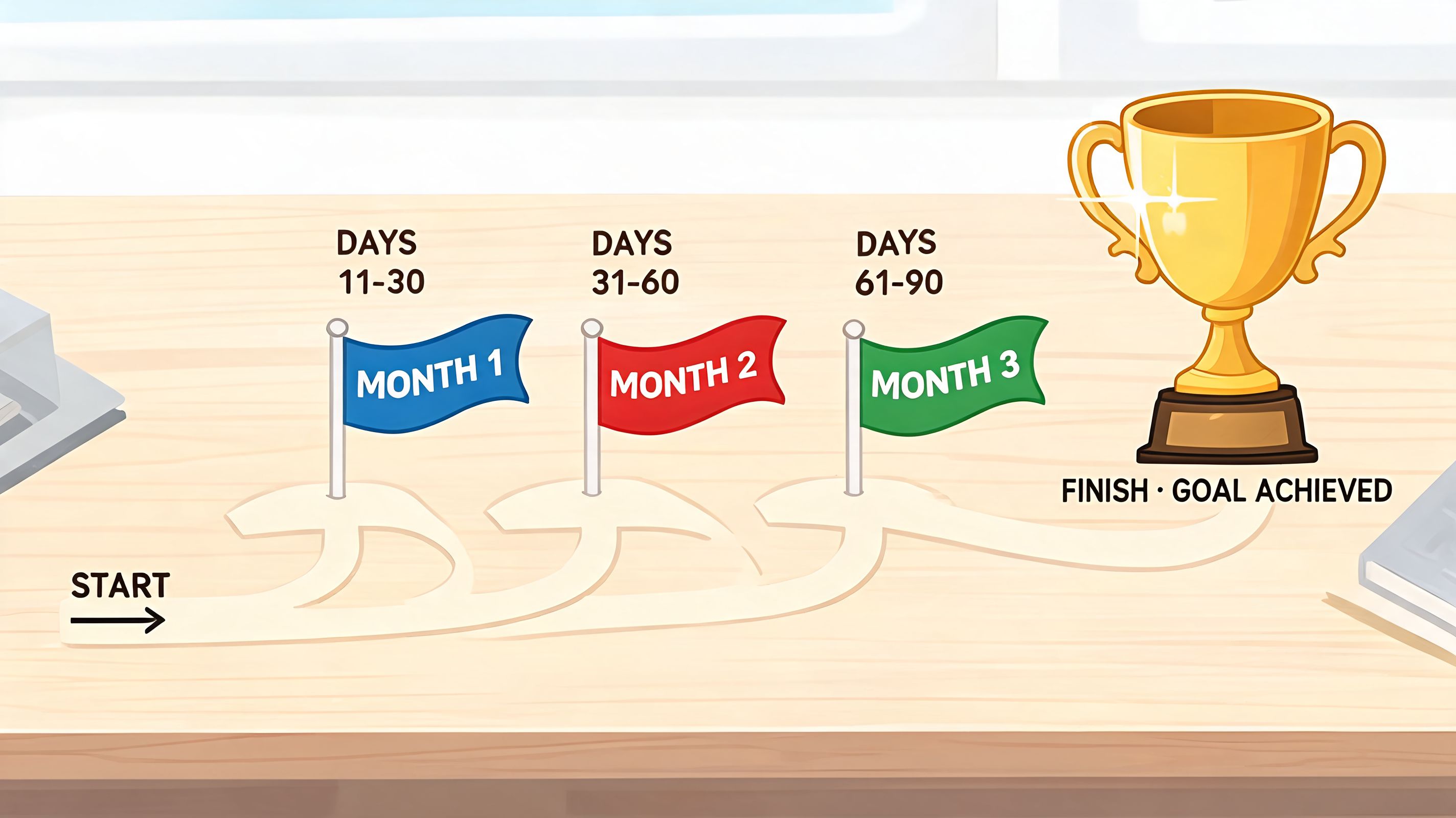
What good onboarding looks like
The first step is practical. Admin access, theme access, app visibility, analytics visibility, and communication channels all need sorting early. If the agency can't see the actual setup, they can't prioritise well.
After that, the work should move into shared context. The team needs to understand your revenue-critical pages, campaign calendar, current pain points, custom app dependencies, and internal approval process.
A clean onboarding sequence usually includes:
Access setup
Shopify permissions, analytics tools, project management access, and any third-party platforms involved in the store's day-to-day operation.Technical and commercial audit
A fast review of theme health, app stack, speed concerns, UX issues, and known operational blockers.Priority alignment
Agreement on what counts as urgent, what supports revenue most directly, and what can wait.Working process
A clear route for requests, approvals, testing, and deployment.
What the first 90 days should produce
The early phase shouldn't try to do everything. That usually creates noise and partial progress. A better pattern is to stabilise first, then optimise.
In practical terms, I'd expect the first quarter to produce some mix of the following:
- Immediate fixes: Resolve bugs, broken sections, app conflicts, and visible UX issues.
- Preventive work: Clean up avoidable technical debt and reduce repeat incidents.
- Priority improvements: Ship a shortlist of meaningful updates tied to store performance or team efficiency.
- Baseline reporting: Establish how success will be reviewed month to month.
What monthly reporting should contain
A bad report is a timesheet in disguise. It lists tasks completed and leaves you to guess whether any of them mattered.
A good report does four things:
| Reporting area | What useful reporting includes |
|---|---|
| Work completed | What was shipped and why it mattered |
| Store observations | Issues identified, risks spotted, and opportunities for improvement |
| Performance movement | Changes in the metrics that matter to your business |
| Next actions | Recommended priorities for the next cycle |
The report doesn't need to be flashy. It needs to be usable. If you can't tell what changed, what improved, and what should happen next, the reporting is too weak.
This walkthrough gives a helpful visual sense of how support and performance work fit together over time:
How to measure the retainer properly
The smartest merchants don't judge a Shopify support retainer by volume of activity. They judge it by business effect.
That means tying the work to a small set of metrics that reflect how the store performs. The exact mix varies by business, but the logic is consistent. Look at site speed, conversion friction, average order value, error frequency, launch reliability, and how quickly issues get resolved.
Reporting should answer one question clearly: is the store becoming easier to run and better at converting demand?
A retainer isn't successful because lots of tickets were closed. It's successful when the storefront becomes more reliable, the team moves faster, and technical work starts supporting commercial momentum instead of interrupting it.
The Grumspot Difference Your On-Demand Growth Team
Traditional retainers often create two frustrations. First, the hours feel opaque. Clients aren't always sure what got used, what rolled over, or why simple tasks expanded. Second, support gets separated from growth, so the agency fixes bugs but doesn't help the store improve in any organised way.
That's why a modern Shopify support retainer needs a different structure. It should combine maintenance, fast delivery, and conversion-minded thinking in one working model.

What a stronger model changes
A flatter pricing model removes a lot of administrative drag. Instead of turning every month into a debate about remaining hours, it gives both sides room to prioritise work based on impact. That's particularly useful when support requests and growth tasks need to coexist, which is how most real stores operate.
The other advantage is team shape. Stores rarely need only development. They need someone to handle technical fixes, someone to think about UX, and someone who can spot CRO opportunities before they get buried under backlog noise.
That's the practical appeal of an on-demand team model like Grumspot's Shopify technical support retainer. It combines ongoing maintenance, bug fixes, updates, feature implementation, and regular health checks under one operating relationship, rather than splitting those responsibilities across multiple suppliers.
Why forward-looking retainers stand out
The next gap between average and stronger retainers is experimentation. Many support plans still stop at maintenance plus minor enhancements. That misses one of the biggest opportunities in ongoing work, which is structured testing.
According to CRO Media's analysis of Shopify retainers, only 15% of UK retainers currently include AI-driven A/B testing, while pilots have delivered 30 to 50% conversion lifts. The number matters less than the direction. Merchants should expect support partners to think beyond upkeep and toward systematic improvement.
That doesn't mean every store needs complex AI tooling immediately. It means the partner should be capable of introducing more advanced CRO methods when the store is ready, instead of treating support as a maintenance desk.
Commercially useful support
The strongest retainer model is the one that helps your team answer practical questions every month:
- What needs fixing now because it threatens trading?
- What should be improved next because it affects conversion or usability?
- What can be tested because it might generate more revenue?
- What should be left alone because it isn't worth the complexity?
That balance matters. Plenty of retainers are good at shipping requests. Fewer are good at guiding decisions.
For merchants who want a partner that can act as an extension of the business rather than a queue-based supplier, the on-demand growth team model makes more sense than rigid hourly packages. It supports the actual mix of work a Shopify store needs: support, development, optimisation, and commercial judgement in the same loop.
If your store feels stuck between urgent fixes and delayed growth work, Grumspot offers a practical path forward. The team works with Shopify merchants on flexible monthly support retainers that cover maintenance, feature delivery, optimisation, and ongoing technical guidance, so you can keep the store stable while still moving the business ahead.
Let's build something together
If you like what you saw, let's jump on a quick call and discuss your project
Related posts
Check out some similar posts.

- composable commerce Shopify Plus
Unlock growth with composable commerce Shopify Plus. Learn architecture patterns and migration steps...
Read more