Mastering Conversion Rate Optimization for Ecommerce in the UK
- conversion rate optimization for ecommerce
- ecommerce CRO
- Shopify optimization
- UK ecommerce
- increase online sales
Launched
March, 2026

At its heart, conversion rate optimisation (CRO) is all about making more money from the visitors you already have. It’s the science of turning browsers into buyers by systematically figuring out what makes them tick—and what makes them leave.
This isn't about throwing ideas at the wall and hoping something sticks. It’s a disciplined, data-led approach focused on understanding how people actually use your site and smoothing out the bumps in their path to purchase. The real goal? Making every pound you spend on marketing work that much harder.
Benchmarking Your UK Ecommerce Conversion Rate
Before you can start improving, you need to know where you stand. "What's a good conversion rate?" is a question I hear all the time, but the answer is always, "It depends." Generic global averages are next to useless because context is everything.
Think about it. Someone buying their weekly groceries online is a world away from someone considering a £3,000 bespoke sofa. The grocery shop is a low-friction, repeat purchase. The sofa might involve weeks of deliberation, multiple site visits, and competitor comparisons. Trying to benchmark one against the other is a recipe for frustration.
The real power of CRO isn't just about hitting an arbitrary number. It’s about grasping the immense financial opportunity hiding in plain sight. In the UK's massive £286 billion ecommerce market, lifting your conversion rate from 2% to 3% doesn't just look good on a report—it can fundamentally transform your profitability.
UK Benchmarks and What They Mean for You
To set goals that make sense, you need to look at UK-specific data for your sector. This is the only way to get a realistic picture of where you are versus your direct competitors and what’s genuinely achievable.
For example, the UK ecommerce scene is one of the most mature in the world. Recent data shows the average UK conversion rate sits at an impressive 3.4%, but the differences between industries are huge. A 2025 analysis found that grocery leads the way at 11.1%, driven by those high-frequency, essential purchases. At the other end, categories like furniture sit closer to 7.1%. Other sectors, like health and wellbeing, can see rates anywhere from 1.87% to 4.20%. You can get a feel for these industry-specific figures in this detailed 2025 UK conversion rate report.
Knowing these nuances is the first step. If you’re selling luxury watches, aiming for a grocery-level conversion rate will only lead to disappointment. Your focus should be on outperforming other high-ticket retailers.
To help you get a sense of where you stand, here’s a quick look at some benchmark conversion rates across different UK industries.
UK Ecommerce Conversion Rate Benchmarks by Industry (2026)
| Industry Sector | Average Conversion Rate (%) |
|---|---|
| Food & Grocery | 10.8 |
| Health & Beauty | 4.5 |
| Fashion & Apparel | 3.2 |
| Home & Furniture | 2.1 |
| Electronics | 1.9 |
| Luxury Goods | 0.9 |
Remember, these figures are just a starting point. Your goal is to understand the ballpark for your sector and then focus on consistently outperforming your own historical data.
The Mobile Conversion Gap
Here’s one of the biggest opportunities in UK ecommerce right now: the mobile experience. Mobile devices now account for over 70% of all online shopping transactions in the UK, yet their conversion rates consistently lag behind desktops.
This "mobile conversion gap" is almost always a direct result of user experience friction. From a customer’s perspective, it’s easy to see why:
- Clunky navigation that makes finding products a chore.
- Product images that are too small to see important details.
- Endless checkout forms that are a nightmare to fill out on a small screen.
This is where a solid CRO programme delivers incredible value. By zeroing in on creating a seamless, intuitive mobile journey, you can close that conversion gap and tap into a huge revenue stream from the majority of your visitors. Establishing a data-driven benchmark is your first move in identifying and tackling these exact challenges.
Building Your CRO Foundation Through Audits
Effective conversion rate optimisation doesn’t start with guesswork or chasing the latest trends. It all begins with a clear, honest look at what’s happening on your website right now. You can't fix a leaky bucket until you find the holes, and that's precisely what a thorough CRO audit is for.
This deep dive acts as your roadmap, revealing the hidden friction points that are quietly sabotaging your sales. It’s a process of methodical investigation that turns a vague desire for ‘more conversions’ into a concrete plan for growth. Generally, this means tackling two key areas: a technical audit and a user experience (UX) audit.
This infographic breaks down the foundational process of building a growth strategy, from benchmarking and identifying opportunities to defining a clear path forward.

As you can see, establishing a baseline and pinpointing financial opportunities are the crucial first steps. Only then can you form a coherent CRO strategy that actually delivers results.
Pinpointing Technical Conversion Blockers
Your first port of call should always be the technical side of things. These are the silent conversion killers that frustrate users before they’ve even had a chance to fall in love with your products. Even the most beautifully designed site will fail if it's slow, broken, or unusable on a customer's device.
Your technical audit should hunt for issues like:
- Slow Page Load Speed: Every second really does count. A site taking more than 3 seconds to load can lose almost half of its potential customers. Check your Core Web Vitals and find any heavy images or clunky code that’s slowing you down.
- Mobile Responsiveness Bugs: With over 70% of UK transactions happening on mobile, your site must be flawless on smaller screens. Look for broken layouts, buttons you can't tap, or forms that are a nightmare to fill in on a phone.
- Broken Links and 404 Errors: Hitting a dead end is a jarring experience. Use a crawler to find any broken internal or external links that lead customers to a frustrating 404 page.
A slow website is more than just an annoyance; it’s a direct tax on your revenue. Think of it this way: if a customer walked into a physical shop and had to wait five seconds for the door to open, how many would simply turn around and leave? The same principle applies online, but the patience level is even lower.
Uncovering User Experience Friction
Once the technical foundation is solid, it's time to get into the user experience (UX). This is where you move from code to human behaviour. Your goal here is to see your site through your customers' eyes to understand why they do what they do.
This part of the audit relies on qualitative data to tell the story behind your analytics. Instead of just knowing that people drop off on your product page, you can see exactly where and why they get stuck. To make sure you cover all your bases, our comprehensive ecommerce audit checklist is a great resource.
Key tools for a solid UX audit include:
- Heatmaps: These show you where users click, how they move their mouse, and how far they scroll. A heatmap might reveal that no one is clicking your main call-to-action because it's "below the fold."
- Session Recordings: Watch anonymous recordings of real user sessions. This is where the magic happens. You might discover users repeatedly trying to click a non-clickable element or getting lost in your checkout.
- User Surveys and Feedback Polls: Sometimes, the easiest way to get an answer is to just ask. A simple exit-intent poll asking, "What stopped you from buying today?" can provide incredibly direct and valuable feedback.
By combining the findings from both your technical and UX audits, you'll have a complete picture of your conversion barriers. You're no longer working on assumptions; you have a data-backed, prioritised list of problems to solve. This list becomes the bedrock of your entire CRO strategy, turning vague goals into actionable ideas you can start testing.
Crafting and Prioritising High-Impact Test Ideas
Once your audit is done, you’re sitting on a goldmine of data about what’s actually happening on your site. The real work starts now: translating those raw numbers and observations into smart, testable ideas. This isn’t about just throwing things at the wall, like randomly changing button colours. It's about building structured hypotheses that link a specific change to a measurable outcome.

A solid hypothesis is the foundation of any good test. It gives you clarity, sets clear expectations, and makes it dead simple to analyse the results later. A simple but powerful framework I always come back to with clients is this: By changing [Element], we expect to see [Outcome] because [Reasoning].
Let’s say your session recordings show people hovering and hesitating on a product page. That single observation can be shaped into a proper test idea.
- Hypothesis: By changing our product page call-to-action from ‘Add to Bag’ to ‘Buy Now,’ we expect to increase add-to-cart clicks by 10% because the new wording feels more urgent and decisive.
Using this format forces you to explain why you think a change will work. More importantly, it anchors your idea directly to the user behaviour you spotted during your audit.
Introducing a Prioritisation Framework
It doesn't take long to come up with a long list of test ideas. The real challenge is figuring out where to start. Testing a tiny tweak on a low-traffic page is a waste of time and resources, but diving straight into a complex checkout redesign might be biting off more than you can chew. This is exactly why you need a prioritisation framework.
One of the most practical models out there is the ICE score. It’s a straightforward way to objectively rank your test ideas by scoring them against three criteria, usually on a scale of 1 to 10.
- Impact: If this test is a winner, how much will it actually move the needle? A change to your homepage banner will almost always have a higher potential impact than tweaking the footer copy.
- Confidence: How sure are you that this hypothesis will prove correct? Your confidence should be rooted in data. If heatmaps clearly show everyone missing a key button, your confidence score will be high. If it's more of a creative gut feeling, the score will be much lower.
- Ease: How simple is this test to get live? This includes both the technical build and any operational effort. A simple text change is a 10; a complete navigation overhaul might be a 2.
Multiplying these three scores (Impact x Confidence x Ease) gives you a single number to rank each idea. This simple maths cuts through subjective debates and gets your team focused on the tests that are most likely to deliver big wins, fast.
Applying the ICE Model in Practice
Let's say your audit produced two interesting ideas. The first is to simplify your mobile navigation menu, because you saw users getting lost in it. The second is to change the colour of the 'Apply' button for discount codes during checkout.
Test Idea 1: Simplify Mobile Navigation
- Impact: 9 (This affects every single mobile user and their ability to find what they want)
- Confidence: 8 (Session recordings clearly show users struggling and rage-clicking)
- Ease: 3 (This needs a fair bit of design and developer time to get right)
- ICE Score: 9 x 8 x 3 = 216
Test Idea 2: Change Discount Code Button Colour
- Impact: 4 (It’s a minor UI tweak that might have a small effect on conversion)
- Confidence: 5 (It's considered a best practice, but you have no hard data for your site)
- Ease: 10 (A simple CSS change that a developer could do in minutes)
- ICE Score: 4 x 5 x 10 = 200
In this case, simplifying the mobile navigation wins out as the higher-priority task, even though it’s much harder to implement. The sheer potential impact is so massive that it outweighs the difficulty. This is how you keep your CRO programme strategic—it stops you from getting bogged down in low-value tweaks and ensures you’re always aiming your efforts where they’ll count the most.
Executing and Analysing A/B Tests That Deliver Results
Alright, all that auditing and planning has brought us to the most crucial part: running the tests. This is where you move from well-researched theories to hard data. Getting A/B testing right is a genuine science, and it’s what turns your educated guesses into measurable improvements in your store's performance.

The concept is straightforward. You show the original version of your page (the ‘control’) to one group of visitors, and a new, modified version (the ‘variation’) to another. Then, you simply track which version persuades more people to do what you want them to do, whether that's clicking "buy now" or signing up for your mailing list.
Setting Up Your Experiment Correctly
If you're on Shopify, you have a wealth of tools at your fingertips. Industry-standard platforms like VWO or Optimizely are fantastic, and Google Optimize (which is being merged into GA4) has long been a go-to. There are also some brilliant Shopify-native apps that make the whole process a bit simpler.
No matter the tool, getting the setup right is non-negotiable.
Your ‘control’ is simply your current page—the baseline. Your ‘variation’ is the new version that includes the single change from your hypothesis. I can't stress this enough: only test one change at a time. If you change both the headline and the button colour, you’ll never know which one actually made the difference.
Your software should handle splitting your traffic evenly, usually 50/50, to ensure a fair comparison. The final piece of the puzzle is defining your primary goal. What’s the one metric that defines a win? For most e-commerce sites, that’s the transaction conversion rate, but for a top-of-funnel test, it might be a micro-conversion like ‘add to cart’.
A clean setup is the foundation of a reliable result. Get it wrong, and you're just making decisions based on noise.
Avoiding the Most Common Testing Pitfalls
I’ve seen so many brands waste time and resources by falling into a few common traps. The biggest one, by far, is impatience.
One of the most destructive habits I see in CRO is calling a test too early. The variation is up by 20% after two days, everyone gets excited, and the change gets pushed live. A week later, you check your analytics and realise the overall conversion rate hasn't moved an inch. This happens when you don't let a test run long enough to reach statistical significance.
Statistical significance is your measure of confidence that the result is real and not just a random fluke. You should always be aiming for a confidence level of 95% or higher before you even think about stopping a test.
Here are a few other mistakes I see time and time again:
- Forgetting about business cycles: You need to run tests for at least one to two full business weeks. This ensures you capture the natural ebbs and flows in customer behaviour, like the difference between a quiet Tuesday morning and a busy Saturday night.
- Testing too much at once: It's tempting, I know. But if your variation has a new headline, new images, and a different call-to-action, a win or loss is meaningless. You have no idea what caused it.
- Ignoring device segments: A change might be a huge success on desktop but a complete conversion killer on mobile. Always, always segment your results. This is especially important in the UK, where desktop often converts much better than mobile despite having less traffic, a clear sign of lingering mobile UX friction. You can see more on these trends in this in-depth analysis of 2025 UK ecommerce rates.
Interpreting Your Results and Taking Action
Once your test has finished and hit that magic 95% significance level, you’ll have one of three outcomes. Knowing what to do with each is what separates a mature optimisation programme from one that just throws ideas at the wall.
- A Clear Win: Fantastic! Your hypothesis was correct. The next step is to roll out the winning change to 100% of your audience. Just as importantly, document what you learned. Why did it win? What does this tell you about your customers’ motivations?
- A Clear Loss: The variation performed significantly worse. Don't be discouraged—this is just as valuable as a win! You've learned what your customers don't respond to. Document that insight, use it to create a new hypothesis, and move on.
- An Inconclusive Result: The test found no meaningful difference between the two versions. This usually means the change you tested wasn't bold enough to influence behaviour. It's a signal to think bigger and be more ambitious with your next test.
By systematically running, analysing, and learning from every single test, you start building a powerful library of customer intelligence. This is the engine of continuous improvement, and it ensures every test you run is smarter than the last.
Implementing and Scaling Winning Changes on Shopify
That little green notification telling you you’ve found a winning A/B test is a great feeling. But the celebration is short-lived, because the real work—and the real value—is just beginning. This is the point where you turn a temporary experiment into permanent profit, and it's where many brands unfortunately drop the ball.
When your testing tool declares a winner, it’s usually applying that change with a layer of JavaScript. That’s fine for the test itself, but leaving it that way long-term is a bad idea. It can slow your site down and introduce code conflicts down the line. The proper way to do it is to hard-code the winning change directly into your Shopify theme.
For Shopify Plus merchants, this is especially important as you have the development flexibility to make these changes stick, even in the checkout. The aim is to make that successful variation a native part of your storefront, so it’s as fast and stable as everything else.
From a Single Win to a Strategic Roadmap
Once you’ve banked a win and coded it in, don't just move on to the next random test. The most powerful thing you can do is use that insight to inform your bigger strategy. A single successful test is a small victory; a series of connected, strategic tests is what drives serious, compounding growth. This is where a CRO roadmap comes into play.
Your roadmap shouldn't be a static to-do list. Think of it as a living document that has to be in constant conversation with the rest of the business.
- Upcoming Marketing Campaigns: Got a big product launch coming? You should be testing those landing pages weeks in advance.
- Seasonality: The tests you run before Black Friday will look very different from the ones you run in a quiet February.
- Business Goals: If leadership is pushing to increase Average Order Value (AOV), your roadmap needs to reflect that with tests focused on upselling, cross-selling, and product bundles.
A mature CRO programme isn't just about running tests. It's about building a culture of continuous improvement that turns customer behaviour into measurable revenue, quarter after quarter.
The UK ecommerce market shows exactly why this is so critical. By late 2025, online sales are projected to account for 30.7% of all retail spending in the UK. In that fiercely competitive £286 billion arena, the stores consistently breaking a 5% conversion rate aren’t just lucky. They get there through a disciplined focus on optimising the user experience, especially on mobile, which now drives 70% of transactions.
Moving Beyond Simple A/B Tests
Testing button colours and headlines is a great starting point, but the biggest gains often come from bolder moves. As your CRO efforts mature, you need to start thinking bigger. For a deeper look at high-impact tactics, there are some excellent guides covering broader Shopify conversion rate optimization strategies.
This means graduating to larger-scale optimisations, like:
- A Full Page Redesign: Instead of just tweaking elements, use your cumulative test learnings to justify a complete overhaul of a key page, like your homepage or product page.
- A Custom Shopify App: Sometimes, you’ll spot a gap that no off-the-shelf app can fill. For one of our clients, we found a huge opportunity to lift AOV. We built them a bespoke product bundle creator that perfectly matched their brand and customer journey, ultimately boosting their AOV by 61%.
- Checkout Flow Optimisation: This is a high-stakes area. Instead of just tweaking a form field, you could test a completely redesigned one-page checkout against your current multi-step process.
To pull off these larger projects, having a reliable technical partner is a game-changer. Whether you need to hard-code wins, build custom features, or integrate sophisticated new tools, having experienced Shopify developers on call makes all the difference.
If you're looking for tools to get started, our guide on 10 essential Shopify apps for higher conversion rates is a great resource. The end goal is to build a system where every part of your operation—from design to development—is guided by data and focused on one thing: turning more visitors into loyal customers.
Common Questions About Ecommerce CRO
Even with a solid playbook, you’re bound to run into some tricky questions when you get into the weeds of conversion rate optimisation. I get asked these all the time by brands, so let's clear up some of the most common hurdles with direct, practical answers.
How Long Should I Run an A/B Test?
It's tempting to look for a magic number of days, but the real answer is this: you run a test until you hit statistical significance, not for a fixed period.
As a general rule, though, always plan for at least one to two full weeks. This is non-negotiable because it ensures you capture the different shopping habits that pop up on weekdays versus weekends.
Your testing tool will report on statistical significance, and the industry standard you're shooting for is 95%. Stopping a test early just because one version is pulling ahead is a classic mistake. It often means you've crowned a winner based on a random fluke, leading to a change that has zero real, long-term impact on your revenue.
Just remember, if your site has lower traffic, you'll naturally need to run tests for longer to gather enough data. Patience is a CRO specialist's greatest virtue.
What Are Some Quick CRO Wins for a New Store?
When you're just starting out, forget about tiny button colour changes. Your time is much better spent on building trust and getting rid of any and all friction. Focus on the foundational stuff that has a massive impact on convincing a first-time visitor to buy.
Here's where I'd start:
- High-Quality Visuals: Don't skimp here. Get professional product photos and videos showing your products from every angle, in context, and in use.
- Prominent Trust Signals: Make your customer reviews, security badges (like SSL), and a clear returns policy impossible to miss.
- Simplified Checkout: Be ruthless. Cut every single unnecessary field from your checkout process. And whatever you do, always offer a guest checkout option. Forcing account creation is a guaranteed conversion killer.
- Benefit-Driven Descriptions: Go beyond the technical specs. Write compelling copy that paints a picture of how your product solves a real-world problem or makes your customer's life better.
Should I Focus on More Traffic or a Better Conversion Rate First?
Focus on your conversion rate. Every single time.
Sending more traffic to a site that doesn’t convert is like pouring water into a leaky bucket—it's expensive, frustrating, and a massive waste of marketing spend. You're paying to bring people to your store who are almost certain to leave empty-handed.
By using conversion rate optimisation to patch the leaks in your "bucket" first, you make every pound you eventually spend on ads work so much harder. Once your conversion rate is solid, scaling your ad budget will deliver a much higher and more predictable return.
Doubling your conversion rate has the same impact on revenue as doubling your traffic. The difference is that it's almost always far cheaper and faster to achieve. It's simply the most efficient path to growth.
What Is the Difference Between UX and CRO?
This is a great question. The two are closely linked and often talked about in the same breath, but they are not the same thing. I always explain the relationship like this: good User Experience (UX) is the foundation upon which all effective Conversion Rate Optimisation (CRO) is built.
- User Experience (UX) is the big picture. It’s all about making a website intuitive, easy, and genuinely pleasant to use. It covers the user's entire journey and how they feel about your brand as a whole.
- Conversion Rate Optimisation (CRO) is a data-driven specialism focused purely on increasing the percentage of visitors who complete a specific goal, like making a purchase.
You simply can’t run successful CRO on a site with a terrible user experience. CRO practitioners lean on UX principles to form hypotheses, but their goal is always tied to improving a core business metric.
If you’re just getting started, digging into resources that can help you increase your sales conversion rate is a brilliant first step. Of course, you can also bring in a dedicated conversion rate optimisation agency to fast-track your results.
At Grumspot, we don’t just build beautiful Shopify stores; we build high-velocity revenue engines. Our team of senior developers, UX designers, and CRO specialists work as an extension of your team to fix, build, and scale your ecommerce experience at speed. Book a free discovery call with us today.
Let's build something together
If you like what you saw, let's jump on a quick call and discuss your project

Related posts
Check out some similar posts.

- cro best practices
Apply cro best practices to Shopify stores with 10 actionable tactics for testing, product pages, ch...
Read more
- ecommerce replatforming agency
Choosing an ecommerce replatforming agency? Learn what they do, replatforming signs, costs, timeline...
Read more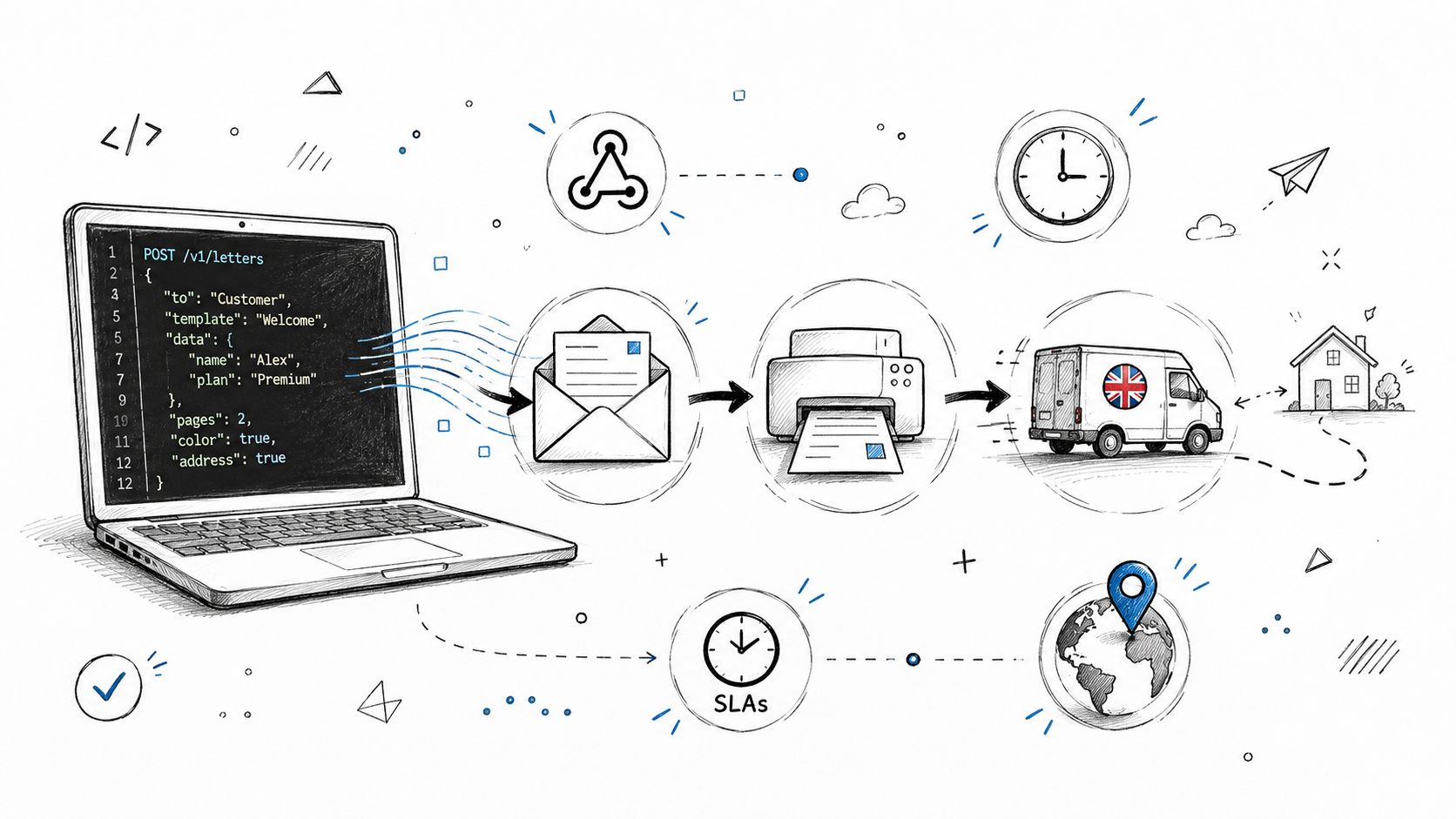
- print and mail API
Learn how a print and mail API works, what to look for in a UK-ready provider, and how to integrate ...
Read more
- product bundling strategy
Learn how a smart product bundling strategy boosts average order value while protecting your profit ...
Read more