Payment Processor Integration: A Practical End-to-End Guide
- payment processor integration
- Shopify payments
- payment gateway
- PCI compliance
- webhook reconciliation
Launched
August, 2026
You've probably got the same problem a lot of UK ecommerce teams inherit: a payment setup that “works” in the narrow technical sense but still leaks revenue at checkout, frustrates finance, and creates late-night support tickets. The processor was added because it was available, not because it matched how UK shoppers pay or how your ops team needs money to move afterwards.
That gap matters more now because UK payments are overwhelmingly digital. UK Finance reported that in 2023, 38.0 billion payments were made in the UK, 85% of them by card, while cash accounted for just 12% and contactless reached 38% of all UK payments UK Finance data. In practice, payment processor integration is no longer just an API choice, it's a checkout-conversion decision, a reconciliation decision, and a compliance decision all at once.
Why Most Payment Integrations Fail Before They Start
A merchant usually spots the problem in the least glamorous way possible. A founder opens the reports, sees buyers get as far as choosing a product, then disappear at payment. The first instinct is to blame the gateway, but the deeper issue is usually a stack built around what the processor exposes, not around how UK shoppers complete a purchase.
UK checkout behaviour is already heavily card-led, and the market has normalised contactless and other low-friction payment flows. That puts pressure on the integration to respect convenience first. If a flow adds friction where the customer expects speed, especially on mobile, the checkout starts losing before the authorisation request even leaves the browser.
The processor is also doing more than passing a payment to a bank. It shapes how fast refunds clear, how recurring billing behaves, how local payment methods appear, and how finance reconciles settlements across cards, wallets, and bank transfer rails. The UK's Faster Payments infrastructure, launched in May 2008, pushed the market towards near-real-time account-to-account settlement, which is why modern integrations cannot be treated like legacy batch systems anymore Bank of England context via Corefy.
Practical rule: if your checkout team only talks about endpoints, you are probably solving the wrong problem. The key question is which payment path gives a UK shopper the least reason to hesitate.
PCI scope has to be clear before the build starts. If the payment form is invasive or the UX is awkward, the merchant pays twice, once in lower conversion and again in operational drag. For a straight overview of scope boundaries, the PCI compliance requirements guide is worth having open before anyone signs off on architecture.
The Four Integration Models You Will Actually Choose Between
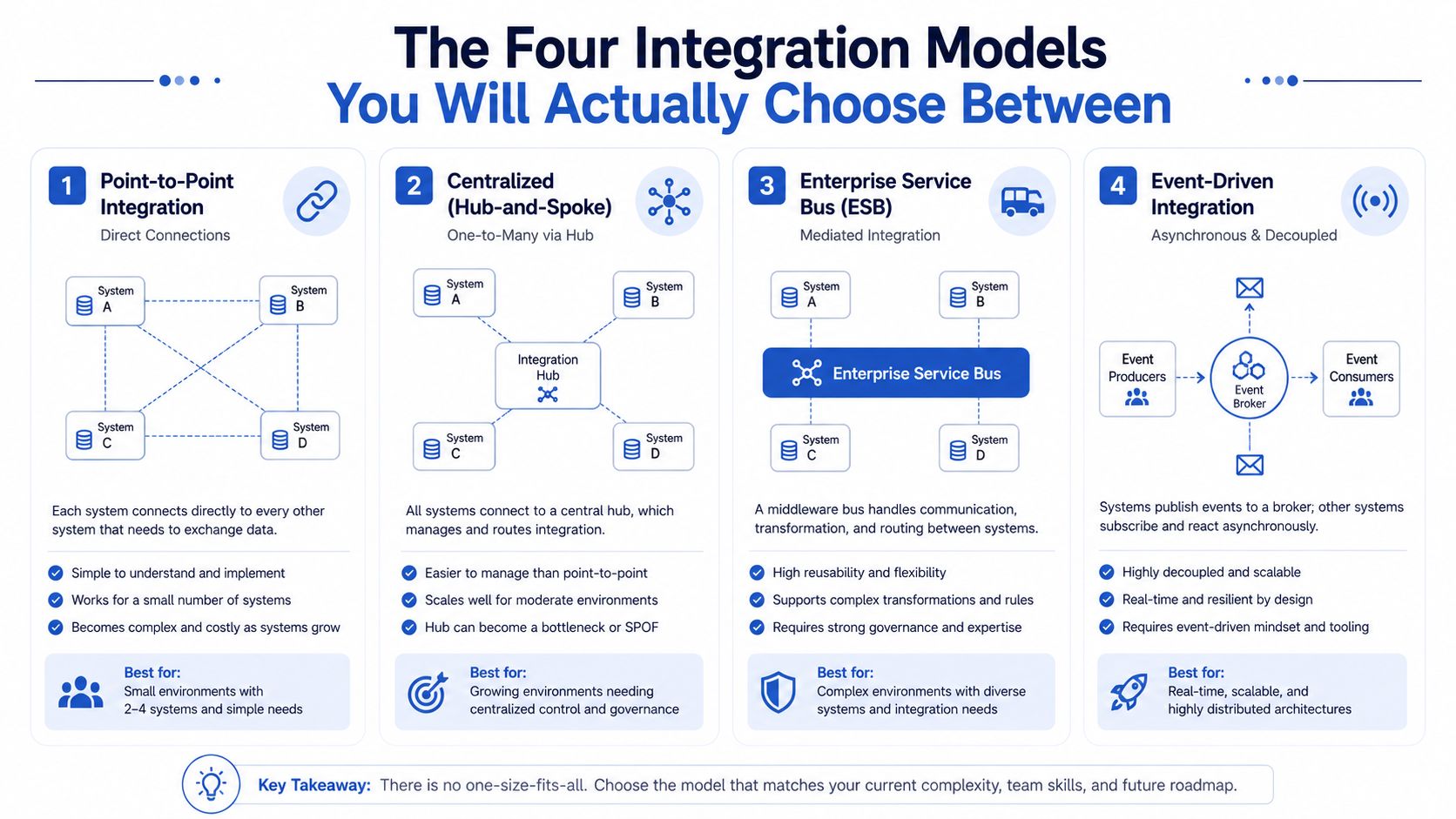
The four models that matter are not theoretical. They're the ones that determine whether a launch feels controlled or chaotic, and whether your checkout lives mostly in the processor's world or mostly in yours.
| Model | Time to launch | PCI scope | Conversion control | Best fit |
|---|---|---|---|---|
| Hosted payment page | Fastest | Lower | Limited | Lean teams, simple launches |
| Direct API or gateway-style integration | Slower | Higher, depending on flow | High | Custom storefronts and headless builds |
| SDK-driven embedded flow | Moderate | Medium | High | Teams that want more UX control without full custom payment UI |
| Platform extension or payment app | Fast for platform-native use cases | Usually lower inside the platform boundary | Moderate | Shopify-style deployments and app-led rollouts |
Hosted pages are the least controversial. The provider handles most of the sensitive flow, so you get a simpler start and less security overhead, but you surrender part of the checkout experience to somebody else. That can be acceptable for a small team, less so for a brand that already invests heavily in checkout optimisation.
Direct APIs are what many envision when they hear “integration”. They provide the greatest control, but they also place more responsibility on your team for callbacks, edge cases, and support. On a Shopify Plus rebuild or a headless storefront, this is frequently the correct exchange, but only if the team is prepared to manage the maintenance load.
SDK-driven embedded flows sit in the middle. They're useful when you want the checkout to feel native without building every payment component from scratch. Platform extensions and payment apps are the most sensible path when the commerce platform already provides a strong operational layer and you'd rather keep the payment work close to that ecosystem.
For a broader architecture lens, the API-first ecommerce architecture guide is useful because the payment decision rarely stands alone.
Picking a Provider With a Scorecard, Not a Vibes-Based Demo
A polished sales demo tells you the UI works. It doesn't tell you whether partial refunds behave properly, whether statement descriptors are editable enough for your support team, or whether a webhook arrives when your ERP expects it. Those are the details that decide whether the integration becomes invisible infrastructure or a permanent source of noise.
What to score before you sign
Start with the boring operational criteria, because they're the ones that survive launch day:
- Local payment coverage: Does the provider support the methods your UK customers use, not just the ones that look good on a slide deck?
- SCA handling: Can it support sensible Strong Customer Authentication flows without turning every basket into a support case?
- Refund behaviour: Do full refunds, partial refunds, and failed refunds behave cleanly across your order stack?
- Settlement and currency handling: Can finance see what was presented to the shopper versus what was settled to the bank account?
- Webhook reliability: Are callback events predictable enough to drive your order and ledger updates?
- Support quality: When something breaks at 11pm before a promotion, who answers?
A provider with brilliant pricing and weak callbacks is still expensive. Finance will end up reconciling the mess manually, and support will inherit the fallout.
The weighting changes by business stage. A Shopify startup may care more about speed to launch and native app support. A Shopify Plus brand usually needs stronger controls around reconciliation, subscriptions, and multi-system reporting, because the payment stack will touch more departments and more order states.
How to turn the shortlist into a decision
Give each provider a score against the same checklist, then compare totals only after the team has discussed the trade-offs. The point isn't to create false precision. It's to stop the loudest voice in the room from selecting a processor because the demo looked slick.
If you're choosing between two close options, ask one final question, how painful would a switch be after webhooks, subscriptions, and finance processes are already wired in? Once the answer becomes “very”, the choice deserves a week of disciplined review, not an afternoon of enthusiasm.
Building the Integration Step by Step
The cleanest launches start with environment boundaries. Separate sandbox from production, keep API credentials out of shared notes, and make sure the team knows exactly which system is authoritative for each payment state. That sounds obvious until the first live order gets tested against a sandbox key and the finance team can't tell why the ledger didn't move.
Build the transaction flow around server-side truth
Use API transaction flows and callback handling from the start, then create a dedicated callback endpoint that your engineering team monitors. Browser redirects are useful for presentation, but they're not reliable enough to be the source of truth for order state. Server-side status plus webhooks is what keeps the commerce system honest when a shopper closes the tab, refreshes, or comes back later from email.
The technical pattern is straightforward, create credentials, wire the callback endpoint, test approvals and declines in sandbox, then only move to production keys once the full state machine behaves predictably payment gateway integration process guide. That matters because the most common go-live failures are missed callbacks, broken refund handling, and sync delays in connected accounting or ERP tools.
Tokenisation, scope and the SCA layer
Tokenisation reduces what your systems need to touch directly. A hosted component usually keeps more sensitive card handling out of your codebase than a fully custom payment form does, while a deeper SDK or direct integration usually gives you more control at the cost of more responsibility. The exact PCI boundary depends on the architecture, so the team should agree on that line before implementation starts.
Strong Customer Authentication adds another layer. The checkout can't just “send to processor and hope.” It needs a plan for challenges, exemptions, and fallback handling when a step-up is triggered. If that logic is bolted on late, support tickets go up because the customer thinks payment failed when the actual problem was a poorly handled auth step.
The retry and idempotency details that save you later
Idempotency keys, duplicate event guards, and careful retry rules are not optional. Without them, a transient network error can look like a failed payment to the frontend and a successful charge to the processor, which is how duplicate orders begin. That's also where niche protocols like the X402 payment protocol explained can be useful reading, not because every merchant needs micropayments, but because it highlights how clean payment state handling depends on explicit transaction semantics.
Keep the implementation dull and deterministic. Payment code should not be clever.
Subscriptions, Multi-Currency and Reconciliation as Daily Operations
The launch date is easy to celebrate. The third month is where payment systems start showing whether they were built as operations infrastructure or as a one-time project.
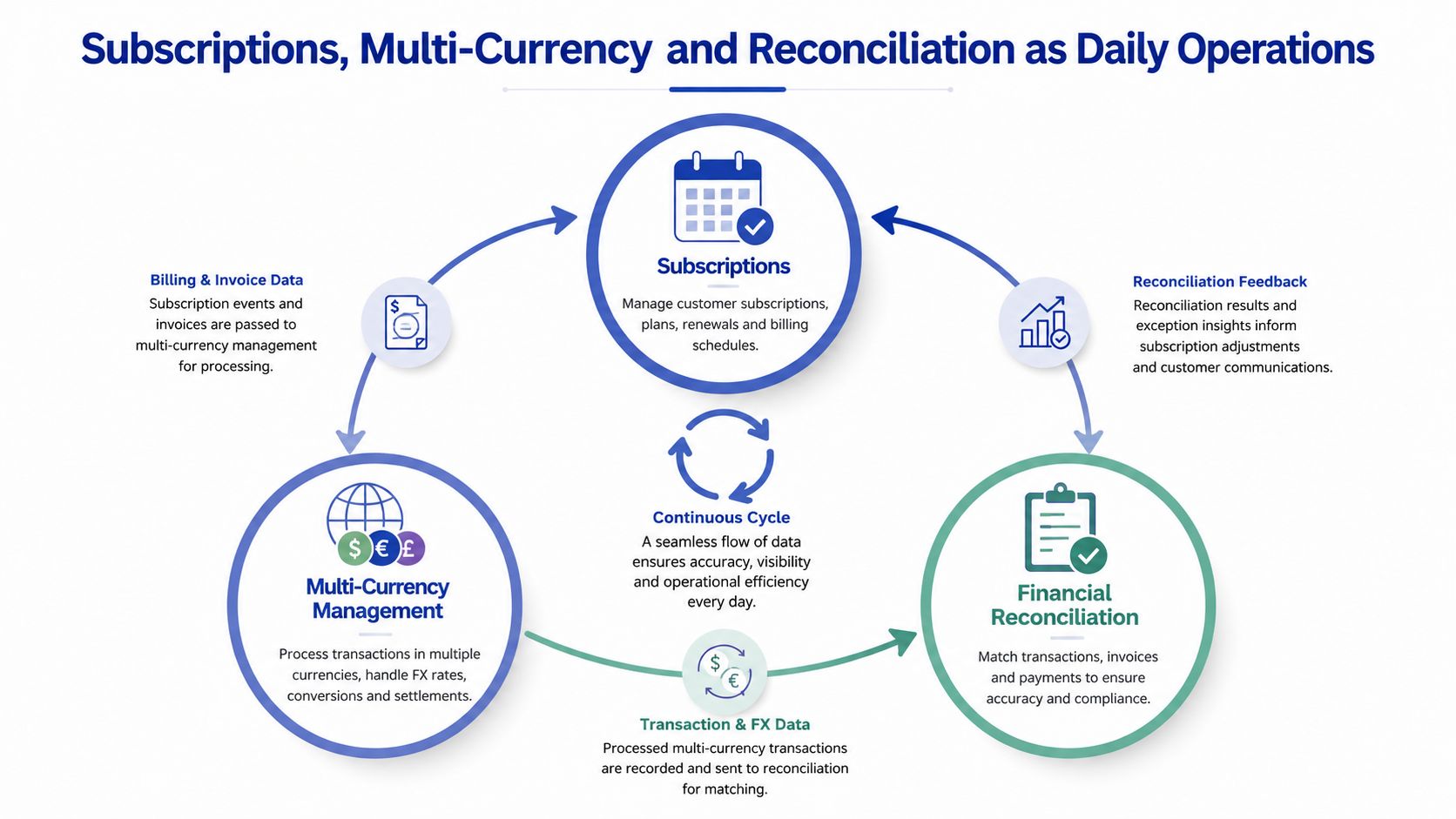
Subscriptions need dunning discipline
Recurring billing stays controlled only when failure handling is deliberate. Cards expire, payment methods lapse, and customers cancel in ways your scheduler needs to respect immediately. If renewal logic is too rigid, the checkout looks fine on day one but starts leaking revenue as soon as the renewal cycle meets its first real-world problem.
For merchants running subscriptions in Shopify, the operating model needs to match the business model, not the processor's default assumptions. The Shopify subscription store setup guide is a useful reference point because subscription logic should be mapped to customer lifecycle, not just to a billing API.
Multi-currency means three different truths
Presentment currency, settlement currency, and ERP currency are not the same thing. Shoppers care about what they see in checkout, finance cares about what lands in the bank, and the ERP cares about how the books are represented internally. If those three layers are not aligned, month-end close becomes a detective exercise.
For teams that sell across borders, the guide to exchange rates for businesses is worth reading alongside your processor documentation, because FX timing can subtly change what the finance team thinks the business earned. Shopify Markets can help present localised pricing, but the processor and the ERP still have to agree on the final accounting truth.
Reconciliation is the thing that tells you whether the integration is healthy
Every transaction should reconcile to the penny across the gateway, the bank statement, and the order system. That discipline matters even more in the UK because Faster Payments changed how quickly funds move and pushed the market away from batch-style assumptions. Refunds, payouts and collections no longer fit neatly into old delay-based workflows.
A practical reconciliation setup uses webhook-driven ledger entries, daily settlement files, and a daily mismatch report. The mismatch report is often where fraud, partial refund drift, duplicate events, and missed state transitions show up first. Teams that treat reconciliation as a daily operation usually catch problems early. Teams that treat it as a month-end activity usually find out when the damage is already spread across several systems.
Testing, Rollout and Monitoring Without Surprises
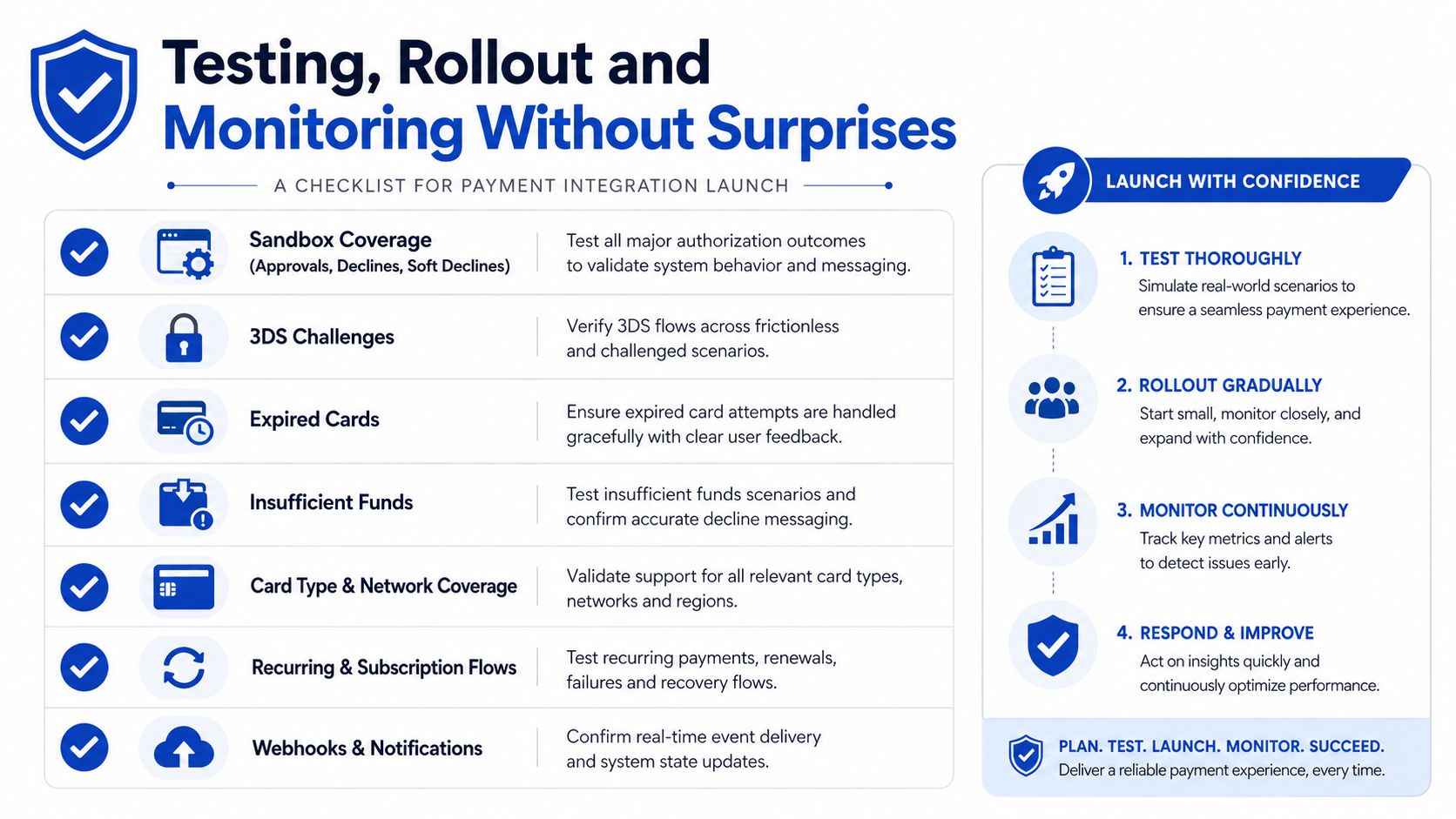
Good payment launches are engineered to be boring. The team should be able to answer two questions before cutover, what happens when payment fails in every expected way, and who notices first when something unusual lands in production?
Test the ugly paths, not just the happy path
Sandbox work should include approvals, declines, soft declines, 3DS challenges, expired cards, insufficient funds, and asynchronous webhooks. That combination catches most of the mistakes that look minor in development and major in production. If the only thing that's been proven is a successful card authorisation, the test plan isn't finished.
A parallel-run pilot is the safest rollout pattern. Route about 10% of transactions through the new processor while the old one stays live, then watch reconciliation accuracy, refund success, settlement speed, fees, and uptime during the pilot integrating payment processors guide. That approach gives you real traffic without forcing a full cutover on day one.
Watch the metrics that tell you where the break is
The first week after launch should be tightly monitored. Track settlement time against your baseline, authorisation rate, refund success rate, webhook delivery latency, dispute volume, and checkout abandonment by step. If one metric moves while the others stay stable, it often points to a narrow failure like a callback issue or an authentication path that confuses shoppers.
Fraud controls need the same practical treatment. Velocity rules, AVS signals, and 3DS outcomes should be visible to the team, but the fraud layer shouldn't punish good customers by default. Shopify's own fraud analysis can be useful, and so can a processor's risk module, as long as the rules are tuned for the checkout you run.
The cleanest rollout is the one that lets support see the problem before customers do.
Common Pitfalls and Your Operator's Playbook
The same mistakes keep showing up because teams underestimate how many systems a payment flow touches. One missed webhook can distort the order system. One bad refund path can confuse support. One currency mismatch can make finance doubt the whole integration.
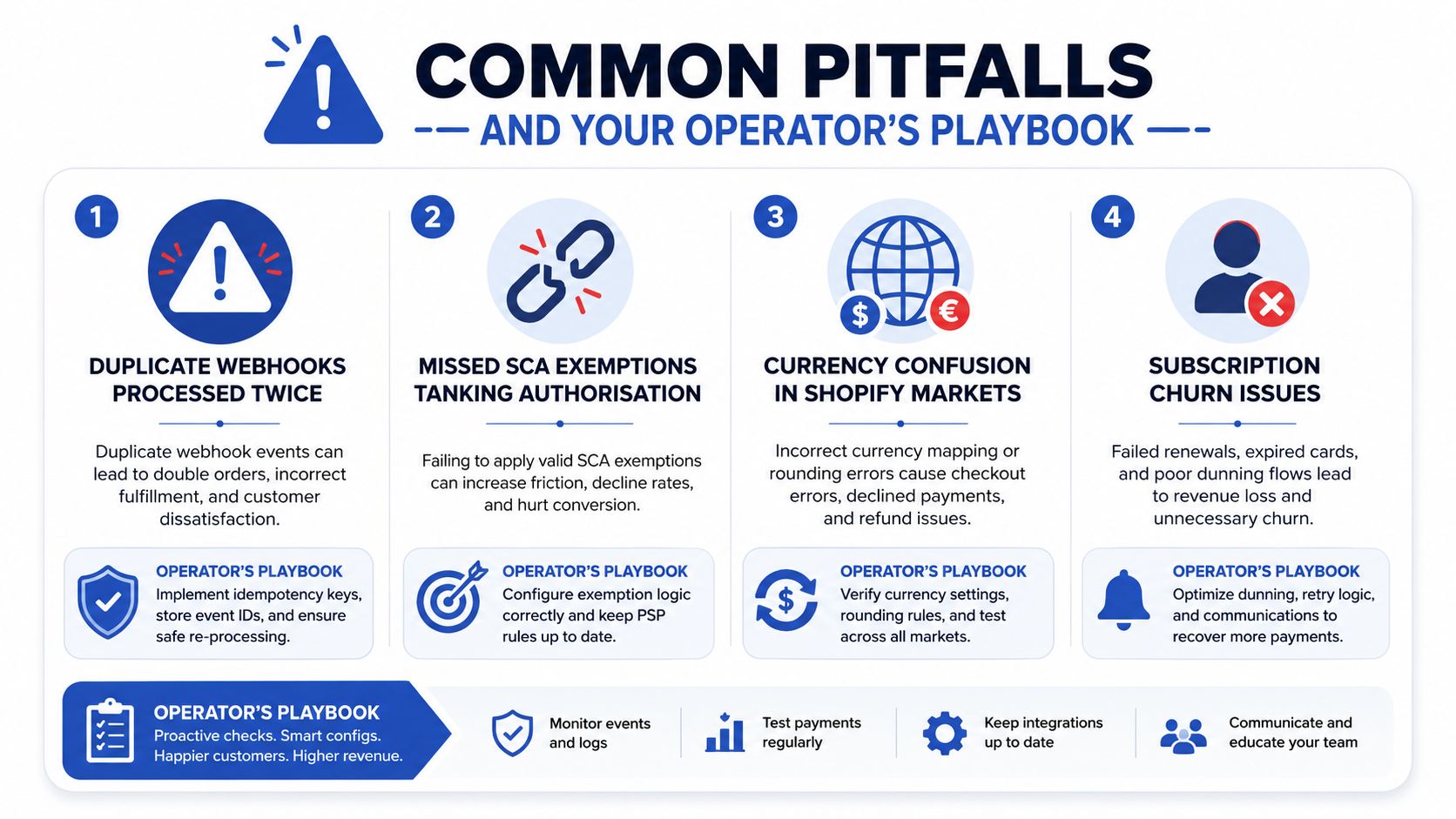
The pitfalls that deserve immediate attention
- Duplicate webhooks processed twice: Treat every incoming payment event as potentially duplicated until your idempotency logic proves otherwise.
- Missed SCA exemptions tanking authorisation: Design the flow so the customer doesn't feel punished for a backend authentication decision.
- Currency confusion in Shopify Markets: Make sure presentment, settlement and ledger currency each have an owner.
- Subscription renewals firing on cancelled cards: Dunning needs real operational ownership, not just a billing plugin.
If you need a single remediation rule for all four, use server-side state, not browser assumptions, and make the finance team part of the rollout plan from the start. That's the difference between a processor integration that scales and one that just survives the demo.
The one-page operator's playbook
- Choose the model first. Decide whether you need hosted, embedded, direct API, or platform-native integration before evaluating vendors.
- Score providers with operations in mind. Weigh SCA, refunds, webhooks, support, and reconciliation, not only headline fees.
- Build around server-side truth. Treat webhooks and callback endpoints as core infrastructure, not optional extras.
- Wire reconciliation on day one. Don't defer finance controls until after launch.
- Run a parallel pilot. Keep the old processor live while a slice of traffic proves the new path.
- Monitor the first-week metrics. Watch settlement, auths, refunds, webhook latency, disputes, and abandonment.
- Document rollback before go-live. If something misbehaves, the team should know exactly how to reverse course.
The best payment processor integration isn't the one with the most features. It's the one that matches your shoppers' behaviour, keeps finance sane, and gives engineering a system they don't have to babysit.
If you want a Shopify Plus team that treats payment processor integration as a conversion, operations, and implementation problem at the same time, visit Grumspot. They build and audit ecommerce systems with the same focus on checkout flow, reconciliation discipline, and clean technical execution that keeps launches from becoming support headaches.
Let's build something together
If you like what you saw, let's jump on a quick call and discuss your project

Related posts
Check out some similar posts.