10 Churn Reduction Strategies for Ecommerce in 2026
- churn reduction strategies
- customer retention
- ecommerce churn
- shopify churn
- reduce churn rate
Launched
July, 2026
Customer churn rarely looks dramatic at first. It shows up as fewer second orders, more paused subscriptions, slower repeat purchase cycles, and support tickets that never quite get resolved. Then margin starts tightening, forecasting gets messy, and acquisition has to work harder just to keep revenue flat.
For UK ecommerce brands, the retention problem is measurable and urgent. Predictive analytics has been shown to reduce customer churn by 15 to 25% when machine learning is used to identify high-risk customers early and trigger pre-emptive outreach, according to Phoenix Strategy Group's analysis of predictive analytics and churn. That matters because churn is rarely just a marketing issue. In practice, it often sits across UX, support, merchandising, data, and the technical plumbing underneath the storefront.
Too many churn reduction strategies stay stuck at the theory level. “Personalise more.” “Improve loyalty.” “Send win-back emails.” Fine advice, but incomplete. A Shopify merchant doesn't reduce churn with slogans. They reduce it by fixing broken ERP syncs, shortening support loops, cleaning up checkout friction, segmenting customer behaviour properly, and building post-purchase systems that run.
The brands that keep customers longest usually do two things well. They remove friction fast, and they act on signals before a customer disappears.
Below is a practical playbook built for implementation, not inspiration.
1. Personalised Customer Experience & Dynamic Storefronts
The fastest way to make a store feel irrelevant is to show the same products, messages, and offers to everyone.
Personalisation works best when it starts simple. A Shopify Plus merchant doesn't need a complex AI stack on day one. Start with first-party behaviour. What categories did the customer browse? What did they buy before? Did they arrive from email, paid social, or direct? That alone is enough to change homepage modules, collection sorting, product recommendations, and email flows.
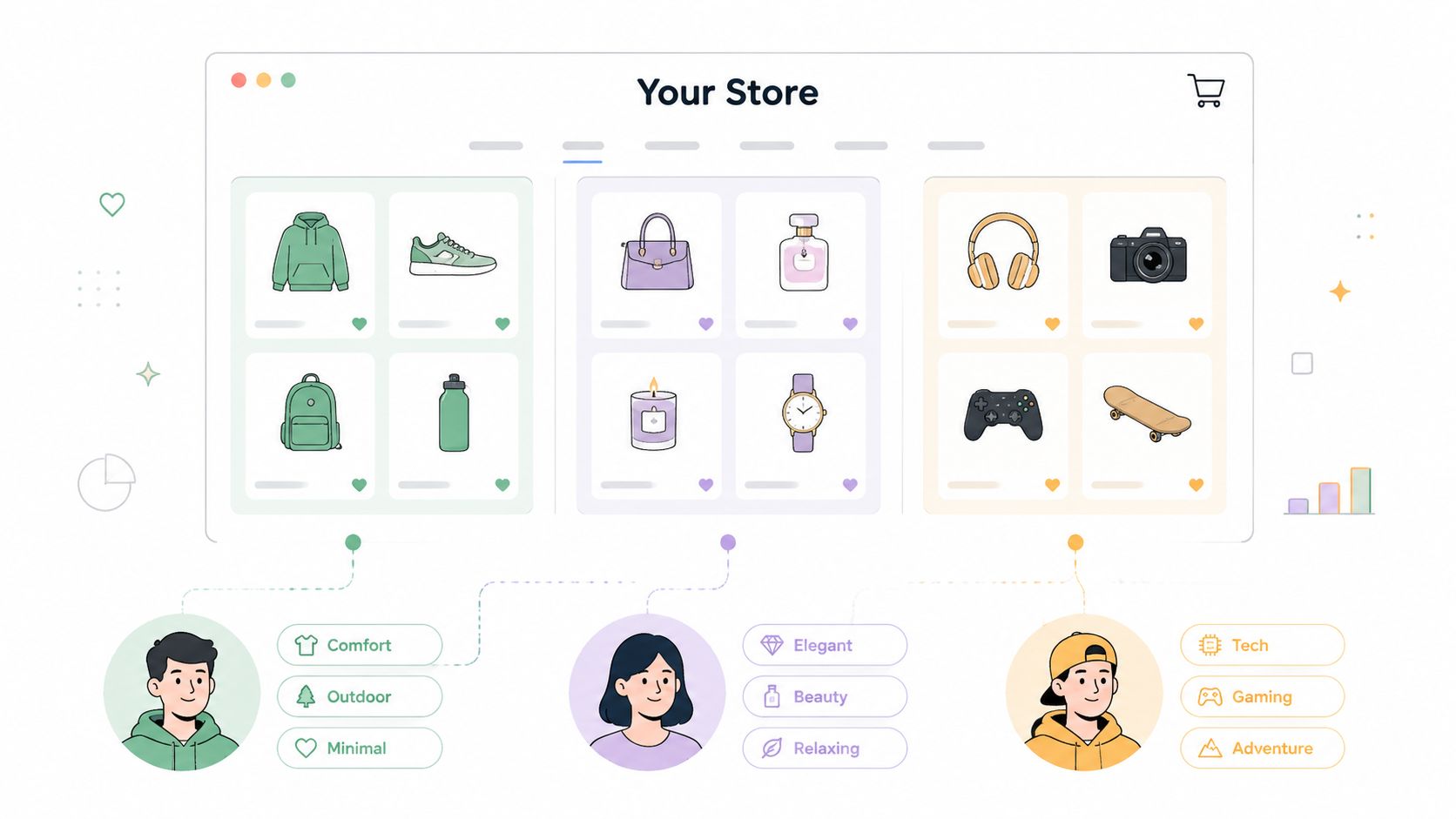
A fashion merchant, for example, can show new arrivals to frequent buyers, entry bundles to first-time visitors, and replenishment-led recommendations to past customers. Klaviyo segments paired with Shopify customer tags can handle a lot of this without custom engineering.
Where merchants usually get it wrong
Many stores jump straight to recommendation widgets and ignore the surrounding experience. If the mobile navigation is clumsy, the search results are poor, or collection filters reset unexpectedly, a personalised carousel won't save retention.
A stronger approach looks like this:
- Segment by intent first: Separate first-time visitors, repeat buyers, high-AOV customers, and lapsed customers before adding more complexity.
- Match content to lifecycle stage: New customers need reassurance and clarity. Returning customers need speed and relevance.
- Keep mobile parity: If your desktop experience feels personalized but mobile feels generic, retention will leak through the device most customers predominantly use.
- Test changes in isolation: Adjust one recommendation rule, banner message, or collection order at a time so you know what changed behaviour.
Practical rule: Personalisation should reduce decisions, not create noise.
Nike and Sephora are useful reference points because they personalise around context, not just product similarity. On Shopify, that often means dynamic merchandising, customized bundles, replenishment reminders, and smarter account-area content. The payoff isn't just a higher conversion on one visit. It's a store that feels easier to come back to.
2. Proactive Customer Support & Omnichannel Communication
Poor support rarely shows up as a single dramatic failure. On Shopify stores, it usually starts with small operational misses. A delayed order with no update. A subscription payment that fails without a recovery message. A return request that sits in a queue while the customer opens chat, sends an email, and posts on Instagram.
That is why support has to be built as a retention system, not just a help desk. The merchants that reduce churn well connect service data, order data, and communication triggers so issues are handled before the customer starts questioning the relationship. For a practical retention framework, this customer retention guide for online businesses is a useful reference point, but execution is what changes revenue.
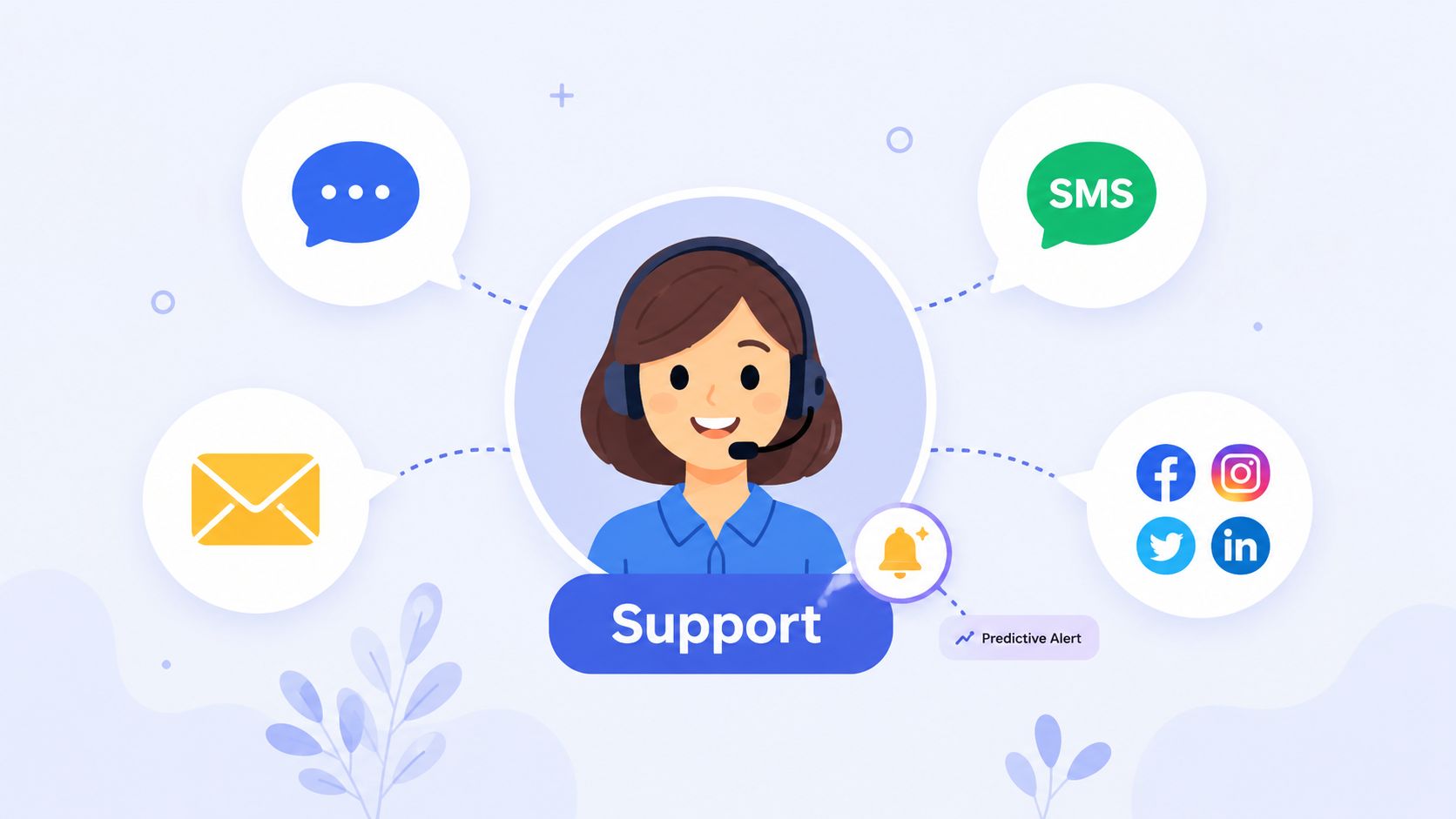
A workable stack usually includes Gorgias or Zendesk for tickets, Shopify Flow for event-based automations, and SMS or email triggers tied to fulfilment, payment failures, and returns. Chatbots can handle order-status volume, but they should hand off quickly when the issue involves account access, damaged items, or policy exceptions. That trade-off matters. Automation cuts cost on repetitive tickets, but overusing it during high-friction moments increases repeat contacts and refund requests.
Speed matters, but resolution matters more
Closing the feedback loop quickly helps retention, especially when the brand follows up on negative feedback with a clear action and owner. SurveyMonkey's feedback management guidance is useful here. In ecommerce, that means acting fast on complaints about shipping confusion, product quality, returns, and billing errors instead of just logging them.
The operational question is simple. Can your team see the full customer story in one screen and fix the issue in one interaction?
If the answer is no, churn risk goes up.
Use these checkpoints to tighten execution:
- Split simple tickets from exception cases: Order tracking, delivery windows, and return-policy questions can be automated. Damaged orders, missing parcels, and account disputes need an agent fast.
- Give agents full context: Pull in Shopify order history, subscription status, loyalty data, and prior conversations so support does not ask the customer to repeat everything.
- Write macros in plain language: Policy accuracy matters, but customers respond better to direct answers, next steps, and clear timelines.
- Track repeat-contact reasons by theme: If "Where is my order?" keeps rising, the problem may be fulfilment messaging. If sizing complaints rise, the problem may sit on PDPs, not in support.
- Route social and SMS into the same queue: Customers do not care which team owns the channel. They care whether someone solves the problem.
First contact resolution is one of the clearest indicators to watch. Hosted Telecommunications' FCR insights apply directly to ecommerce support teams. A fast first reply looks good on a dashboard, but it does little for retention if the customer needs two more follow-ups to get a refund, replacement, or shipping answer.
This is also where support connects directly to lifetime value. Stores that treat support as a revenue function keep more customers, recover more at-risk orders, and protect margin better than stores that treat it as overhead. Netco Design's customer value strategies reinforce that point.
Good support solves tickets. Proactive omnichannel support removes the reasons customers leave in the first place.
3. Subscription & Retention Programmes (Loyalty Rewards)
Loyalty programmes fail when they feel like accounting systems dressed up as rewards.
Customers stay when the programme gives them a reason to keep choosing you. That could be early access, replenishment convenience, exclusive bundles, earned credit, members-only support, or product drops that fit how they already shop. Points alone won't do much if the core experience is forgettable.
For Shopify merchants, the strongest retention programmes usually combine a few mechanics. Recharge or Skio can support subscriptions. Loyalty tools can handle points and tiers. Klaviyo can trigger lifecycle messaging around status, rewards, and next-best purchase prompts. The important part is that the system feels visible. If customers don't understand the benefit in seconds, they ignore it.
Build for habit, not novelty
A good programme creates repeat behaviour. A weak one creates occasional coupon redemptions.
Use this lens when designing it:
- Make benefits immediate: Give the customer something useful on the second order, not only after a long accumulation cycle.
- Reward profitable behaviour: Replenishment, bundles, referrals, and subscription tenure are often better triggers than blanket discounting.
- Show status clearly: Customers should see what tier they're in, what benefits they gain next, and why it matters.
- Connect programme data to campaigns: Segment by tier, subscription age, and reward usage so retention messaging feels earned.
For merchants shaping longer-term customer value, Grumspot's guide to customer retention tips for growing an online business is a useful practical reference. So is Netco Design's breakdown of customer value strategies, especially if you're weighing incentives against margin protection.
Sephora's tiering works because the customer can feel progression. Amazon Prime works because benefits become part of routine behaviour. That's the standard to aim for. If the programme doesn't change how people buy, it won't change churn.
4. Win-Back & Re-engagement Campaigns
Some customers leave because they're done. Many leave because nothing reminded them to come back.
That distinction matters. A good win-back campaign doesn't blast a discount to everyone who's been quiet. It identifies what kind of customer went inactive, what they used to buy, and what likely interrupted the relationship. A lapsed skincare subscriber needs a different message from a seasonal fashion customer or a high-value buyer who had a poor delivery experience.
The first question is timing. “Lapsed” should reflect your buying cycle, not an arbitrary calendar rule. If a customer usually orders coffee every few weeks, waiting months to re-engage is too late. If they buy furniture, you need a different window and a different message entirely.
What actually gets attention
The strongest re-engagement sequences usually combine relevance with a clear reason to act. That could be a restock, a new collection aligned with previous purchases, an improvement to a past complaint, or a limited return offer.
A practical structure often looks like this:
- Email one: Acknowledge the gap and lead with relevance, not discounting.
- Email two: Show products, bundles, or updates based on past purchase history.
- Email three: Add urgency with a time-bound incentive if needed.
- Paid retargeting or SMS: Reserve this for higher-value segments or subscription recovery flows.
Don't start with the biggest discount. Start with the strongest reason to care.
Netflix-style “we miss you” messaging works because it reminds the customer what they're missing. On Shopify, that might be a refill reminder, a product line expansion, a routine-builder bundle, or social proof around a newer version of something they bought before. If support notes or survey data exist, use them. Re-engagement works far better when the customer feels recognised rather than recycled through a generic automation.
5. Conversion Rate Optimisation (CRO) & Friction Reduction
A lot of churn starts before the second purchase. The customer's first experience was harder than it should have been.
Merchants often treat CRO as an acquisition discipline, but it's one of the most practical churn reduction strategies because friction changes how customers remember the brand. If the product page was confusing, checkout was clumsy, shipping information was vague, and account login was annoying, you haven't just lost a conversion edge. You've damaged the likelihood of return.
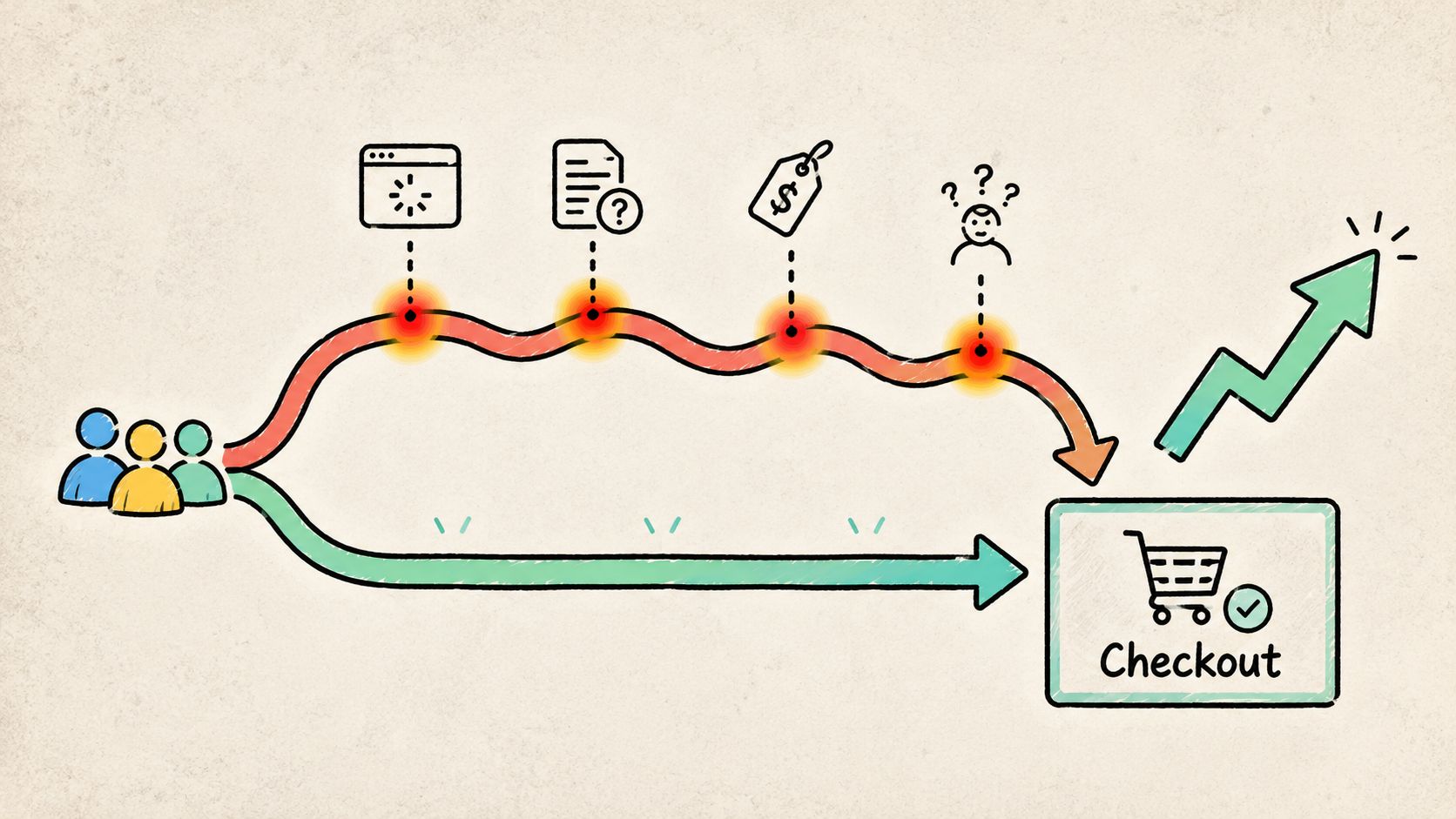
Practitioners need to get specific. Look at search behaviour, product page exits, checkout abandonment by device, returns-related complaints, and session recordings. Then fix the points where intent is already present but the experience gets in the way.
Retention hides in usability
Common retention leaks on Shopify Plus include variant selectors that break on mobile, poor subscription UX, weak account areas, hidden delivery costs, and post-purchase flows that go silent after order confirmation.
Prioritise work in this order:
- Checkout clarity: Reduce surprises around shipping, taxes, delivery timing, and payment options.
- Product comprehension: Use better media, size guidance, ingredient details, FAQs, and comparison content.
- Navigation and search: Returning shoppers should reach known products fast.
- Post-purchase UX: Confirmation pages, tracking pages, and self-serve account tools affect whether customers trust the next order.
Grumspot's article on conversion rate optimisation and UX is especially relevant here because retention and conversion usually share the same friction points.
Amazon remains the reference not because it looks elegant, but because it removes hesitation. That's the standard. A polished theme doesn't reduce churn if key journeys still feel brittle.
6. Competitive Pricing Strategy & Dynamic Offers
Price causes some churn. Bad pricing strategy causes much more.
Too many merchants react to churn by discounting harder. That approach can recover some short-term demand, but it often attracts low-commitment customers and trains existing ones to wait. Worse, it hides the underlying problem. Sometimes the issue isn't that the price is too high. It's that the value is unclear, bundles are weak, replenishment economics don't make sense, or a competitor structured the offer better.
A stronger pricing strategy starts with segmentation. High-frequency buyers, first-time customers, subscribers, and premium product customers shouldn't all see the same offer logic. Returning customers may respond better to exclusive bundles or loyalty pricing than a sitewide code.
Discount with intent
Merchants usually get better retention outcomes when they use targeted offers tied to customer context.
Consider these approaches:
- Bundle value instead of cutting margin: Increase perceived value with complementary products rather than constant markdowns.
- Protect premium lines: Not every category should be promotional. Some products sell better when the brand holds its pricing position.
- Use retention offers selectively: Save stronger offers for cancellation flows, subscription recovery, or valuable at-risk cohorts.
- Explain the value difference: If your product costs more, prove why through quality, convenience, formulation, service, or warranty.
Luxury brands tend to hold pricing to preserve positioning. Amazon changes offers dynamically because convenience and comparison are core to the model. Most Shopify brands sit somewhere in between. They need flexibility without becoming discount-dependent.
For a wider view on how offer structure influences conversion perception, PinDrop's pricing page is a useful example of how pricing presentation shapes decision-making. The lesson is simple. Retention improves when pricing feels fair, legible, and connected to real value.
7. Onboarding Excellence & Customer Education
A customer who doesn't reach value quickly is already halfway out the door.
This is obvious in subscriptions, replenishment brands, and any product that requires setup, routine-building, or usage guidance. If the first delivery arrives and the customer has to guess what to do next, retention drops long before they formally cancel. For Shopify merchants, onboarding isn't just for software. It applies to skincare regimens, supplement schedules, product assembly, refill logic, membership benefits, and account setup.
The first post-purchase experience should answer practical questions fast. What arrived? How do I use it? When should I reorder? What if I need help? Done well, onboarding reduces buyer's remorse and increases confidence.
To see how a guided onboarding flow can simplify understanding, this short video is a helpful reference:
Make the first win obvious
Merchants often overload onboarding emails with brand story and under-deliver on utility. Customers usually want one thing first. Confirmation that they made the right choice.
Practical onboarding assets include:
- Usage sequences: Timed emails or SMS based on when the product is likely to arrive and be used.
- Role-based guidance: For B2B or multi-user setups, admins and end users need different instructions.
- Self-serve answers: Help content embedded into account areas, product pages, and order status pages.
- Milestone prompts: Messages tied to first use, refill timing, reorder windows, or feature activation.
Slack is a classic example because users meet value inside the setup process. Ecommerce brands should apply the same principle. Don't just welcome the customer. Help them succeed with the purchase they already made.
8. Net Promoter Score (NPS) & Feedback-Driven Improvements
A customer who leaves a low score has already pointed your team toward a revenue leak.
That is why NPS works best as an operational tool, not a reporting metric. The score matters less than the reason behind it and the action that follows. For Shopify merchants, that usually means turning free-text feedback into tagged issues, then routing those issues to the team that can fix them. Support can handle service recovery. Operations may need to address delivery gaps. Development may need to fix account bugs, subscription logic, or checkout friction. Merchandising may need to correct sizing, bundles, or product expectations.
Used properly, feedback gives you faster signal than waiting for repeat purchase rate or subscription churn to drop. A cluster of complaints about delayed shipping updates, failed rebills, confusing returns, or poor mobile UX often appears before the revenue impact shows up in cohort reporting.
Close the loop fast
Speed matters here. A slow follow-up turns a useful signal into a missed save. The practical goal is simple. Identify detractors quickly, review the verbatim comments, and trigger the right response path. Some cases need a personal outreach from support. Others need a Jira ticket, a Shopify Flow automation, or a fix in the apps and integrations behind the storefront.
Integration often gets overlooked. If your store, helpdesk, subscription platform, CRM, ERP, and fulfilment tools are disconnected, feedback keeps naming the symptom while the root cause stays live. I see this often with Shopify Plus builds where customers complain about one visible issue, but the underlying failure sits in event sync, order tagging, inventory logic, or account-state mismatches between systems.
For teams building a more disciplined process, this guide to measuring customer satisfaction is a useful reference.
If detractors keep mentioning the same issue, stop collecting more comments and fix the underlying workflow.
A workable cadence is straightforward. Send the survey after the experience is complete enough to judge. Review negative responses every day. Tag themes consistently. Then show customers what changed. That last step matters more than many teams expect, because visible improvements increase trust and give future respondents a reason to believe the feedback request is not performative.
9. Predictive Analytics & Early Churn Warning Systems
Retention teams usually lose the customer before they record the churn.
According to Stripe's churn reduction resource, machine learning models used to identify high-risk customers have shown a 25 to 30% improvement in retention accuracy compared with traditional RFM segmentation alone, and 68% of top-performing brands reportedly use ML-based churn prediction models as part of core CRO strategy. For Shopify merchants, that matters because churn rarely starts with a cancellation event. It starts with smaller operational signals that show up days or weeks earlier.
The practical job is to turn those signals into actions your team can run. On Shopify, the pattern is often clear. A customer buys less often, stops opening replenishment emails, raises more support tickets, skips a subscription cycle, starts returning adjacent products, or shifts from full-price bundles to single low-commitment items. If those events sit in Klaviyo, Gorgias, Recharge, Shopify, and your ERP without a shared customer view, the risk score stays theoretical and no one owns the save.
Start with a system your team can maintain.
A lot of brands do not need a custom model on day one. They need a usable scoring framework, clean event tracking, and prebuilt responses inside the tools they already use. RFM is still useful here, especially when paired with suppression rules, product-level churn indicators, and account tags that tell support or CRM who needs intervention first. Then, once the workflow is stable, add machine learning to improve prioritisation rather than to compensate for bad data or unclear ownership.
The biggest implementation mistake I see is model-first retention. Teams spend months scoring accounts, then realise they have no agreed playbook for what happens when a customer crosses the risk threshold.
Use the signal to trigger a specific workflow:
- Behavioural decline: Send replenishment reminders, reorder prompts, or category-specific recommendations based on prior purchase intervals.
- Service-related risk: Route the account to support with full order history, ticket context, and recent fulfilment issues visible in one view.
- Subscription instability: Trigger failed-payment recovery, pause-save options, and offer logic that protects margin instead of defaulting to discounts.
- High-value account risk: Escalate to a human quickly, with personalized outreach tied to product usage, order cadence, and lifetime value.
There is a real trade-off here. More scoring complexity can improve prioritisation, but it also increases setup time, dependency on clean integrations, and the chance your team stops trusting the output. In practice, a simpler warning system tied to Shopify Flow, CRM automation, support routing, and merchandising rules will outperform an advanced model that never reaches execution.
The standard to aim for is straightforward. Detect risk early, assign an owner, trigger the right intervention, and measure whether the save rate improves by segment. That is how predictive analytics becomes a revenue tool instead of another dashboard.
10. Strategic Partnerships & Cross-Selling Ecosystems
22% of subscribers lost within 90 days because of broken ERP and CRM integrations is not a partnership problem. It is an execution problem, as highlighted by UK Data Services on predictive analytics and customer churn.
Partnerships reduce churn when they make the customer journey more useful and harder to replace. For Shopify Plus merchants, that usually means one of three things. A partner adds recurring utility, expands the product ecosystem, or connects the store more tightly to the customer's existing workflow. A supplement brand can pair products with a fitness app. A beauty merchant can connect replenishment, regimen builders, and advisor-led recommendations. A B2B store can tie ordering into procurement, ERP, and CRM processes so repeat purchasing becomes faster and more reliable.
The commercial upside is real, but the operational trade-off is just as real. Every partner, bundle, app connection, and shared promotion adds dependency across data sync, fulfilment logic, eligibility rules, reporting, and customer support. If those systems fall out of sync, retention drops for reasons that have nothing to do with pricing or product quality.
That is why strong partnership strategy on Shopify Plus starts in operations, not campaign planning.
Use a simple evaluation framework before launching anything:
- Value fit: The partner should solve a related customer problem and make the core product more useful.
- Integration fit: Shopify data, inventory status, subscription logic, customer tags, and post-purchase triggers need to pass cleanly between systems.
- Margin fit: Cross-sells and bundled offers should raise lifetime value without creating discount dependency or fulfilment complexity that wipes out profit.
- Support fit: Your team needs clear ownership when an order, reward, subscription, or referral flow breaks.
- Placement fit: Cross-sells usually work best after purchase, inside the account area, in replenishment reminders, or within lifecycle email. They often perform worse when forced into the cart.
I have seen merchants get this wrong by treating partnerships as a media channel. They launch a co-branded offer, push traffic to a landing page, and call it retention. Real retention comes from persistent utility. If a customer gets easier reordering, better outcomes from connected products, or fewer steps inside their buying workflow, the partnership has a reason to keep working month after month.
The technical layer matters more than the pitch. On Shopify Plus, this often means using Shopify Flow for partner-specific triggers, configuring customer tags and metafields for offer eligibility, validating subscription and bundle logic across apps, and testing fulfilment exceptions before launch. If a loyalty reward can be redeemed in one system but not recognised in checkout, the cross-sell has already failed.
Apple, Shopify, and Adobe benefit from ecosystem effects because their integrations stay useful over time. For a merchant, the equivalent is smaller but still valuable. A subscription tied to loyalty status, a bundle tied to replenishment timing, or a B2B reorder experience connected cleanly to backend systems can all raise switching costs. The rule is simple. Build partnerships that add recurring utility, then make the technical experience reliable enough to support it.
Top 10 Churn-Reduction Strategies Comparison
| Strategy | 🔄 Implementation complexity | ⚡ Resource requirements | 📊 Expected outcomes | 💡 Ideal use cases | ⭐ Key advantages |
|---|---|---|---|---|---|
| Personalised Customer Experience & Dynamic Storefronts | High, data infra, AI models, ongoing optimization | High, engineers, analytics, CRM & content ops | 📊 Increased AOV & conversion; stronger LTV | Mid-to-large ecommerce with rich customer data | ⭐ Highly relevant experiences; scalable personalization |
| Proactive Customer Support & Omnichannel Communication | High, multi-channel orchestration, training | Medium–High, support agents, tooling, monitoring | 📊 Lower churn via issue prevention; higher CSAT | High-touch products, service-centric brands | ⭐ Faster resolution, emotional loyalty, cost savings via automation |
| Subscription & Retention Programmes (Loyalty Rewards) | Medium, program design, tiering, fulfilment logic | Medium, subscription tooling, operations, marketing | 📊 Predictable recurring revenue; +20–40% CLV typical | Repeat-purchase brands, CPG, membership services | ⭐ Creates switching costs and sustained revenue |
| Win-Back & Re-engagement Campaigns | Low–Medium, segmentation and sequence setup | Low, email/ads spend, CRM workflows | 📊 Recovers lapsed revenue at lower CAC | Brands with measurable lapsed cohorts or seasonality | ⭐ Cost-effective reactivation and churn insight |
| Conversion Rate Optimisation (CRO) & Friction Reduction | Medium, A/B testing, analytics, UX changes | Medium, CRO tools, analysts, designers | 📊 Direct lift in conversion and revenue; compounding wins | Any ecommerce with traffic; checkout-focused flows | ⭐ Reduces abandonment and improves UX-driven revenue |
| Competitive Pricing Strategy & Dynamic Offers | Medium–High, pricing rules, monitoring, governance | Medium, pricing tools, analysts, possible dynamic engines | 📊 Prevents price-driven churn; tests elasticity | Price-sensitive and highly competitive markets | ⭐ Balances competitiveness with margin preservation |
| Onboarding Excellence & Customer Education | Medium, content production and flow design | Medium, content creators, product/UX, onboarding tech | 📊 Reduces early churn; faster time-to-value | Complex products, SaaS, merchant integrations | ⭐ Increases adoption and lowers support volume |
| Net Promoter Score (NPS) & Feedback-Driven Improvements | Low–Medium, survey cadence and action processes | Low, survey tools, analytics, product resources | 📊 Identifies churn drivers; guides prioritized fixes | Product-led companies seeking continual improvement | ⭐ Direct customer insight and accountability for change |
| Predictive Analytics & Early Churn Warning Systems | High, ML models, data pipelines, retraining | High, data scientists, historical data, tooling | 📊 Enables proactive interventions; high ROI if accurate | Subscription businesses and high-value cohorts | ⭐ Targets at-risk customers for efficient retention spend |
| Strategic Partnerships & Cross-Selling Ecosystems | Medium, partner selection, SLAs, integrations | Medium, BD, integration engineering, co-marketing | 📊 Expands addressable market; increases LTV via bundles | Platform businesses and ecosystem-focused brands | ⭐ Network effects, shared acquisition, deeper value |
From Strategy to Action: Building Your Retention Engine
Reducing churn isn't a campaign. It's an operating model.
That's the shift many ecommerce teams need to make. They already know the usual advice: personalise the experience, improve support, launch loyalty, send win-back emails. The problem is that these tactics often live in separate teams with separate tools. Marketing owns the emails. Support owns complaints. Ops owns fulfilment. Development owns the integrations. Nobody owns the churn system end to end.
The merchants that improve retention consistently usually work differently. They define churn clearly, build shared visibility around risk, and assign actions to actual people. A repeat buyer's decline in order frequency should trigger something. A failed payment should trigger something. Negative NPS feedback should trigger something. A broken sync between Shopify and the ERP should trigger something immediately, because that issue can undo months of acquisition and brand-building work.
If you're deciding where to start, don't try to launch all ten strategies at once. Pick the one or two leaks that are hurting trust most right now.
For some brands, that's support. Customers aren't getting answers quickly enough, and complaints are bouncing between channels. For others, it's CRO. The store still has friction in product discovery, checkout, or post-purchase flows. Subscription brands often need to look at onboarding, payment recovery, and account experience before they add more acquisition spend. Merchants with growing operational complexity should look hard at backend integrations, because technical friction often causes churn that teams mislabel as pricing or customer service.
A practical first sequence might look like this:
- Audit the obvious churn points: checkout friction, account issues, delayed support, subscription cancellation reasons, returns complaints.
- Create one risk view: bring together order history, support context, survey feedback, and engagement signals.
- Fix one recurring problem fully: not partially, not cosmetically. Fully.
- Automate the repeatable interventions: replenishment reminders, failed-payment recovery, lapsed-customer sequences, support escalations.
- Review churn reasons monthly: if the same reason appears repeatedly, treat it as a product or systems problem.
Retention work gets easier once the business stops treating it as an abstract metric. Churn is behavioural. Customers leave because something broke, confused them, disappointed them, or made the next purchase feel unnecessary. Your job is to identify that point early and remove it.
Done properly, churn reduction strategies compound. Better onboarding improves repeat purchase confidence. Better support protects trust. Better integrations reduce technical friction. Better personalisation increases relevance. Better CRO makes every return visit easier. None of these fixes lives in isolation.
That's why the best retention systems feel boring in the right way. They run every week. They surface problems early. They tell the team what to do next. And they protect revenue long before a cancellation email arrives.
If you want help turning these churn reduction strategies into an actual Shopify retention system, Grumspot can help. The team fixes the underlying technical and UX issues that drive churn, from storefront friction and weak subscription flows to broken ERP, CRM, and fulfilment integrations. Whether you need a focused audit or an ongoing Shopify Plus partner, Grumspot builds retention into the store experience instead of treating it as an afterthought.
Let's build something together
If you like what you saw, let's jump on a quick call and discuss your project
Related posts
Check out some similar posts.
- subscription examples
Explore 7 subscription examples across Shopify, pricing and retention models, with practical lessons...
Read more
- churn prediction
Discover how churn prediction models work and learn practical steps for feature engineering, evaluat...
Read more
- retention marketing strategies
Boost ecommerce repeat purchases with 10 actionable retention marketing strategies. Implement on Sho...
Read more
- what is customer lifetime value
Learn what is customer lifetime value, how to calculate it, and how to increase CLV for your ecommer...
Read more