Top Retention Marketing Strategies for Ecommerce Success
- retention marketing strategies
- customer retention
- ecommerce marketing
- shopify plus
- repeat customers
Launched
July, 2026
For most businesses, a 5% improvement in customer retention translates to a profit increase between 25% and 95%, according to Brandmovers on customer retention strategies. That's why the next customer worth fighting for is often one you already have.
Acquisition feels exciting because it's visible. You launch ads, watch traffic rise, and count new orders. Retention is quieter, but it's where margin, predictability, and customer lifetime value start to compound. If you're running an ecommerce brand on Shopify, retention isn't a side project for email or support. It's the operating system behind repeat purchases.
The best retention marketing strategies don't rely on one clever campaign. They combine loyalty, lifecycle messaging, merchandising, customer service, and post-purchase experience into a system that gives customers a reason to come back. That system also helps with increasing customer lifetime value, which is the metric most growth-stage brands eventually realise matters more than vanity traffic spikes.
In practice, retention usually breaks when brands do one of three things. They send the same message to everyone. They treat support as separate from marketing. Or they overuse discounts until customers learn to wait for the next offer.
The good news is that most of this is fixable with better structure, better segmentation, and better timing. Below are ten retention marketing strategies that work in real ecommerce environments, with Shopify-specific implementation notes, the metrics worth tracking, and the mistakes that tend to drain profit.
1. Loyalty Programmes and Rewards
A loyalty programme should answer one customer question fast: why buy the next order from you instead of somewhere else?
That answer needs to be concrete. Brands with stronger loyalty economics usually keep the offer simple, visible, and easy to redeem. Bain & Company has long pointed to retention as a major profit driver because repeat customers tend to buy more often and cost less to serve over time, which is why a loyalty programme can improve margin if you design it around profitable behaviour rather than blanket discounts (Bain on customer retention economics).
What to build first
Start with a basic structure that customers can understand in seconds:
- One way to earn: for example, spend £1, get 1 point
- One way to redeem: for example, 100 points = £5 off
- One clear moment of use: usually the second purchase, where retention value starts to show
That setup is enough to test whether customers respond to credit, status, or perks without creating an admin problem for your team.
For most Shopify stores, the best first version is next-order credit or free shipping after a spend threshold. Both are easy to explain and easy to surface across the site, cart, post-purchase email, and account area. If your average order value is already tight, free product rewards often protect margin better than cash discounts.
Tiering comes later. Add it once you have enough order volume to see whether top customers want status benefits such as early access, priority support, or exclusive drops. A tier model with weak perks creates complexity without changing behaviour.
Shopify setup that works in practice
Keep the programme tied to data you already have in Shopify: order count, lifetime spend, last purchase date, and product category purchased. Customer tags make this manageable. Shopify Flow can automate tag changes, reward triggers, and internal alerts when someone crosses a VIP threshold.
The important part is visibility. If customers cannot see their progress, they forget the programme exists. Put reward balance or progress messaging in the account area, cart, and post-purchase communications. Then connect it to your lifecycle email marketing strategy so points earned, points expiring, and next-tier progress appear at the right moment instead of getting buried in generic campaigns.
Reward the behaviour you want
Different reward types drive different outcomes:
- Immediate value: credit, free shipping, a small discount
- Status value: early access, members-only products, faster support
- Experience value: birthday gifts, samples, exclusive content, surprise-and-delight inserts
Use immediate value to get the second purchase. Use status and experience value to keep good customers engaged without teaching them to wait for offers.
That trade-off matters. If every reward is a discount, you can increase redemption while lowering contribution margin. If rewards are too abstract, customers ignore them. The strongest programmes sit in the middle. They feel useful to the customer and still make financial sense for the brand.
Metrics and pitfalls
Track four numbers first: member repeat purchase rate, redemption rate, average order value for members, and gross margin after rewards. Compare members against a similar non-member cohort. Enrollment volume on its own tells you very little.
Watch for three common failure points:
- The threshold is too high. Customers stop caring if progress feels unrealistic.
- The reward is too weak. Enrollment rises, but behaviour does not change.
- The programme overpays low-value buyers. You end up subsidising orders that would have happened anyway.
Expiry reminders can help, especially for dormant members, but keep the tone measured. Two reminders tied to a genuine deadline usually outperform a stream of urgency-heavy messages that make the programme feel like a promotion calendar.
2. Email Segmentation and Personalisation
Email drives repeat revenue because relevance changes behaviour. Brands that tailor sends by customer stage, product interest, and purchase history consistently outperform stores that send the same campaign to the full list. That gap shows up in second-order rate, revenue per recipient, and unsubscribe trends.
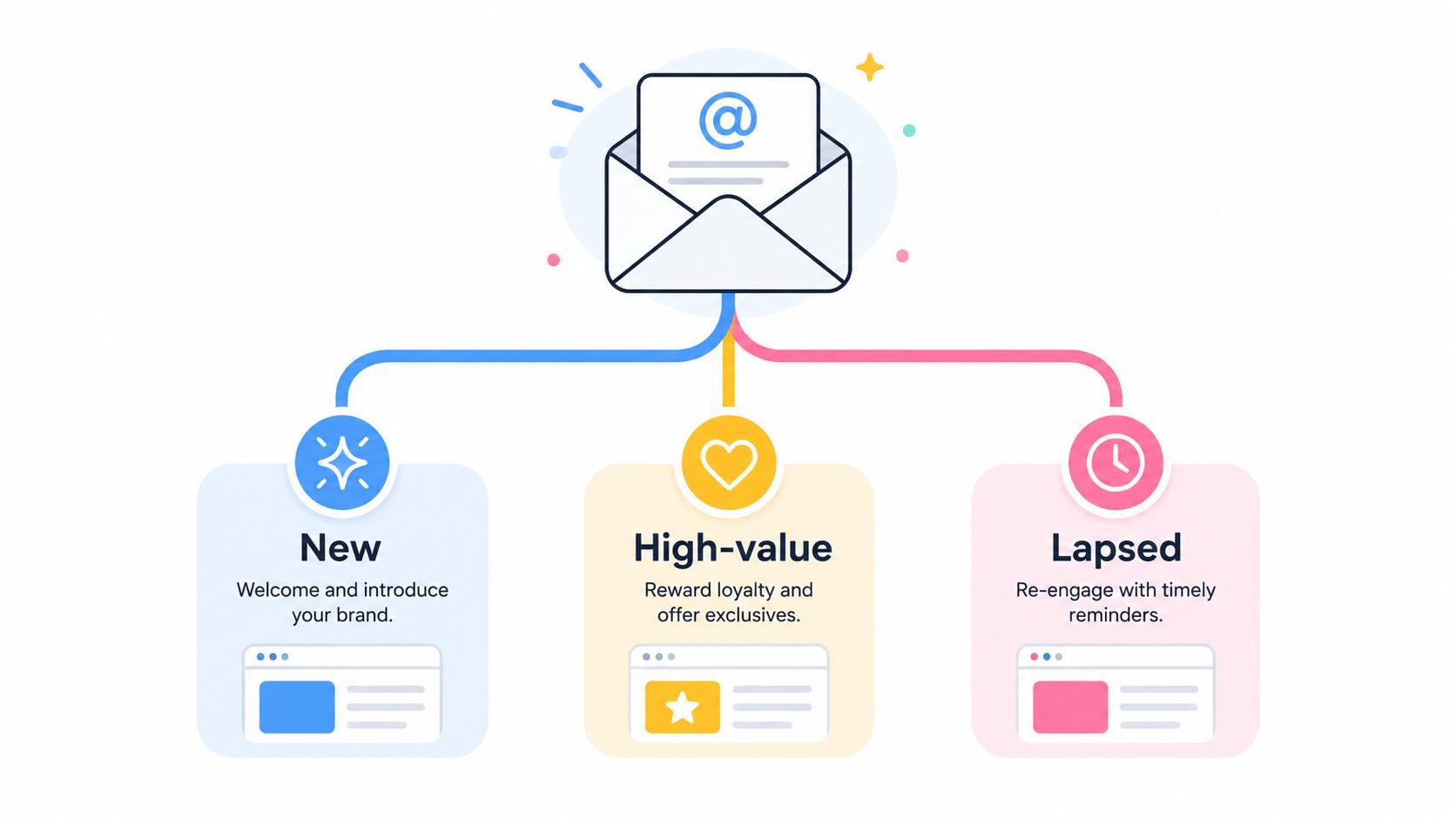
The practical point is simple. A first-time buyer needs onboarding and proof they made a good choice. A repeat customer is more likely to respond to replenishment timing or a complementary product. A high-value customer often responds better to priority access than another discount code. If all three receive the same message, performance usually settles at the level of the least relevant send.
Start with a segmentation model you can maintain
Keep the first version small enough to run well inside Shopify and your ESP. These five groups cover most retention use cases:
- New customers: onboarding, education, product-use guidance, second-purchase prompts
- Repeat customers: replenishment reminders, cross-sell, bundle offers, loyalty nudges
- High-value customers: early access, concierge-style service, lower discount frequency
- At-risk customers: reminders tied to expected reorder windows or declining engagement
- Lapsed customers: win-back emails with a clear reason to return
If you need a practical structure for setting this up, start with an email framework built around the customer journey. It is a better planning tool than organising flows around internal teams or campaign calendars.
Shopify implementation details
Use Shopify order history, product purchased, average order value, and last order date as your base layer. Then add email engagement signals such as clicks, non-openers over a defined period, and recent site activity if your ESP supports it. Klaviyo, Omnisend, and similar tools make this manageable, but the logic matters more than the platform.
A strong setup usually includes six automated flows: welcome, post-purchase, browse abandonment, cart abandonment, replenishment, and win-back. Build each one with modular content blocks so the hero product, timing, copy, and offer can change by segment without rebuilding the email every time. That saves production time and makes testing easier.
I pressure-test these flows with one question: what job is this email doing? The best retention emails answer a specific customer need. How do I get started? When should I reorder? What pairs well with what I bought? Why should I come back this week?
This walkthrough is useful if you want to see segmentation in action:
Metrics and common mistakes
Track repeat purchase rate by segment, revenue per recipient, click rate, unsubscribe rate, and time to second order. Open rate still has directional value, but it is not enough to judge retention performance on its own. The key test is whether each segment moves toward another purchase.
The common failure points are predictable:
- Too many segments too early: the logic breaks, reporting gets messy, and the team stops trusting the setup
- Sending generic campaigns to the entire list: engagement drops because message, timing, and offer stop matching intent
- Using discounts to compensate for weak targeting: short-term revenue rises, margin falls, and customers learn to wait
- Ignoring suppression rules: recent purchasers get win-back emails, VIPs get beginner content, and trust erodes
Good segmentation is not about making your email programme more complex. It is about making each send more useful, which is usually the fastest route to better retention.
3. Personalised Product Recommendations
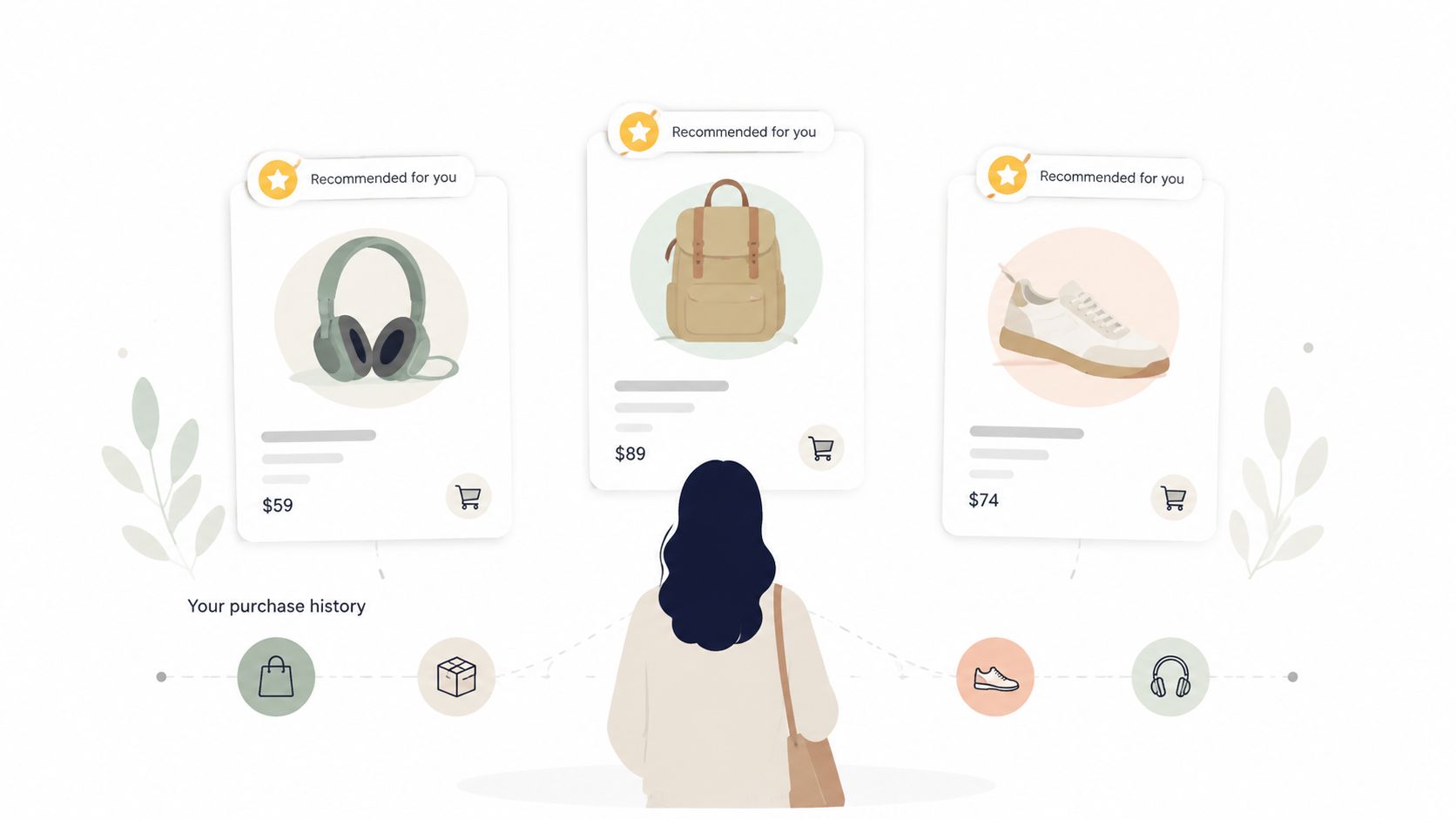
Relevant recommendations can lift average order value and improve repeat purchase behaviour. The gains usually come from reducing choice overload, not from showing customers more products.
A broad industry review from McKinsey on personalization in retail found that effective personalization is linked to faster revenue growth. In practice, the retention impact shows up when a store helps customers find the next useful item at the right point in the journey. Even a simple rules-based setup will usually beat a generic best-sellers block.
Where recommendations belong
Placement changes performance. A recommendation block on the wrong page can drag down clicks, while the same products can convert well when the customer is already in buying mode.
The highest-value placements usually include:
- Cart drawer: accessories, bundles, and low-friction add-ons
- Post-purchase email: complementary products after the first order is complete
- Account area: replenishment prompts and quick reorders
- Collection and PDP modules: related items, recently viewed products, and frequently bought together sets
- Subscription portals: add-ons, swaps, and upgrade options
The logic should match the category. Beauty brands often recommend by routine, shade family, or skin concern. Apparel stores usually get better results from fit, season, and category affinity. Home and electronics brands often rely on compatibility, replacement parts, and attach-rate products.
How to implement this on Shopify
Start with three recommendation types before adding anything more advanced: complementary products, replenishment products, and category affinity products. That gives you enough coverage to improve retention without creating a logic tree your team cannot maintain.
On Shopify, product tags, collections, metafields, and purchase history are usually enough to power the first version. Shopify merchants do not need AI on day one. They need clean product data, sensible exclusions, and placements tied to intent.
A few rules matter more than the algorithm:
- Do not recommend products the customer already bought unless they are consumable or replaceable
- Exclude owned variants such as the same size or colour already purchased
- Suppress out-of-stock items so recommendation clicks do not lead to dead ends
- Protect margin by weighting high-return, low-margin products carefully
- Separate hero products from replenishment lines because each needs different logic and timing
For Shopify Plus stores, recommendation performance usually improves when merchandising and CRM share ownership. Merchandising knows margin, stock position, and substitution options. CRM knows lifecycle stage, send timing, and which placements drive the second or third order.
Relevance beats novelty. A recommendation that matches the customer's next need will usually outperform a clever suggestion that does not fit the moment.
Metrics and common mistakes
Track click-through rate on recommendation modules, assisted revenue, attach rate, average order value, and repeat purchase rate among customers who engaged with recommendations versus those who did not. Review results by placement, not only in aggregate. Cart recommendations and post-purchase recommendations do different jobs.
The common failure points are consistent:
- Using the same block everywhere: intent changes by page and by lifecycle stage
- Optimising only for clicks: high click volume means little if the products do not convert
- Ignoring stock and fulfilment constraints: promoted products disappear, ship late, or create support issues
- Over-personalising too early: weak data creates odd suggestions that reduce trust
- Letting apps run without review: recommendation tools need merchandising rules, testing, and regular QA
If engagement is high but revenue stays flat, check the offer before blaming the engine. In audits, I usually find one of four issues: the wrong placement, weak product margins, poor inventory coverage, or recommendations that make sense mathematically but not commercially.
4. Subscription and Recurring Revenue Models
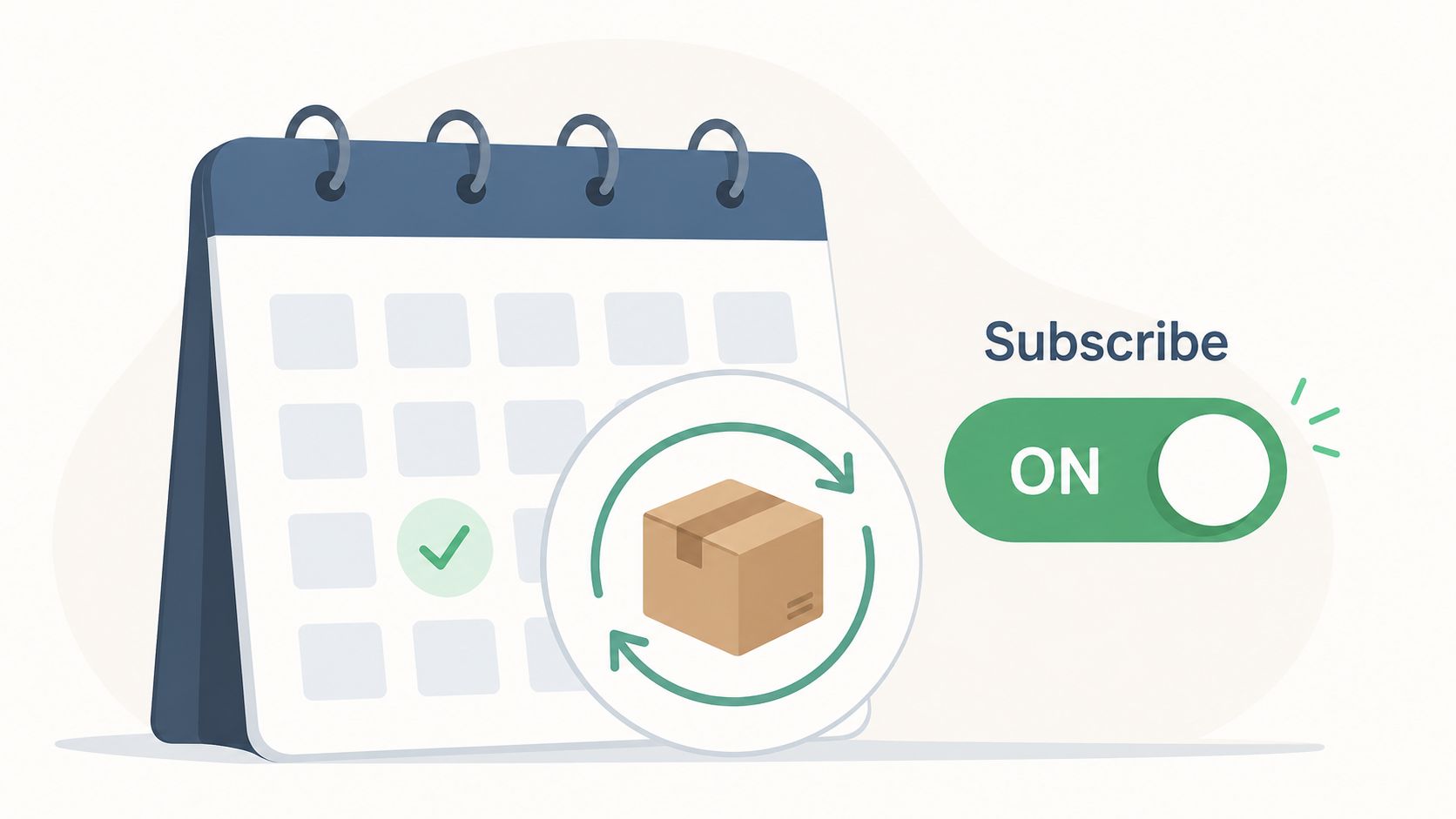
Subscriptions turn retention from a hope into a habit. They work best when the customer already needs repeat replenishment and the subscription removes friction rather than adding commitment anxiety.
The easiest wins tend to sit in consumables, supplements, pet care, beauty, shaving, household essentials, and any category where reorder timing is predictable. Dollar Shave Club helped popularise the model. Ritual and many modern DTC brands refined it by making cadence, editing, and skipping simple.
Why subscriptions fail
Most subscription churn isn't caused by the concept itself. It's caused by rigid rules, poor communication, or weak fit between the product and the reorder cycle.
Common failure points include:
- Wrong cadence: customers get too much or too little product
- Hard cancellation: people feel trapped and leave annoyed
- Invisible management: customers can't easily skip, swap, or pause
- Weak onboarding: the first delivery doesn't explain what happens next
If you offer subscribe-and-save on Shopify, make the customer portal easy to find from email, account pages, and order confirmations. A hidden portal creates support tickets and resentment.
How to build one customers keep
Lead with convenience first, then savings. The strongest proposition is usually “never run out” plus control. Customers tolerate moderate discounts. They don't tolerate feeling locked in.
Pre-renewal emails matter more than typically understood. Send reminders before the next charge, let customers edit the order, and suggest relevant add-ons. If a customer skips, treat that as a signal. They may need a different cadence, not a win-back offer.
For metrics, watch active subscriber count, skip behaviour, cancellation reasons, average time on subscription, and the share of subscribers who add one-time products to recurring orders. Segment subscribers separately from one-off buyers. They need different creative, different incentives, and often different support.
5. Retargeting and Remarketing Campaigns
Retargeting is useful, but it's often run badly. Many brands throw the same ad at every visitor and call it remarketing. That doesn't retain customers. It just burns spend on people who've already moved on.
The smarter approach is intent-based sequencing. A cart abandoner needs a different message from someone who only glanced at a collection page. A previous customer who browsed a refill product is closer to conversion than a stranger who bounced in ten seconds.
Build audiences by buying context
Useful retargeting groups usually include browsers, product viewers, cart abandoners, recent purchasers, and lapsed customers. The creative should follow the journey.
Try this sequence:
- Reminder: show the product they viewed or left behind
- Reassurance: add reviews, delivery info, or product education
- Incentive: only if the category or margin supports it
- Urgency: low-stock or deadline messaging where accurate
Nike, Amazon, and Warby Parker all demonstrate versions of this playbook. Not by showing more ads, but by showing more relevant ads.
What to connect inside Shopify
Feed your ad platforms clean product data. Sync customer lists for suppression so recent purchasers don't keep seeing conversion ads for something they already bought. If you run replenishable products, create dedicated remarketing windows based on expected usage instead of generic recency.
Retention marketing strategies often overlap. The best paid retargeting isn't isolated from email and SMS. If a customer clicks a retargeting ad and returns to site, the on-site recommendation and pop-up logic should reflect that journey.
Measure return visitor conversion, assisted conversions from paid remarketing, and whether customer segments respond differently to discounts versus education-led creative. If ad fatigue creeps in, reduce frequency and refresh the angle. Repetition without relevance creates irritation, not recall.
6. VIP and Exclusive Access Programmes
VIP programmes are not just loyalty programmes with a fancier label. They serve a narrower purpose. They protect and grow your best customers by giving them treatment that feels earned.
High-value customers usually don't want the same incentives as everybody else. They care less about another routine discount and more about access, recognition, convenience, and status. Sephora's tiered model is a good example. So are limited-release mechanics used by Nike SNKRS and luxury retailers.
What belongs in a VIP tier
The strongest VIP benefits are hard to copy and easy to value:
- Early access: product drops, launches, sale previews
- Service upgrades: priority support or concierge-style help
- Exclusive products: limited bundles, colourways, or editions
- Recognition signals: milestone gifts, anniversary rewards, first-look content
A generic “VIP gets 10% off” offer is usually weak unless your category is highly price-sensitive. Better VIP programmes increase perceived privilege without destroying margin.
Make progression visible
Customers should know how close they are to the next level and why it matters. That's where many brands miss. They create tiers but don't explain the benefits clearly or celebrate movement between them.
On Shopify, use customer tags, spend thresholds, and order counts to trigger upgrade messaging. Show status in account areas, email footers, and post-purchase messages. If someone qualifies for a higher tier and you don't tell them quickly, you waste the emotional payoff.
The benefit doesn't need to be expensive. It needs to feel selective.
Track spend concentration among VIP customers, repeat purchase cadence, full-price purchase behaviour, and benefit usage. If your top tier only redeems discounts, your VIP programme may be attracting bargain hunters instead of strengthening your best relationships.
7. Customer Feedback and Review Management
Reviews do more than improve conversion. They reveal friction that pushes customers away before your metrics show it. A retention-minded brand treats reviews as operating data, not just social proof.
In UK sectors where retention is closely watched, loyalty is strengthened through value-added services and a continual feedback loop using surveys and focus groups, according to Bill Gosling's retention insights from the UK telecom sector. Ecommerce brands can apply the same principle. Ask, listen, then act fast enough that customers notice.
Build the review loop into post-purchase
Request feedback after the customer has had time to use the product. For skincare, that may be later than for apparel. For a fast-consumption product, earlier often works. The key is matching the ask to actual use.
If you need a practical framework for collecting, responding to, and operationalising reviews, this guide to customer review management covers the workflows typically required.
Useful review operations include:
- Product reviews: surface fit, quality, and use-case objections
- Delivery feedback: catch fulfilment and packaging issues early
- Support follow-up: identify unresolved concerns before churn
- Review response templates: keep tone consistent but human
A separate resource on optimizing online reviews is useful if your current review process is mostly reactive.
Support speed is retention work
Recent research cited in the UK retention discussion shows that 43% of customers expect a response within 24 hours. If your team misses that threshold, shipping questions, damaged item complaints, and “where is my order?” tickets quickly become churn triggers.
That's why review management and support can't sit in separate silos. If multiple reviews mention sizing confusion or delayed delivery communication, fix the root cause in product content, fulfilment messaging, or help centre flows.
Track review volume, response times, recurring complaint themes, and whether poor review experiences correlate with lower repeat purchase behaviour. If negative reviews keep appearing for the same issue, the problem isn't your reputation management. It's your operation.
8. Win-Back and Re-engagement Campaigns
A meaningful share of repeat revenue is recoverable if you intervene before a customer becomes fully inactive. The mistake is waiting too long, then sending a generic discount to everyone who has gone quiet. Win-back works better as a timed recovery system tied to product cadence, margin, and customer history.
The trigger matters more than the creative.
A lapsed-customer definition should match the category. If a customer usually reorders skincare every 45 days, waiting 180 days to start outreach leaves too much revenue on the table. If you sell seasonal products or high-consideration items, an aggressive trigger creates noise and trains customers to ignore you. I usually set the first re-engagement window at roughly 1.5 to 2 times the normal repurchase cycle, then adjust once the data shows where response drops.
If you're building a stronger recovery programme, these churn reduction strategies for ecommerce brands fit well with win-back flows because they help you identify risk before the customer disappears from the file.
Build the flow around behaviour, not silence alone
“Inactive for 90 days” is a weak trigger on its own. Better win-back flows use signals such as browsing without purchase, a drop in order frequency, subscription skips, low email engagement after a previously active period, or repeat purchases stopping on a core replenishment SKU. Klaviyo, Shopify Flow, and most retention stacks can support this logic if your tags, product data, and event tracking are clean.
On Shopify, start with segments like these:
- Previous customers who have not ordered again within the expected replenishment window
- Customers who viewed or added to cart in the last 30 days but did not purchase
- High-value buyers whose average order cadence has slowed
- One-time buyers whose first product has a natural second-purchase path
That segmentation changes the message. A lapsed replenishment buyer may need a usage reminder or restock prompt. A one-time buyer may need a stronger reason to trust a second purchase. A high-AOV customer often responds better to service, access, or curated recommendations than to a blunt discount.
A sequence that protects margin
Start with relevance. Incentives should come later, and only where they improve incremental recovery.
A practical sequence looks like this:
- Message 1: Reconnect. Show products related to their last purchase, recent arrivals in the same category, or a replenishment reminder.
- Message 2: Remove friction. Answer likely objections with delivery clarity, sizing guidance, product education, or social proof.
- Message 3: Incentivise selectively. Offer a measured discount, bonus points, or free shipping to customers who still have not converted.
- Message 4: Sunset or reset preferences. Ask whether they still want updates, or let them reduce frequency instead of fully unsubscribing.
This order matters. Brands that lead with discounts often get orders back, but they also teach customers to wait for the next offer. Brands with healthy retention usually earn the first reactivation attempt through relevance, then use incentives as a recovery tool rather than the whole strategy.
What to track
Open rate is not the main metric here. Track outcomes that show whether the campaign brought back profitable customers:
- Reactivation rate
- Time to second purchase after reactivation
- Margin by reactivated cohort
- Post-reactivation repeat rate over 60 to 120 days
- Offer dependency, especially the share of recovered orders that required a discount
- Unsubscribe and spam complaint rate by segment
One more operational point. Exclude customers with unresolved support issues, recent refunds, or negative post-purchase signals from standard win-back flows. Sending “we want you back” to someone still waiting on a replacement order is how retention automation creates more churn, not less.
9. Community Building and Customer Advocacy
Some brands hold customers because the product is useful. The strongest brands also give customers a place to belong. That belonging can take the form of a private group, ambassador network, creator community, referral programme, or customer-led feedback panel.
Community-led retention is common in brands like Glossier, Peloton, and Beardbrand because the product becomes part of identity. When customers share routines, tips, or results with one another, the relationship stops being purely transactional.
Start smaller than you think
Most communities don't fail because the idea is wrong. They fail because the brand opens a space, posts promotional content, and expects customers to generate energy on command.
A better approach is to begin with a tightly defined group of engaged customers and a clear interaction model. That might mean product testers, high-value repeat buyers, or active reviewers. Give them a reason to participate beyond discounts. Access, influence, recognition, and useful conversation all matter.
Turn customers into advocates carefully
Referral mechanics belong here too, but they need the right timing. Ask for advocacy after a positive experience, not immediately after first purchase unless your category supports instant enthusiasm.
Good advocacy systems include:
- Referral offers: both parties benefit
- UGC prompts: encourage proof, routines, and creative use cases
- Member recognition: feature customers in email, product pages, or social
- Feedback access: let customers shape launches or improvements
Community is slower to build than email automation, but it often creates stronger defence against churn because customers aren't just attached to the product. They're attached to participation. Track referral activity, community engagement quality, repeat purchase behaviour among members, and whether top contributors continue buying without aggressive incentives.
10. Progressive Profiling and Preference Centres
Forms with fewer fields usually convert better. The practical lesson for retention is simple. Ask for the minimum at sign-up, then earn the right to ask better questions later.
Progressive profiling works because context changes what a customer is willing to share. Before first purchase, an email address and one useful preference is often enough. After purchase, you can ask about size, usage cycle, favourite categories, gift intent, or how often they want to hear from you. The trade-off is clear. Every field you add can improve relevance, but each one also creates friction.
Preference centres turn that data strategy into something customers can control. That matters because many subscribers do not want a full unsubscribe. They want fewer messages, different product categories, or to keep service updates while muting promotions. As noted earlier, UK shoppers respond well to brands that communicate in a relevant, timely way. You cannot do that consistently if every subscriber sits in one generic segment.
Build the preference centre around decisions you will actually use
A good preference centre should change messaging, timing, or channel selection in your retention system. If the answer will not trigger a different experience, do not ask for it.
Useful fields usually include:
- Category interests: so campaigns match what the customer buys or browses
- Channel preferences: email, SMS, or both, based on consent status
- Send frequency: weekly, new launches only, sale alerts only, or fewer promotions
- Service notifications: back in stock, order updates, replenishment reminders
- Customer status: loyalty updates, VIP access, or product education for specific lines
On Shopify, store these preferences in customer metafields or sync them into your ESP and CRM. Then map them to flows, campaign exclusions, and support visibility. Many teams, however, fall short. They collect preferences in a nice-looking page, but the email calendar, SMS tool, and support desk continue sending the same messages to everyone.
Implementation blueprint for Shopify brands
Start with three collection points, not ten. Use your sign-up form for one preference, your post-purchase flow for one or two more, and your account area for the full preference centre. That sequence gives you cleaner data and better completion rates than a long upfront form.
A practical setup looks like this:
- Signup form: email plus one selector such as men's, women's, skincare, supplements, or home fragrance
- Post-purchase email or SMS: ask a question tied to future value, such as replenishment timing or product type
- Account page or email footer link: let customers edit frequency, channel, and content preferences anytime
- Flow logic: suppress irrelevant campaigns and trigger content based on saved preferences
- Reporting: compare retention and unsubscribe rates by preference segment
Keep the payoff visible. If you ask for replenishment timing, send reminders that match the expected usage window. If you ask about categories, stop sending irrelevant launches. Customers notice when they share data and nothing improves.
Measure unsubscribe deflection, click rate by preference group, repeat purchase rate for subscribers who set preferences, and the share of your list with at least one usable profile attribute. Those metrics tell you whether the centre is reducing fatigue and improving targeting.
The goal is not more zero-party data. It is better customer data that your retention programmes use.
10-Point Retention Marketing Strategy Comparison
| Strategy | 🔄 Implementation Complexity | ⚡ Resources & Speed | 📊 Expected Outcomes (⭐) | Ideal Use Cases | 💡 Key Advantages / Tips |
|---|---|---|---|---|---|
| Loyalty Programmes and Rewards | Medium, app/APIs + ongoing management | Moderate setup; ongoing reward costs | Increases CLV 25–35%, ⭐⭐⭐⭐ | Retail DTC, frequent-purchase categories, Shopify Plus | Tier rewards; integrate email reminders; gamify; align with margins |
| Email Segmentation and Personalisation | High, requires data infra & flows | High initial effort; fast engagement gains once running | Email ROI +40–50% vs non-segmented, ⭐⭐⭐⭐ | Stores with rich customer data and lifecycle marketing needs | Start with 3–5 segments; automate flows; sync CRM + Shopify |
| Personalised Product Recommendations | Medium–High, recommendation logic & placement | Moderate (apps available); performance improves with data | Drives 20–35% revenue for mature setups; AOV +10–25%, ⭐⭐⭐⭐ | Large catalogs, repeat buyers, cross-sell opportunities | Layer strategies; exclude purchased items; test placements |
| Subscription and Recurring Revenue Models | High, billing, fulfillment, CS integration | High setup & ops; delivers predictable recurring revenue over time | CLV 2–3x; steady forecastable revenue, ⭐⭐⭐⭐⭐ | Consumables, replenishment items, health & beauty | Offer clear value; frictionless pause/skip; lifecycle messaging |
| Retargeting and Remarketing Campaigns | Medium, pixel & audience setup; creative sequencing | Moderate resources; quick to deploy and scale with budget | ROI 5–8x typical; lower CPA for abandoners, ⭐⭐⭐⭐ | Cart abandoners, high-intent browsers, product viewers | Use frequency caps; sequential messaging; dynamic product ads |
| VIP and Exclusive Access Programmes | High, tier logic, exclusives, coordination | Resource-intensive; slower to scale but high ROI from top cohort | Top-tier spend +30–50%, ⭐⭐⭐⭐ | Brands with valuable high-spend cohorts; luxury/aspirational | Calculate CLV per tier; gamify progression; celebrate promotions |
| Customer Feedback and Review Management | Low–Medium, workflows, moderation & aggregation | Low setup; ongoing moderation; quick trust & SEO gains | Product conversion uplift ~+4.6% with reviews, ⭐⭐⭐⭐ | Product-heavy stores, new product launches, marketplaces | Request reviews 1–2 weeks post-delivery; respond within 48h; simplify form |
| Win-Back and Re-engagement Campaigns | Medium, inactivity triggers & creative series | Moderate effort; cheaper than acquisition; continuous automation | Cost ~70% less than acquisition; partial recovery of lapsed customers, ⭐⭐⭐ | Lapsed customers (6–12+ months), known buyers | Define inactivity windows; lead with value; segment by CLV |
| Community Building and Customer Advocacy | High, sustained moderation, events, content | High ongoing effort; slow initial growth; high long-term payoff | Builds referrals, UGC, and brand stickiness, ⭐⭐⭐⭐ | Lifestyle brands, niche communities, subscription offerings | Start small (100–500); moderate actively; incentivize advocacy |
| Progressive Profiling and Preference Centres | Medium, multi-touch data collection & consent | Moderate setup; phased data build-up; privacy compliance needed | Better-quality zero-party data; lower unsubscribes; improved personalisation, ⭐⭐⭐⭐ | Privacy-conscious brands seeking better personalization | Ask essentials at signup; collect more post-purchase; respect preferences |
From Strategies to Systems: Building Your Retention Engine
The mistake most brands make is treating retention as a menu of disconnected tactics. They launch a loyalty app, set up a few flows, maybe add reviews, then wonder why repeat purchase behaviour barely moves. Retention gets stronger when these pieces share data and reinforce one another.
A loyalty programme should influence email segmentation. Email behaviour should shape product recommendations. Review data should feed product page content, support scripts, and post-purchase messaging. Subscription activity should trigger replenishment, upsell, and save-flow campaigns. When you connect these touchpoints, customers experience one coherent brand rather than separate departments sending unrelated messages.
That's where Shopify can be a strength if you use it properly. The platform already gives you order data, product data, customer accounts, tags, and integration options. The challenge isn't lack of information. It's deciding what signals matter and making sure they trigger the next useful action.
For many merchants, the best place to start is not with the flashiest tactic. Start where the leak is obvious. If customers buy once and never return, fix post-purchase email, on-site recommendations, and support speed. If your best customers keep spending but don't feel recognised, build the VIP layer and loyalty communication. If lapsed customers are stacking up, tighten your re-engagement windows and stop waiting too long to intervene.
There's also a sequencing question. Not every brand needs all ten strategies at once. A smaller catalogue with low purchase frequency may get more from segmented email, smart win-back flows, and review management than from a complex community build. A replenishment-heavy brand may prioritise subscriptions, reminders, and preference centres before investing in broad VIP mechanics.
One point is worth keeping in view. The frequently asked question about how to reward customer value without incentivising discounts alone still lacks clear UK-specific segmentation data, even though Carlos Alba Media notes that 61% of UK e-commerce growth in 2025 came from loyalty programmes rewarding behaviour over repetition. That gap matters. It means practitioners still need to test carefully instead of assuming every points mechanic creates the right kind of loyalty.
That's why metrics matter, but only the right ones. Track repeat purchase rate, time to second order, retention by cohort, offer dependency, support response quality, and customer lifetime value. Don't rely on campaign-level vanity metrics to judge retention performance. A win-back email with strong click rates can still be weak if those customers don't stick. A loyalty programme with high enrolment can still underperform if nobody redeems or if only low-margin buyers engage.
Operational discipline matters as much as strategy. Teams should review churn reasons, support tickets, repeat purchase timing, and campaign engagement together. Marketing can't solve fulfilment issues with better copy. Support can't repair weak merchandising by answering the same question repeatedly. Product and CRM teams need shared visibility.
AI and automation can help, and that's one reason brands increasingly lean on tools that unify customer signals across channels. Used well, systems like BeyondComments AI analytics and similar intelligence layers can help teams spot patterns faster, prioritise segments more accurately, and move from reactive messaging to more timely intervention. But the tooling only helps if your offer, customer experience, and retention logic are already sound.
The strongest retention marketing strategies are usually not the most glamorous. They are the most consistent. Fast support. Relevant messaging. Useful reminders. Better rewards. Smarter product discovery. Respect for customer preferences. Those are the mechanics that turn a first order into a second, a second into a habit, and a habit into loyalty.
If you're rebuilding or scaling a Shopify retention system, Grumspot can help connect the strategy to the storefront, flows, and backend logic that make it work. From Shopify Plus builds and subscription setups to CRO-led redesigns and deep integrations, Grumspot helps ecommerce teams turn scattered retention tactics into a storefront experience that keeps customers buying.
Let's build something together
If you like what you saw, let's jump on a quick call and discuss your project
Related posts
Check out some similar posts.
- shopify store credit
Learn how to set up Shopify store credit with built-in tools or apps. Covers policy design, refund w...
Read more
- subscription examples
Explore 7 subscription examples across Shopify, pricing and retention models, with practical lessons...
Read more
- unified commerce platform
Learn how a unified commerce platform connects channels, ERPs, and CRMs to drive growth. Practical g...
Read more
- composable commerce platform
Learn what a composable commerce platform is, how it differs from monoliths, and how UK Shopify Plus...
Read more