Tiered Pricing Models: A Practical Guide for Ecommerce
- tiered pricing models
- ecommerce pricing
- Shopify pricing
- pricing strategy
- conversion optimisation
Launched
July, 2026
You're staring at a pricing page that looks tidy enough, but the numbers feel wrong. The cheapest option attracts bargain hunters, the middle option gets skipped more than it should, and the premium offer only closes when a salesperson intervenes. On a Shopify store, that usually means the tiers are doing too much guesswork and not enough guiding.
Tiered pricing models work when they help a shopper choose faster and spend with confidence. They fail when they add friction, blur the difference between options, or ask customers to do the maths in their heads. In ecommerce, the point isn't just to charge more at the top end, it's to shape a buying decision that feels obvious on the product page and still holds up in cart.
The structure matters because tiered pricing is already baked into UK markets in different ways. Ofcom's 2023 telecoms pricing report showed that about 46% of UK households were on standalone or dual-play landline-and-broadband packages, while around 54% were on triple-play or quad-play bundles that differentiate service levels, and it also noted that many households could save around £180 a year by switching from a more expensive legacy package to a cheaper comparable alternative (Ofcom pricing context). That's not a Shopify metric, but it's a useful reminder that people already understand price ladders, they just need the ladder to make sense.
What Tiered Pricing Models Actually Are
A merchant I worked with had a supplement subscription where the offer looked simple, but the cart told a different story. Customers saw one monthly price, then hesitated once they reached the refill options because the perceived jump in value wasn't clear. When we shifted to a clear three-step structure, shoppers stopped treating it like a mystery checkout and started treating it like a choice.
The core idea
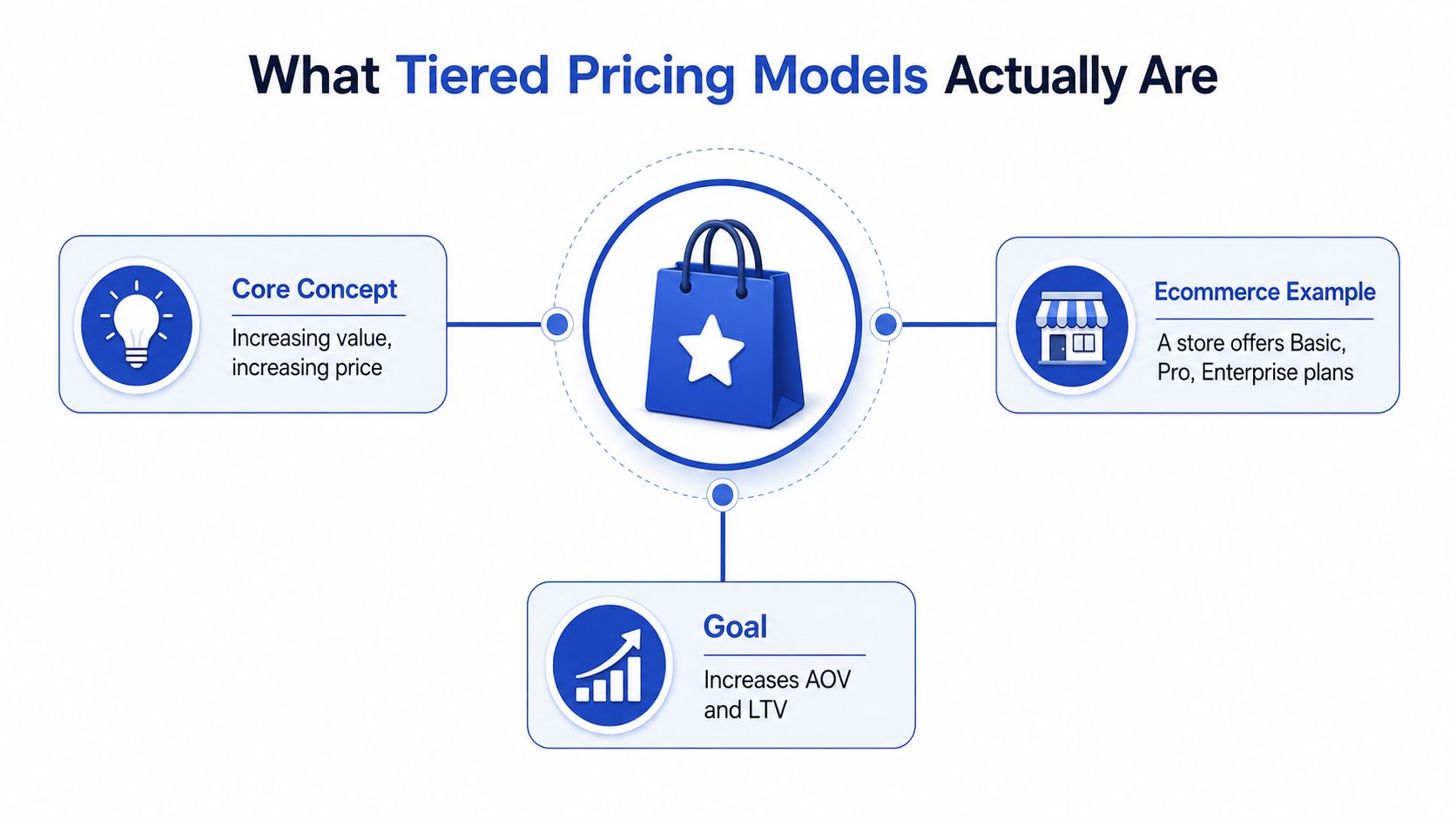
Tiered pricing means the offer changes at defined thresholds. The threshold might be quantity, included features, or service level, but the customer sees distinct brackets rather than one flat price. That's different from a single price with random add-ons, and it's different from a discount code that briefly lowers the same offer without changing its structure.
The useful mental model is simple. A tiered offer says, “if you buy or commit at this level, you get this level of value, and the next step gives you more.” That aligns with the way businesses segment by willingness to pay and preserve margin, especially when cost-to-serve changes as orders get larger or support gets heavier (Stripe on tiered pricing mechanics).
Practical rule: if the shopper can't tell what improves as they move up, you don't have a tiered model, you have a messy price list.
What it is not
A la carte pricing lets buyers assemble their own package piece by piece. That can work, but it's a different job. A genuine tiered model does more of the decision-making for them, which is why it often lifts clarity on the PDP and reduces the feeling that every extra feature is a separate negotiation.
It also isn't just “good, better, best” copy with prettier labels. The labels matter, but the structure matters more. If every tier has the same core value and only a tiny price difference, the shopper won't read it as a ladder, they'll read it as noise.
For teams that want a practical example before rebuilding their own pricing page, check our plans and look at how the options are framed as a buying decision rather than a static rate card.
The Three Main Variants of Tiered Pricing in Ecommerce
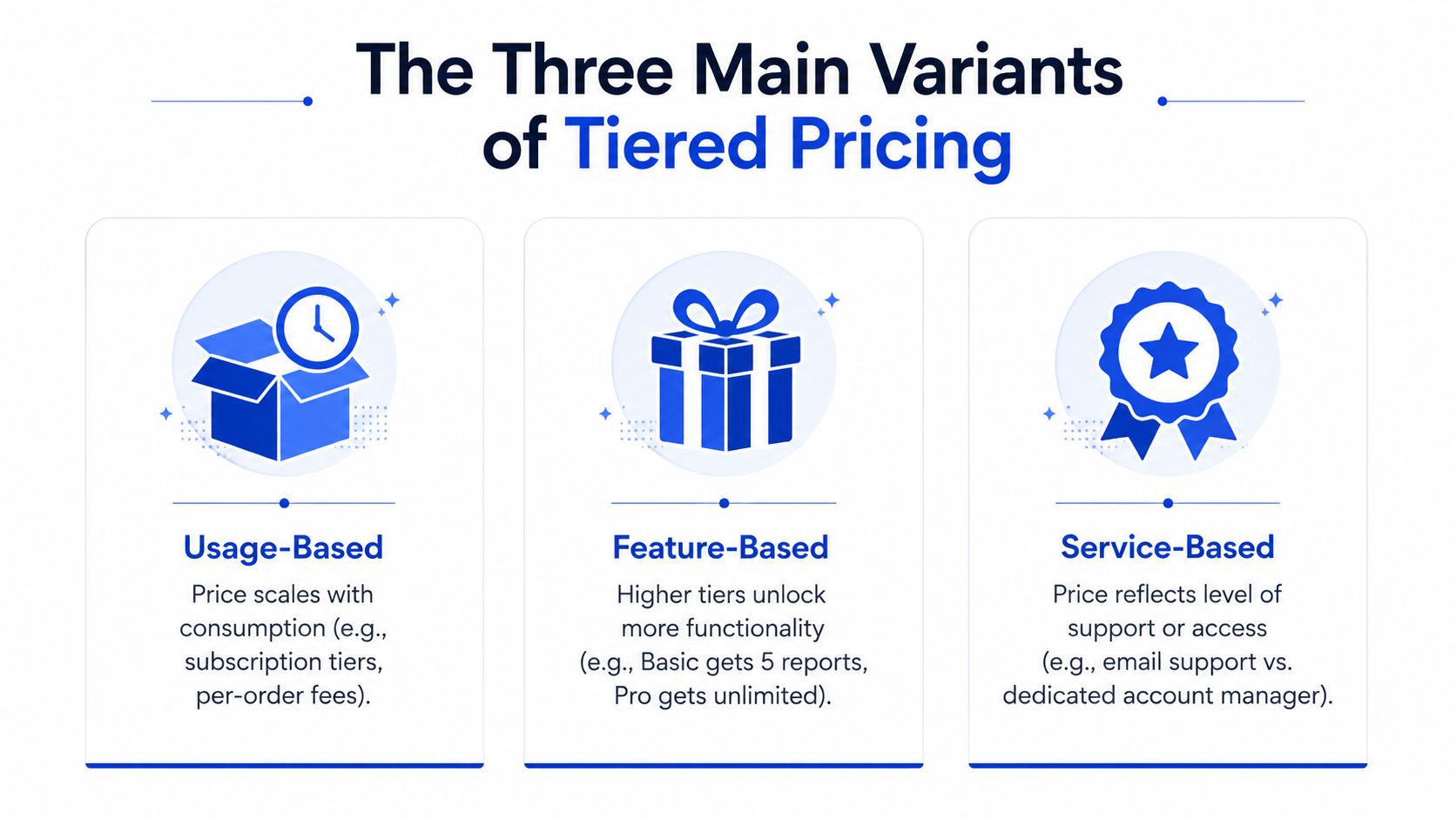
The first decision is the axis. Before you write copy or build a table, decide whether the tier changes by usage, features, or service level. If you skip that step, you end up mixing signals, which is why so many pricing pages feel like they were assembled from three different strategies.
Usage-based tiers
Usage-based tiers scale with consumption. A subscription box might price one delivery differently from a double or quadruple shipment, or a service brand might adjust fees based on order count and frequency. The shopper isn't really buying “more stuff”, they're buying a plan that fits how often they'll need it.
This variant works when demand is variable and the product's economics change with usage. It's the cleanest fit when a merchant can connect price to actual consumption without forcing the buyer to guess what counts as value.
Feature-based tiers
Feature-based tiers provide more functionality, access, or bundled value as the price rises. Think Starter, Growth, and Pro, but translated into ecommerce bundles, memberships, or premium product packs. The buyer is comparing what's included, not just how much they're allowed to consume.
This structure is strong when the lower tier is still useful and the upper tier solves a specific premium need. It falls apart when the feature list is padded or when one tier clearly contains everything good and the others feel like leftovers.
Service-based tiers
Service-based tiers price the level of support, access, or attention. That can mean standard email support at one level and dedicated account help at another, or faster fulfilment, concierge onboarding, or priority replacement handling. The product may be identical, but the experience is not.
This version works best when service is part of the value proposition and the buyer feels the difference during the journey, not just after purchase. It's also the easiest to under-explain, which is why the on-page copy has to be blunt and specific.
Matching Tier Shapes to Business Goals
A pricing model should serve a goal, not a mood board. When a merchant says they want “three tiers because everyone does”, that's usually code for not knowing whether the core problem is AOV, conversion, retention, or margin protection. The axis you choose should reflect the outcome you need.
When the goal is higher AOV
Volume tiers usually fit best when the goal is to increase average order value. Bigger baskets become easier to justify if the price per unit or the effective bundle value improves as quantity rises. That said, the model can push buyers to over-order, which is fine if replenishment is natural and waste risk is low.
Volume tiers are weaker when the business needs repeat purchase rather than one larger first order. A shopper may take the bigger bundle once, then disappear for a long cycle, which can make the headline AOV win look better than the actual customer value.
When the goal is retention
Feature tiers tend to support retention better, especially for subscription or membership models. Customers can begin on a lower tier, then upgrade as their needs become clearer. That creates a path, which is what keeps people inside the ecosystem instead of pushing them to a competitor when their needs change.
The downside is decision fatigue. If the feature table reads like a software contract, the shopper slows down or bounces. On Shopify, the best-performing feature tiers usually stay short, visual, and tied to outcomes the buyer already wants.
When the goal is protecting margin
Service tiers work well when premium buyers need more help and are willing to pay for it. That can protect margin because the cost of support is being reflected in the price rather than hidden inside one flat offer. It also creates a cleaner premium story for high-touch categories.
For a useful international pricing lens on how local market structure changes pricing decisions, see this guide on international pricing strategy. The main lesson is straightforward, the same price architecture doesn't always work across markets.
Decision rule: if the buyer's biggest reason to pay more is “I need more of the same thing”, use volume. If it's “I need more capability”, use features. If it's “I need more help”, use service.
Implementing Tiered Pricing on Shopify Without Breaking the Funnel
On Shopify, tiered pricing fails most often because the logic, copy, and storefront presentation drift out of sync. The merchant updates a price in one app, rewrites the PDP manually, and forgets to change the cart badge. That's how you end up with a pricing offer that technically works but feels broken at checkout.
Build the data model first
Start with a product and variant structure that can support the tiers. Use metafields for the tier labels, threshold copy, comparison notes, and any “best for” descriptors, because that keeps the theme logic separate from the commercial logic. If the offer changes later, you don't want to rewrite hard-coded text blocks across the theme.
The threshold logic should be predictable. A merchant offering quantity steps, bundle steps, or membership steps needs one source of truth for the breakpoints, otherwise the PDP, cart, and subscription widget will tell different stories.
Use the right pricing engine
If the pricing changes in a simple, rules-based way, use the native Shopify stack available to the build you're on. Older implementations may rely on Shopify Scripts, while newer builds should lean on Shopify Functions where the architecture allows it. The point is to keep discount logic deterministic, not hidden inside three separate apps that all think they own the cart.
For merchants who need a more structured way to manage variant-level rules, DPP Shopify is a relevant reference point because it sits in the wider family of tier and product data tools that help brands keep pricing logic consistent. On a live store, consistency beats cleverness every time.
Place the tiers where the buyer can still act
The PDP is the first place tiered pricing has to earn its keep. Put the comparison table or tier selector above the fold only if the choice is simple enough to understand in a glance. If the structure is more complex, use a dedicated pricing page and let the PDP focus on the default choice plus a short explanation.
Practical rule: if the tier comparison needs a long paragraph to decode, it probably belongs lower on the page, not louder.
Keep the cart aligned with the PDP. Cart upsells, subscription widgets, and delivery selectors should all use the same tier language, the same thresholds, and the same promise. If you're building a subscription-led flow, the setup guidance in this Shopify subscription store setup resource is worth comparing against your current theme architecture.
A simple checklist keeps the launch sane.
- Metafields: Store tier names, thresholds, and “best for” notes in one place.
- Pricing logic: Apply discounts or step pricing through one governed rule set.
- PDP blocks: Show the comparison where the shopper can still choose confidently.
- Cart state: Make sure the selected tier still reads the same after add to cart.
- Subscription widget: Match renewal copy, delivery cadence, and tier benefits.
If you need agency support for a rebuild or a migration, Grumspot handles Shopify Plus design, development, and storefront optimisation, which is useful when tiered pricing has to survive checkout, subscriptions, and international expansion without drifting.
Sample Tiered Pricing Structures Worth Studying
The strongest tier tables usually look obvious after the fact. That's because they're built from the business model outward, not from a generic “three columns” template. Coffee, skincare, and wholesale all use tiered structures, but they solve very different problems.
What the structure is doing
A coffee subscription with one-bag, two-bag, and four-bag delivery tiers is usually about consumption fit and convenience. The shopper is choosing how much of the same product they want on a predictable schedule, which makes the comparison fast and intuitive.
A skincare brand with bundle tiers often uses feature logic, even when the wording sounds like quantity. The core value lies in what each tier provides, such as gift inclusion, routine completeness, or access to a more premium regimen. The table is selling outcome, not just units.
A B2B Shopify Plus merchant with 50, 200, and 1,000 unit breaks is using volume logic. The buyer already understands that bigger orders should change the economics, so the table needs to be clear about where the price steps happen and what triggers them.
Merchant reality: the more complex the order process, the more the tier table has to do in the first glance.
Tiered Pricing Structures Compared
| Merchant Type | Tier Axis | Number of Tiers | Primary Goal |
|---|---|---|---|
| Coffee subscription | Usage | 3 | Match delivery size to consumption |
| Skincare brand | Features | 3 | Increase basket value with bundled benefits |
| B2B wholesale merchant | Volume | 3 | Reward larger orders with lower unit economics |
For a CRO team, the first test is usually not the price itself, it's the framing. Which tier is highlighted, whether the middle option is visually anchored, and whether the value explanation is short enough to be scanned on mobile all matter more than a cosmetic redesign. The same basic logic shows up across consumer and B2B, which is why the table format matters less than the way the thresholds are perceived.
KPIs and Testing Strategies That Actually Move the Needle
Tier changes should be measured like revenue decisions, not design preferences. A prettier pricing module that doesn't move the right metrics is just decoration. On Shopify, the best dashboards make it painfully clear which tier is chosen, where buyers drop, and whether the margin story still works after the offer goes live.
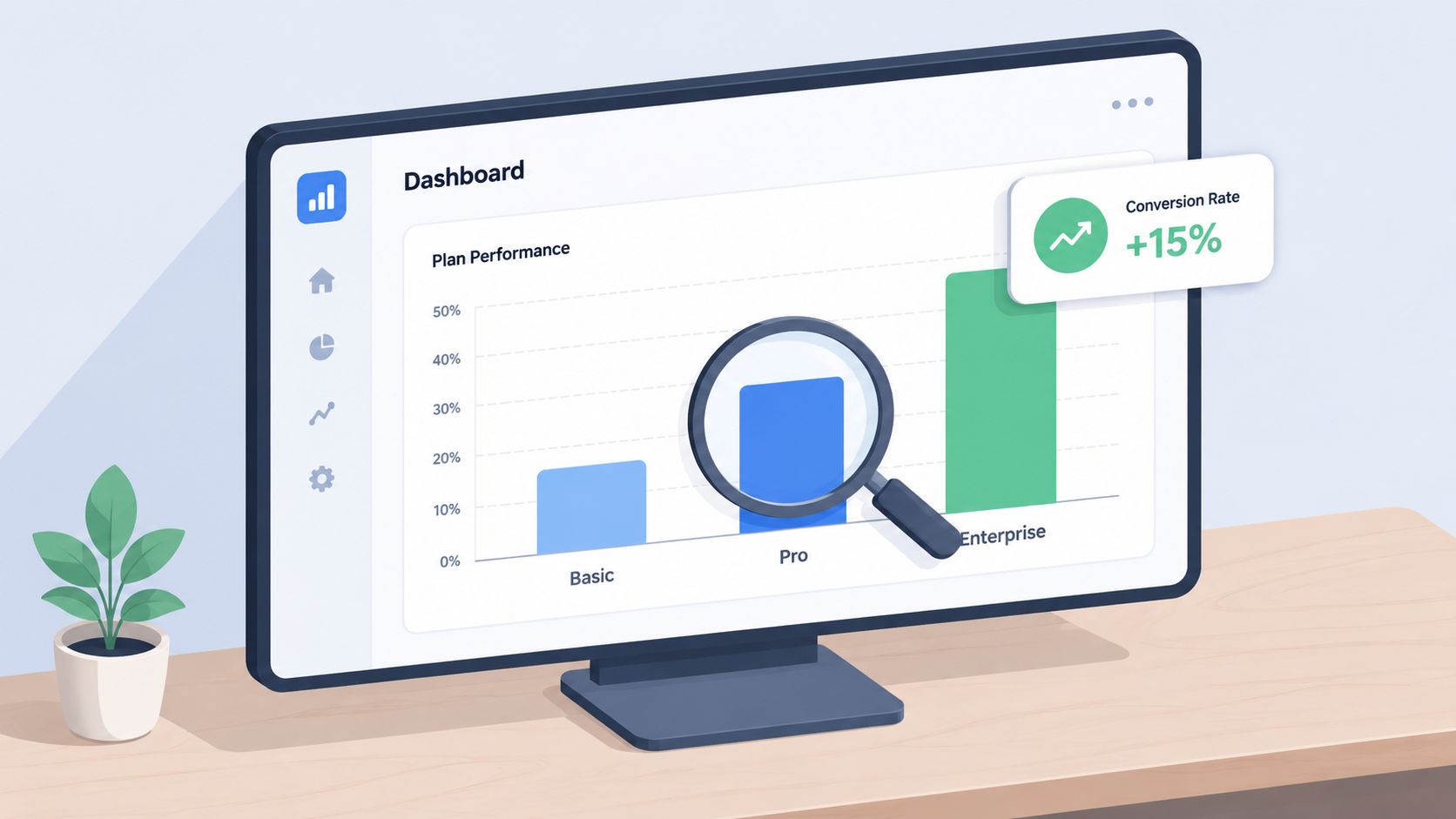
The KPIs that matter
AOV tells you whether the tier structure is pushing baskets upwards. Conversion rate by tier shows whether one option is acting as a dead end. Tier selection distribution shows which plan people pick, and that matters because many stores assume the middle option is the default when the data says otherwise.
For recurring offers, track downstream retention and LTV by tier, not just the first purchase. A lower-tier acquisition plan that upgrades well can be more valuable than an expensive plan that sells slowly. If your pricing page is tied to subscriptions, the economics show up there.
How to test without fooling yourself
Use a hypothesis that names the shopper behaviour you expect. For example, if you move the middle tier closer to the entry tier, you should be testing whether the middle option becomes the easier default, not whether the page “looks better”. Keep one primary KPI and a small set of guardrails, usually margin and refund behaviour.
For subscription or repeat-purchase flows, holdout cohorts are safer than a quick PDP A/B test. A clean pricing display can still produce bad downstream economics if it attracts the wrong buyer. Geo splits can help when you're changing offer structure across regions, but the key is to keep audience contamination low.
If you're trying to read the store through a CRO lens, this AOV optimisation guide is a useful companion because tiered pricing rarely lives in isolation. It usually sits alongside bundle logic, cart incentives, and threshold messaging.
Practical rule: don't call a test won until the tier that wins on the PDP also behaves well after checkout.
Common Pitfalls and When Tiered Pricing Is the Wrong Choice
Not every store should launch three tiers. Some products are too simple, some offers are too close together, and some categories punish confusion more than they reward choice. If the shopper needs a calculator to compare tiers, the offer is already too heavy.
The biggest failure mode is decision paralysis. Too many tiers, or tiers that differ only by a tiny feature gap, make the middle feel arbitrary and the premium feel overpriced. Another common mistake is hiding the upgrade path, which forces the shopper to hunt for what changes between options.
Regulated sectors need extra care. In the UK gambling market, tiered pricing has practical relevance because the Digital Economy Act 2017 introduced a 25% levy on the annual gross revenues of UK operators of remote gambling facilities starting in October 2019, and for remote gaming the levy is charged on profits above a £2 million threshold (UK tiered pricing context). If your pricing structure interacts with statutory thresholds, margin management and compliance can't be an afterthought.
The simplest launch filter is this.
- Don't launch if the tiers are too close to feel distinct.
- Don't launch if the lowest tier under-delivers and creates support friction.
- Don't launch if the middle tier has no clear reason to exist.
- Don't launch if your cart and PDP can't keep the same promise.
Tiered pricing is useful only when it helps the customer choose faster and helps the merchant protect margin without looking manipulative. If it adds friction, scrap it and simplify the offer.
If you want help turning pricing tiers into a cleaner Shopify buying flow, Grumspot builds and audits storefronts, subscription setups, and conversion paths that have to stay aligned from PDP to checkout. Visit Grumspot if you want a team that can shape tiered pricing into something shoppers understand and your margin can live with.
Let's build something together
If you like what you saw, let's jump on a quick call and discuss your project
Related posts
Check out some similar posts.
- social proof examples
Examples of social proof for ecommerce brands: case studies, client testimonials, Shopify badges and...
Read more
- cro best practices
Apply cro best practices to Shopify stores with 10 actionable tactics for testing, product pages, ch...
Read more
- shopify plus stores
Explore 7 Shopify Plus stores, from Gymshark to Huel, and uncover design, UX, conversion and integra...
Read more
- ecommerce growth uk
A data-led 2026 playbook on ecommerce growth UK strategy, covering channels, CRO, payments, fulfilme...
Read more