Best Web Design Agency Brighton: Your 2026 Guide
- web design agency brighton
- shopify agency brighton
- ecommerce design uk
- hire web designer
- brighton digital agency
Launched
May, 2026

Most businesses hire a web agency for the wrong reason. They want a nicer site, a fresher brand, better visuals, a cleaner homepage. That's how expensive mistakes get approved.
If you run ecommerce, a redesign isn't a creative purchase. It's a commercial decision tied to conversion, checkout completion, search visibility, platform stability, and how much operational pain your team inherits after launch. A polished store that breaks reporting, slows mobile pages, or creates migration issues is not a success. It's a liability with good typography.
If you're searching for a web design agency in Brighton, ignore the agencies that lead with moodboards and generic promises. Hire the one that can explain how they'll protect revenue while changing the site.
Stop Shopping for a Website, Start Shopping for Results
The usual advice is wrong. People tell you to start with portfolios, aesthetics, and whether you “like the style”. That matters far less than most buyers think.
For UK retail, the website is too commercially important to judge like a branding project. Internet sales accounted for 27.2% of total retail sales in February 2026, according to Barefoot Web's reference to ONS data. If that much revenue depends on digital experience, then your agency decision should start with one question: who can improve commercial performance after launch?
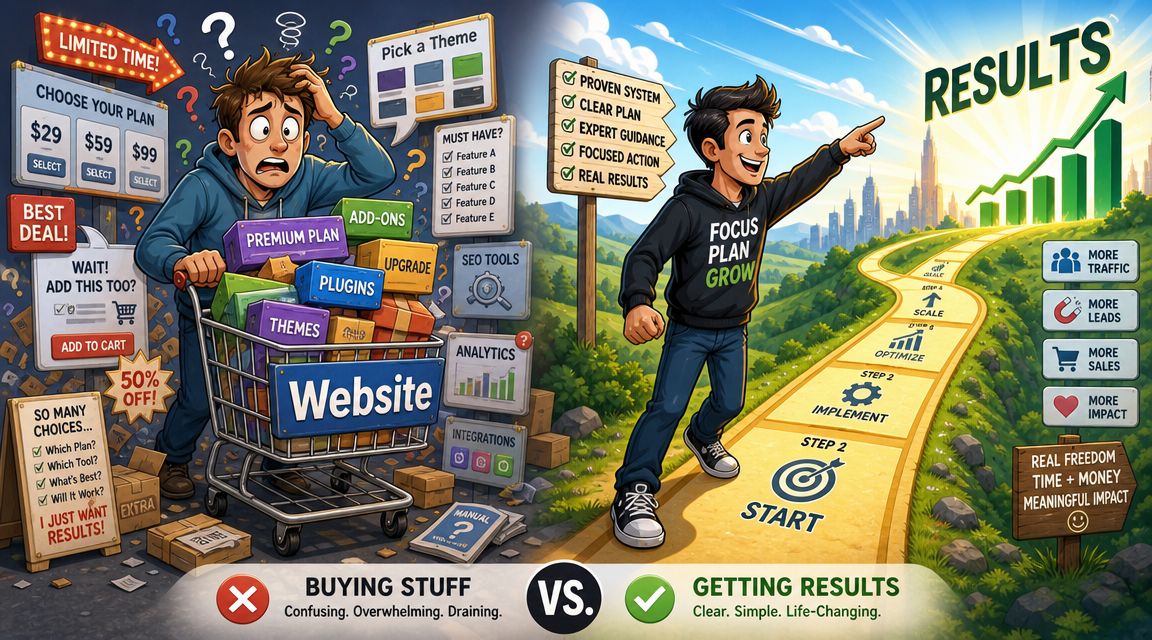
A bad redesign usually fails in predictable ways. The team obsesses over the homepage while product and checkout templates stay weak. They change navigation without understanding user behaviour. They migrate content and products badly, lose SEO equity, and then call the drop in performance a temporary adjustment.
What actually matters
If you're hiring your first serious agency, judge them on outcomes like these:
- Conversion quality: Can they explain where buyers are dropping out and what they'll change first?
- Revenue protection: Do they have a plan for migration, redirects, QA, and launch rollback?
- Operational fit: Can the new build support subscriptions, international markets, and your internal workflows?
- Post-launch accountability: Will they measure performance after release, or disappear once the site is live?
Practical rule: If an agency can't talk clearly about checkout friction, analytics setup, and template-level performance, they're selling design, not growth.
A brochure-site mindset is still common, even in ecommerce. You'll hear talk about storytelling, brand expression, and smooth user journeys. Fine. But if they can't connect those ideas to lead generation, order flow, or retention, you're listening to packaging.
The better buying question
Don't ask, “Can you redesign our website?”
Ask this instead:
Who can launch a better site without damaging the parts of the business that already work, and then improve the parts that don't?
That shift changes the entire selection process. Suddenly, the flashy agency with pretty Dribbble-style visuals looks less convincing than the team that asks for access to analytics, page-speed data, search performance, and your current funnel.
That's the mindset you want when choosing a web design agency in Brighton. Not a supplier of pages. A partner that treats the site like a revenue engine.
Why a Brighton Agency Gives You a Competitive Edge
Brighton is not a compromise option for businesses that don't want to hire in London. That framing is outdated.
Brighton has a mature digital ecosystem, and that matters when you want an agency with real depth rather than a freelancer network dressed up as a full-service team. Clutch's Brighton listings in May 2026 showed a concentration of active firms including Frost Creative Limited, CreativeWeb, Lightflows, Series Eight, Goodface agency, ExpandX Marketing & Web, and Duck. That density is one reason Brighton is regularly treated as one of the UK's stronger regional hubs for web agencies.
Why the local market matters
A strong local agency market usually creates three advantages for buyers.
First, competition improves standards. In a crowded market, agencies can't survive on vague promises for long. They need sharper positioning, clearer processes, and stronger delivery.
Second, talent pools get deeper. Brighton has long been a recognised creative and digital centre, and that history tends to produce better designers, developers, strategists, and project managers in the same place.
Third, you get South East access without London overhead. Brighton agencies often work with London clients, but they aren't trapped by London's pace, pricing assumptions, or bloated process.
Here is a useful perspective to consider:
| Factor | Why it helps you |
|---|---|
| Agency concentration | More choice, better comparison, less chance of settling for a weak fit |
| Regional maturity | Agencies are more likely to have repeatable delivery processes |
| Access to London market | Stronger commercial expectations and broader experience |
| Creative heritage | Better balance of brand thinking and digital execution |
Brighton is useful if you know what you're buying
The phrase web design agency Brighton attracts a wide range of providers. Some are excellent. Some are branding studios that also build websites. Some are dev shops with thin UX capability. Some are generalist marketing agencies that treat ecommerce like an add-on.
That's why local reputation alone isn't enough. You still need to separate surface-level capability from growth capability.
A useful filter is whether the agency sounds like a design supplier or an ecommerce operator. The good ones ask about margin pressure, returns, product discovery, merchandising logic, and whether your team can manage the site after launch. That's closer to what an ecommerce growth agency looks like in practice.
What Brighton gives you
Brighton gives you a better hunting ground, not an automatic answer.
A mature market helps. It does not remove the need for sharp due diligence.
That's the advantage. You're choosing from an established ecosystem with boutique specialists and larger teams, rather than hoping one generic agency can somehow handle design, ecommerce logic, migration risk, and integration complexity all at once.
The Four Pillars of a High-Growth Ecommerce Agency
A decent-looking portfolio tells you almost nothing about whether an agency can handle a revenue-critical ecommerce build. You need a harsher test.
The agencies worth hiring usually stand on four pillars. If one is weak, the project gets fragile fast.
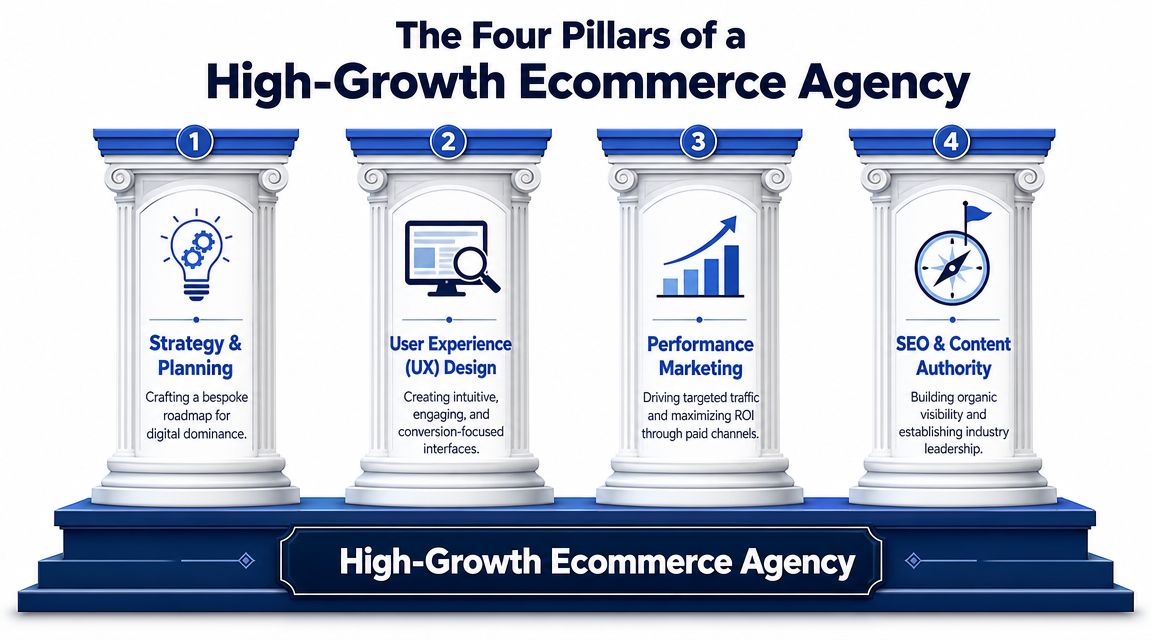
Platform depth, not platform familiarity
A lot of agencies say they “work with Shopify”. That statement is almost useless.
You need to know whether they understand theme architecture, Shopify 2.0 constraints, app impact on performance, merchandising workflows, internationalisation, subscriptions, and how content editors will use the system. If your business is growing, platform mistakes become operational problems within months.
This matters more because ecommerce complexity is rising. Creative Blend notes that buyers often struggle to get clear answers on Shopify migrations, internationalisation, and ERP or CRM integrations, even though these are common growth requirements. The same source also cites a projection of about US$160 billion in UK ecommerce revenue in 2026, which is a reminder that mature online markets create more complex operational demands, not simpler ones.
Red flag: the agency talks about “beautiful Shopify stores” but can't explain data flow, app governance, or what happens when your catalogue and systems get more complicated.
Migration discipline
Migrations break businesses when they're handled like content moves instead of risk projects.
A serious agency should be able to talk about redirect mapping, data validation, metadata preservation, collection logic, tracking continuity, and staged QA. If they can't explain their approach to launch risk in plain English, don't hire them.
Ask them what they do to protect:
- Search visibility: How do they preserve URLs, metadata, and internal linking logic?
- Customer continuity: How do they handle account data, subscriptions, and order history where relevant?
- Operational uptime: What's the plan if launch-day issues hit checkout, stock sync, or payment flow?
Conversion-led UX
Most agency sites say they care about UX. Fewer can show a process for improving it commercially.
A high-growth agency doesn't redesign everything at once because it looks dated. They identify the pages and interactions that affect buying behaviour most, then improve those first. That usually means product pages, collection pages, cart, search, and checkout-related journeys before cosmetic flourishes.
If an agency starts with visual exploration before understanding funnel performance, they're guessing with your money.
Good UX in ecommerce is not abstract. It's product discovery, trust, clarity, speed, friction reduction, and cleaner paths to purchase.
Integration competence
This is the pillar buyers underestimate most.
A web design agency in Brighton might produce a strong front end and still be the wrong choice if your store depends on stock systems, fulfilment logic, customer data tools, subscriptions, B2B pricing, or cross-border setup. The site doesn't live on its own. It sits in the middle of a messy stack.
Here's the simplest way to assess this:
| Pillar | What good looks like | What weak looks like |
|---|---|---|
| Platform depth | Clear answers on Shopify setup, content management, app impact | Generic platform talk |
| Migration discipline | Structured launch planning and risk control | “We'll manage redirects later” |
| Conversion-led UX | Template prioritisation based on buying behaviour | Homepage-first redesigns |
| Integration competence | Comfortable discussing ERP, CRM, subscriptions, markets | Avoids back-end detail |
The agency doesn't need to be the biggest one in Brighton. It needs to be the one that understands how ecommerce truly breaks, and how growth practically happens.
Your 9-Step Agency Selection Checklist
Hiring an agency feels vague until you turn it into a procurement process. That's what you should do. Good founders and ecommerce leads don't “see who they like”. They run a structured selection.
Start with discipline, not chemistry.
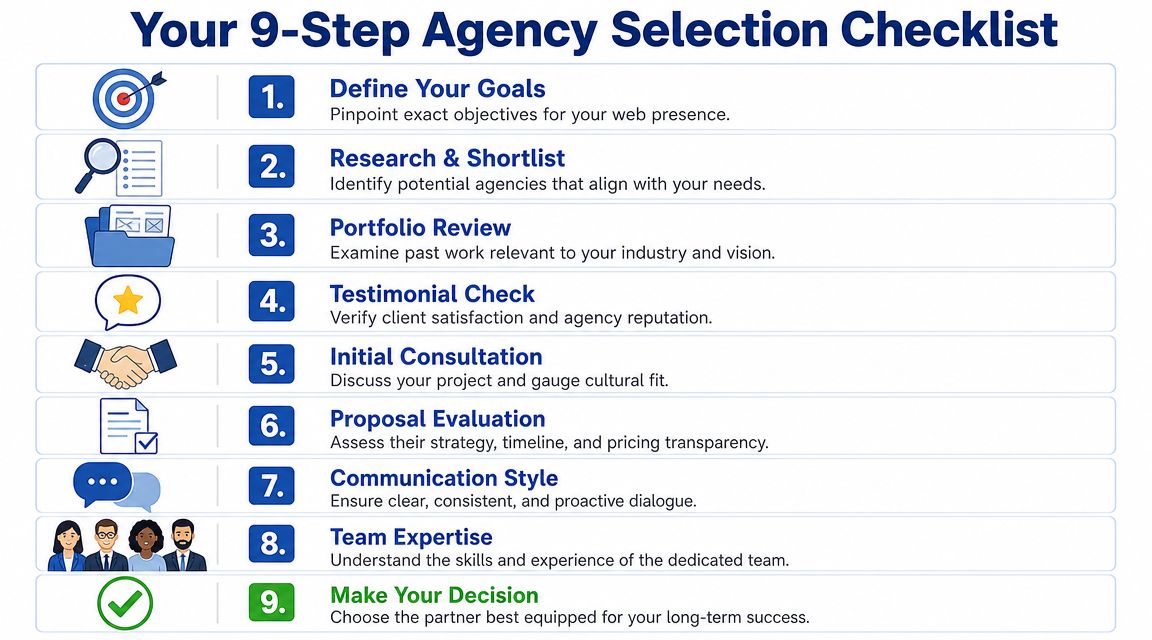
Step 1 to Step 3
Define the commercial job
Write down what the project must achieve. Better conversion. Cleaner migration. Faster merchandising. Stronger mobile UX. Fewer app conflicts. If your brief just says “modern redesign”, you're setting yourself up for vague proposals.
Audit your current store first
Before you speak to agencies, get clear on what's broken. The strongest methodology is a structured conversion audit: map the funnel, instrument analytics, identify mobile friction, redesign the highest-impact templates first, then retest. Thrive Agency's guidance lays out a practical sequence: crawl the site, compare mobile versus desktop conversion, prioritise template changes, and re-test against conversion rate.
Build a focused shortlist
Don't shortlist every agency with a pretty portfolio. Shortlist agencies that show ecommerce depth, migration fluency, and comfort with operational complexity. For a broader framework, this guide to how to choose a web design agency is a useful companion because it pushes you toward evaluation criteria that matter beyond visuals.
Step 4 to Step 6
Review work through a commercial lens
Ignore style for a moment. Look for evidence that the agency understands collection pages, filters, product content structure, cart flow, upsell logic, and mobile interactions.
Interrogate case studies
Don't ask, “Can we see relevant work?” Ask better questions:
- What was broken before the redesign?
- What did you refuse to change because it was already working?
- What happened in the first weeks after launch?
- How did you measure success beyond appearance?
Write a brief that exposes weak agencies
Include your platform, current pain points, required integrations, migration concerns, internal approval process, and desired reporting cadence. Mention anything that adds complexity, such as subscriptions, international storefronts, or ERP dependencies. Weak agencies will respond with generic packages anyway. That tells you enough.
Before you go further, it helps to hear how another specialist frames partner selection on the paid acquisition side. This piece on Choosing your Google Ads growth partner is useful because the same principle applies: don't buy channel activity, buy accountable expertise.
Step 7 to Step 9
Run serious interviews
Don't treat calls like chemistry checks. Use them to test thinking. Ask:
- Talk me through a project where the original brief was wrong
- How do you decide what not to redesign
- What's your approach to QA before launch
- How do you handle disagreements about scope or priorities
- What reporting do you provide after launch
Check the actual team
Ask who will do the work. Not just the sales lead. You want to know whether the strategist, designer, developer, and project lead are senior enough for the risk level of the project. Many agencies sell seniority and deliver juniors.
Negotiate the contract around risk
Focus on scope boundaries, milestones, post-launch support, QA responsibility, and what happens if timelines slip. If migration or integration work is involved, make sure those assumptions are written down.
Here's a useful benchmark for your own process:
Decision test: If you finish the selection process and still can't explain how the agency will improve revenue, reduce friction, or lower launch risk, you haven't finished the selection process.
Decoding Agency Pricing and Finding Value
Most buyers look at pricing too early and read proposals too strictly. That's how they choose the wrong agency for the right budget.
A cheap quote often means one of three things. The agency has misunderstood the complexity. The agency has excluded important work and will charge later. Or the agency plans to deliver a thin process with minimal strategic thinking.
What you're usually paying for
Agency pricing normally lands in a few broad models:
| Model | Best for | Watch out for |
|---|---|---|
| Fixed project | Clear scopes and one-off redesigns | Hidden assumptions and change request creep |
| Monthly retainer | Ongoing CRO, support, iteration, roadmap work | Weak accountability if deliverables are vague |
| Day rate or sprint model | Fast-moving teams with internal ownership | Requires strong client-side direction |
There isn't a universally “best” model. A fixed project can work well for a contained build. A retainer is often better when the job itself includes iteration, testing, support, and post-launch growth work.
Judge value, not headline cost
The strongest commercial case for paying more is simple. Better design and UX can drive real business impact. MadeByShape reports that a well-designed website can improve time on site by up to 84% and increase year-over-year online revenue by 132%. That doesn't mean every redesign will produce those results. It does mean design quality affects commercial outcomes enough that price should be assessed as an investment decision, not a procurement exercise.
That's why the cheapest proposal is rarely the safest one. If one agency includes discovery, template prioritisation, analytics planning, migration QA, and post-launch measurement, while another sends a lower quote built around design files and a build, those are not equivalent offers.
The expensive part of a redesign is not the invoice. It's the performance loss from hiring the wrong team.
If you need a practical grounding before reviewing proposals, this breakdown of Shopify website design cost is useful because it helps separate design effort, development effort, and the hidden cost drivers buyers often miss.
Your Next Step to a High-Velocity Revenue Engine
A good agency relationship doesn't feel like outsourced production. It feels like your ecommerce team got sharper overnight.
That's the shift that matters. You're not buying pages, mock-ups, or a launch date. You're choosing the people who will touch conversion paths, product discovery, integrations, site performance, and a meaningful chunk of revenue.
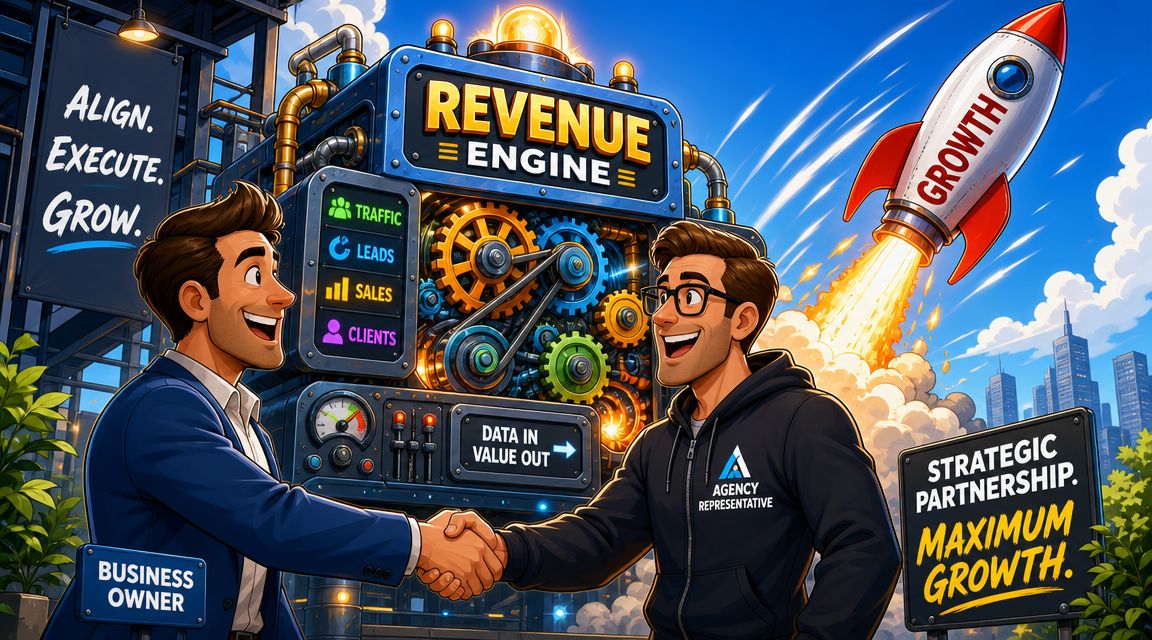
The right web design agency in Brighton will understand that a redesign is only successful if the store is easier to buy from, easier to manage, and safer to scale. They'll be comfortable discussing audits, migrations, structured QA, ERP and CRM dependencies, international requirements, and post-launch iteration. They won't hide behind aesthetics.
What a serious partner looks like
A strong ecommerce partner usually does five things well:
- Starts with evidence: They want analytics, funnel context, and current pain points before proposing solutions.
- Designs for purchase behaviour: They care about product templates, collection logic, cart friction, and mobile use.
- Respects operational reality: They ask about systems, apps, workflows, and future growth plans.
- Builds with discipline: They treat launch like risk management, not just handover.
- Stays accountable: They measure what happened after launch and keep improving it.
If you hold agencies to that standard, your shortlist will shrink quickly. That's a good thing.
The practical move
Don't spend another month collecting attractive proposals that all sound the same. Choose a partner that can explain what they'll change, why they'll change it, how they'll protect what already works, and how they'll judge success after launch.
A website redesign should make the business stronger, not just newer.
If you want a team that works that way, Grumspot is built for it. Grumspot focuses on conversion-first Shopify design and development, structured migrations to Shopify 2.0, deep audits across UX, technical SEO, and performance, plus the operational work most agencies avoid, including internationalisation, subscriptions, and ERP or CRM integrations. Their engagements are flexible, and their case studies include a bundle creator that lifted AOV by 61%, alongside full-store rebuilds and app-focused projects.
If you're ready to hire a serious ecommerce partner instead of another design vendor, talk to Grumspot. They'll help you assess what's holding your store back, what should be fixed first, and whether a redesign, rebuild, or targeted CRO sprint is the right commercial move.
Let's build something together
If you like what you saw, let's jump on a quick call and discuss your project
Related posts
Check out some similar posts.

- web design agency southampton
Find the best web design agency Southampton. Our 2026 guide covers vetting, pricing, red flags & cho...
Read more
- web design agency sheffield
Find the best web design agency Sheffield. Our 2026 guide covers vetting portfolios, pricing, Shopif...
Read more
- web design agency leeds
Our 2026 guide helps you find & hire the best web design agency leeds. Get checklists, pricing bench...
Read more
- web design agency manchester
Find the best web design agency Manchester has to offer. Our 2026 guide covers services, pricing, qu...
Read more