7 Best Web Design Agency London Picks for 2026
- best web design agency london
- london web design
- ecommerce agency london
- ux design agency
- Shopify Plus agency
Launched
June, 2026
You start with three agency tabs open, two stakeholder opinions in Slack, and a brief that mixes redesign, SEO, CMS pain, and revenue targets. At that point, a generic "top agencies" list is not much help. The useful question is simpler. Which type of agency fits the job, the budget, and the internal team that has to live with the result after launch?
That is the filter used in this guide.
Start with specialisation. Some London agencies are built for enterprise brand platforms and complex governance. Others are better for fast-moving mid-market builds, conversion-focused ecommerce work, or CMS projects where the marketing team needs day-to-day control. If Shopify Plus is part of the brief, platform depth matters. A polished brochure-site portfolio does not tell you much about subscription logic, product architecture, app stacks, or checkout trade-offs.
Then check scale and budget signals. In a market as broad as London, buyers need sharper criteria than visual taste alone. The difference between a studio, a digital product consultancy, and a large integrated agency affects pricing, pace, stakeholder management, and how much senior attention your account gets. That is why this guide highlights fit, likely project shape, and rare pricing cues where they are available, rather than treating every agency as interchangeable.
Finally, check operating fit. A team can produce strong creative work and still be wrong for your business if they rely on heavy process, need long discovery phases, or expect client-side resources you do not have. I have seen good projects go off course because the agency was capable, but mismatched to the company stage. That is also why specialist options matter. For Shopify Plus brands that need focused ecommerce execution, this guide to the best web design agencies in the UK gives broader context on where platform specialists sit relative to larger full-service firms.
One more practical note. If you're also trying to build a repeatable system for agency lead generation, use the same standard here. Choose partners with a clear delivery model, defined strengths, and an honest fit for the brief.
1. AKQA
AKQA is the name that tends to come up when the brief is larger than "website redesign". It fits organisations that need brand, product, content, and engineering to work together across markets. If you're launching a flagship digital experience with multiple stakeholders, complex governance, and a high bar for creative execution, AKQA belongs on the shortlist.
Its strength isn't low-friction delivery for smaller businesses. It's scale. That matters in London, where buyers are choosing from a large agency ecosystem and credibility often comes from proven ability to handle complex builds and migrations at scale, as reflected in the broader market context covered by this London agency market overview.
Best fit
AKQA makes sense when your website sits inside a wider digital estate. Think global brand sites, campaign platforms, experience-led product launches, and enterprise environments where regional teams, legal review, and technical integration all need managing.
A few practical advantages stand out:
- Enterprise-grade delivery: Strong fit for multi-market builds, premium brand environments, and technically demanding web programmes.
- Cross-functional depth: Strategy, UX, UI, content, and engineering usually need to work in parallel on larger briefs. AKQA is built for that.
- Executive confidence: Well-known enterprise buyers often want an agency with a reputation that reassures internal stakeholders.
Trade-offs to watch
The trade-off is straightforward. AKQA is rarely the efficient option for a straightforward mid-market build. The process can be heavier, lead times can stretch, and the commercial model suits organisations with budget and internal maturity.
Practical rule: If your brief includes phrases like "global rollout", "multiple markets", "brand governance", or "connected experience", AKQA is a strong match. If your brief is "we need a faster, better-converting site this quarter", it may be more agency than you need.
Visit AKQA.
2. ustwo
ustwo is usually a better fit when the website is part of a product problem, not just a marketing problem. Its value sits in research-led design, strong product thinking, and in-house engineering that can carry ideas through into a working experience rather than stopping at polished concepts.
That matters if your site has account areas, service journeys, logged-in flows, content systems, or a roadmap that extends beyond launch. Teams that care about inclusivity, accessibility, and a more collaborative discovery phase often prefer this style of partner. If you're refining your shortlist, this broader guide on how to choose a web design agency is a useful companion to evaluating product-minded firms like ustwo.
Where ustwo wins
ustwo tends to shine when stakeholders already know that user research can't be skipped. It suits organisations that want to validate assumptions early, pressure-test journeys, and build around real user behaviour rather than internal opinion.
Good reasons to hire them:
- Human-centred process: Strong option for teams that need research, service thinking, and inclusive design built into the engagement.
- Product-grade execution: Better fit than a pure creative studio if the website behaves more like a digital product.
- Strong collaboration model: Useful for clients who want workshops, evidence-based decisions, and deeper stakeholder alignment.
What to be careful about
If you only need a brochure site with a cleaner look and better CMS setup, ustwo may be over-specified. Product-led agencies can add rigour that smaller projects don't need, and that affects budget, speed, and meeting load.
One practical test helps. Ask how much of your problem is design expression, and how much is journey complexity. If journey complexity is the bigger issue, ustwo moves up the list.
Visit ustwo.
3. Tangent (an Exadel company)
Tangent sits in the zone between consultancy discipline and digital agency delivery. That's useful when the brief isn't only about launching a better site, but about maintaining a platform, aligning roadmap decisions, and managing enterprise requirements over time.
Its appeal is operational maturity. For larger organisations, that often matters more than visual flair. You need a team that can work with internal product owners, compliance requirements, and technology stakeholders without turning the project into chaos.
Why buyers choose Tangent
Tangent is a strong option for businesses that want strategy, UX, and engineering under one roof, with enough process discipline to support a long-running platform rather than a one-off launch. Security posture and governance are often deciding factors on these deals.
It tends to fit best here:
- Complex CMS and platform work: Useful for content-heavy estates and data-rich environments.
- Cross-disciplinary squads: Helpful when design and engineering need to iterate tightly.
- Enterprise governance: Stronger fit for regulated or risk-aware teams than lightweight creative boutiques.
A smart way to evaluate agencies in this bracket is to ask how they balance design ambition with commercial performance. This article on conversion-focused web design is a good reference point because it keeps the conversation tied to business outcomes rather than presentation polish.
Trade-offs
Tangent may be too process-heavy for small companies that need speed and direct access to a tiny senior team. If your project is relatively simple, you'll probably feel the weight of a larger delivery structure.
The right enterprise agency doesn't just launch the site. It leaves you with governance, prioritisation, and a realistic roadmap.
Visit Tangent.
4. Cyber-Duck (CACI Digital Experience)
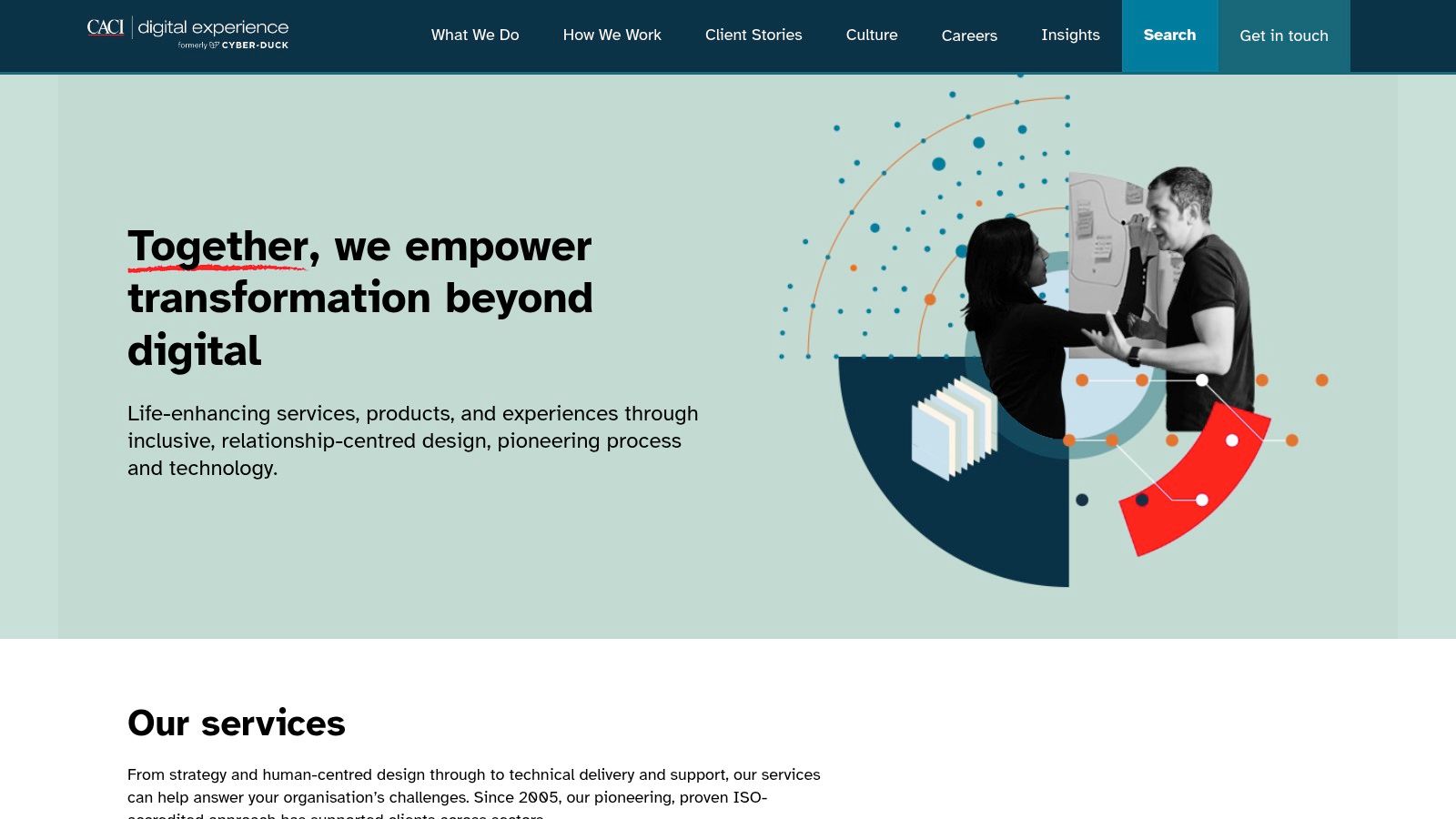
Cyber-Duck is one of the clearest picks for buyers who care about accessibility, governance, and open-source depth. If you're in public sector, higher education, regulated services, or any environment where procurement and compliance matter, it deserves serious attention.
This isn't only about credentials. It's about whether the agency operates in a way that reduces risk. Accessibility is a practical benchmark in London buying decisions, and UK public-sector standards are based on WCAG 2.2 AA. Agencies that can demonstrate keyboard audits, automated testing, and responsive QA usually inspire more confidence than agencies that only mention accessibility in passing.
Where Cyber-Duck stands out
Cyber-Duck's positioning is strongest when the site needs to perform under scrutiny. Drupal, Laravel, Acquia, hosting, DevOps, and structured UX work are all relevant here, but the bigger differentiator is discipline.
Reasons it often gets shortlisted:
- Accessibility-first delivery: Strong fit for organisations where conformance is part of procurement or internal policy.
- Open-source expertise: A good option if Drupal is already in your stack, or if you want flexibility outside closed platforms.
- Governance and accreditation: Helpful when risk reduction matters as much as visual design.
Who should think twice
Smaller businesses can find this level of process excessive. If your site isn't regulated, your content model is simple, and your team wants fast iterations, a lighter studio may be easier to work with.
The test is simple. If failure creates procurement, compliance, or reputational pain, Cyber-Duck becomes much more attractive.
Visit Cyber-Duck.
5. Propeller
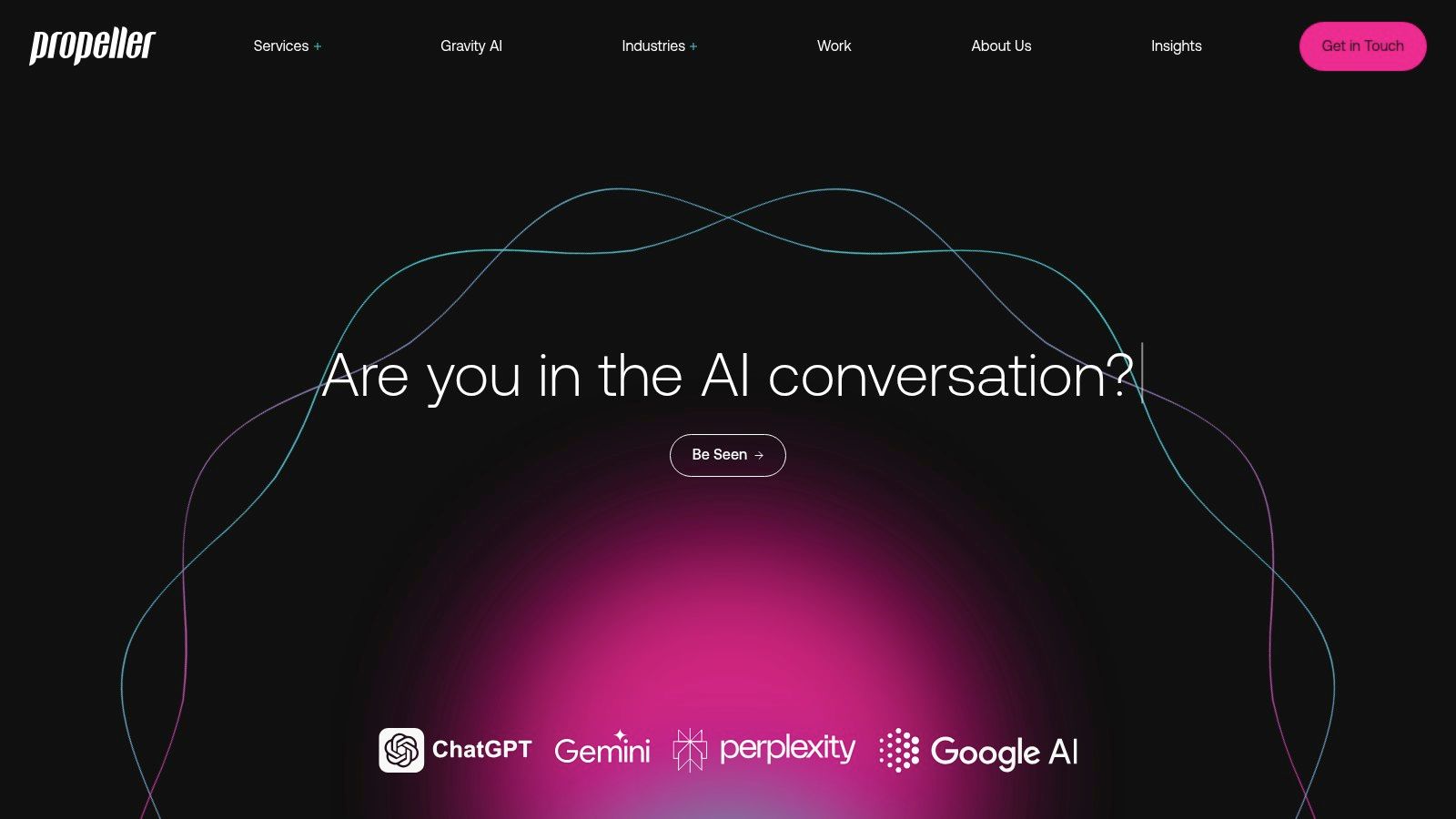
Propeller is one of the more commercially relevant options for ecommerce and hospitality-led briefs. It combines design and build with broader digital marketing support, which can help if you don't want your agency relationship to end at launch.
That makes it especially useful for brands where the website has to sell, book, upsell, or support retention. A good-looking site isn't enough in that environment. The UK's retail context reinforces that point. The Office for National Statistics reported that 26% of all retail sales in Great Britain were online in December 2024, which is why conversion-first execution matters more than gallery-worthy design alone.
Best use case
Propeller is a sensible choice for D2C brands, hotels, leisure businesses, and operators who want a site tied closely to marketing performance. Shopify and Shopify Plus capability make it more relevant than broad creative agencies for ecommerce-led briefs.
Three buying signals matter here:
- Shopify depth: Important if your roadmap includes storefront changes, merchandising flexibility, or a migration.
- Commercial mindset: Better suited to revenue-focused brands than agencies that stay mostly in branding language.
- Marketing adjacency: Helpful when SEO, paid media, CRM, and site performance need to support each other.
The trade-off
The trade-off is that a multi-service agency can be less specialised than a pure platform expert. If your whole project depends on Shopify architecture, app constraints, ERP links, or theme performance, ask detailed technical questions. The gap in many London lists is exactly this. They often don't clarify migration risk, Shopify readiness, or integration depth, a weakness reflected in the broader London agency comparison landscape on Clutch.
Visit Propeller.
6. KOTA
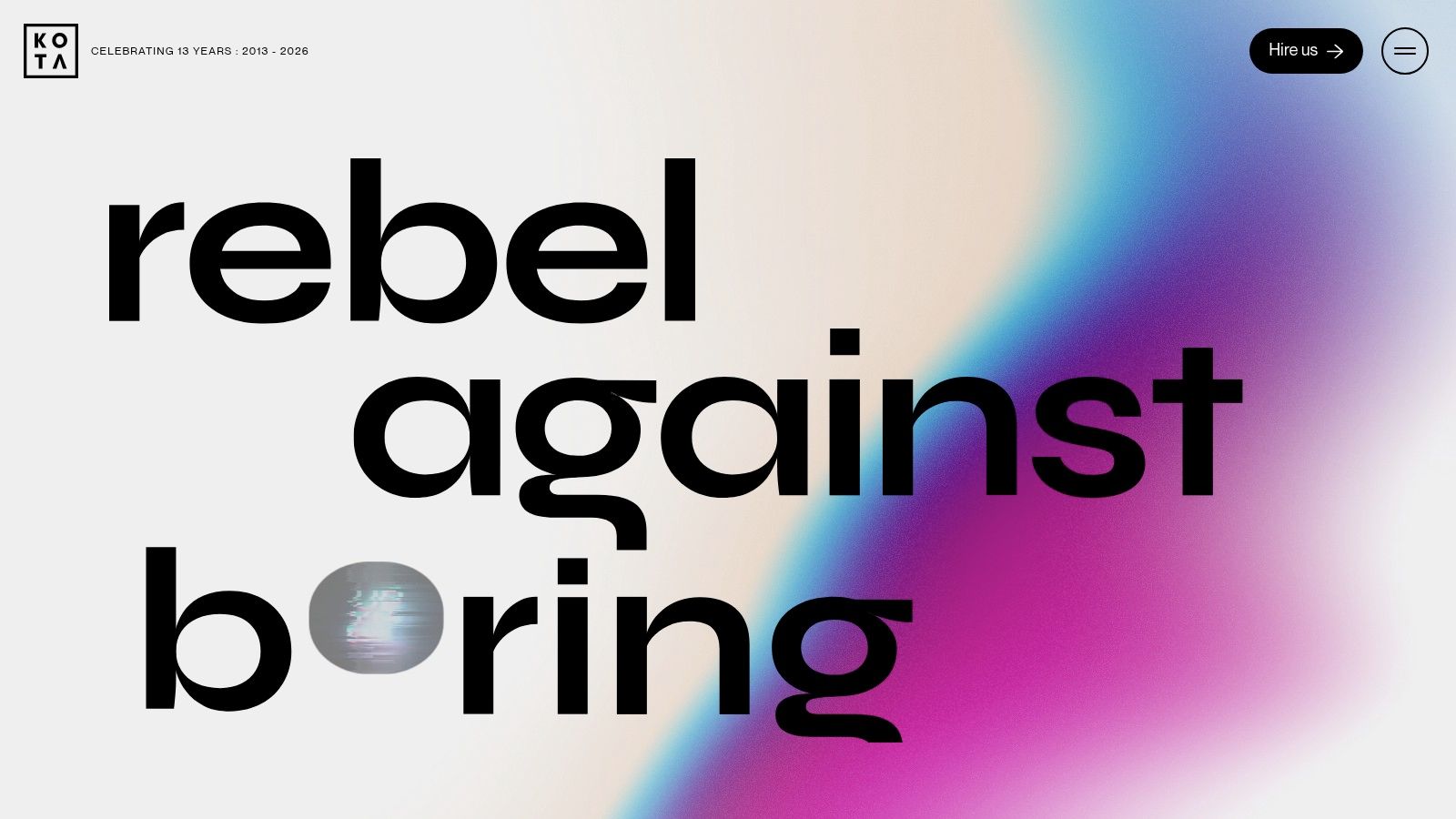
KOTA is a good example of a London agency that leads with creativity but still gives buyers practical budget signals. That matters because many agency sites stay vague until the proposal stage, which wastes time on both sides.
Its own published guidance is useful context for the market. KOTA says bespoke web development in London typically ranges from £15,000 to £80,000+, with a straightforward custom application often around £20,000, and notes minimum project sizes of £8,000 for custom WordPress builds and £15,000 for bespoke development. Those numbers won't apply to every agency, but they do help anchor what serious custom work in London tends to look like.
When KOTA makes sense
KOTA is strongest for businesses that want a memorable visual identity without hiring a giant enterprise agency. It's a fit for companies that need branding and website execution to feel tightly connected.
Why buyers like them:
- Clearer budget expectations: Helpful if you're trying to qualify fit early.
- Distinctive design style: Strong option when standing out matters.
- Ongoing support: Useful if you want post-launch continuity rather than a hard handoff.
Where fit can break down
If your decision is mainly platform-led, especially around ecommerce architecture or non-WordPress stack requirements, KOTA may not be the first choice. Design-led agencies can produce strong launch work, but the long-term fit depends on how much technical complexity sits behind the brief.
A visually strong agency is valuable when brand differentiation is the bottleneck. It isn't enough when migration risk or systems complexity is the real problem.
Visit KOTA.
7. Plug & Play
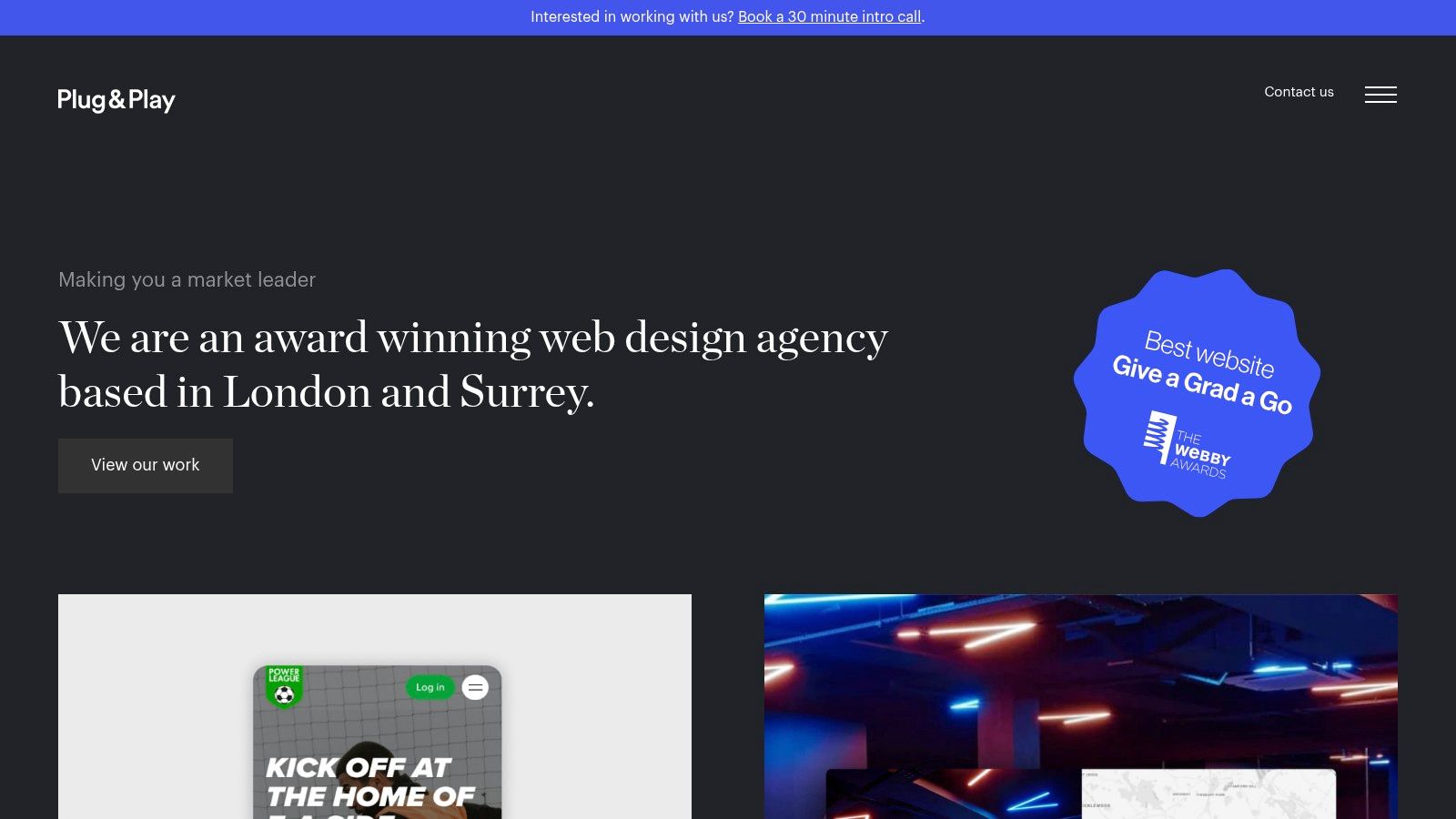
Plug & Play is the pragmatic option in this list. It won't usually be the pick for a global flagship brand build, but that's also the appeal. Many SMEs and mid-market firms need a capable agency that can improve UX, keep SEO in view, and recommend the right platform without turning the engagement into a strategic theatre production.
This kind of partner often works best when the brief is concrete. Better site structure, stronger conversion paths, manageable CMS, cleaner performance, and a launch process that doesn't disappear into endless discovery. Plug & Play's platform-agnostic positioning is useful here because not every business should default to WordPress or Shopify without a proper fit check.
Why it earns a shortlist place
For growth-stage companies, practical execution often matters more than agency prestige. Plug & Play appears to understand that middle ground.
Its strengths are straightforward:
- Pragmatic platform advice: Better than forcing every client into the same stack.
- Conversion and SEO awareness: Useful if traffic quality and lead flow matter from day one.
- Collaborative process: Early prototyping usually helps avoid expensive late-stage disagreement.
The main caution
Confirm who will work on the project and how deep the technical bench goes if your site has unusual requirements. Pragmatic agencies are often strongest on mainstream commercial builds. If your brief involves heavy systems integration, a more specialist team may be safer.
There's also a wider 2026 issue to keep in mind when comparing agencies for the best web design agency London shortlist. Many still speak mainly about design and traditional search. Fewer explain AI-era discovery, structured content, and how sites should be built for visibility across search, AI answers, and comparison platforms, a gap discussed in this AI-era agency evaluation perspective.
Visit Plug & Play.
Top 7 London Web Design Agencies Comparison
| Agency | Implementation Complexity 🔄 | Resource Requirements ⚡ | Expected Outcomes ⭐📊 | Ideal Use Cases 💡 | Key Advantages ⭐ |
|---|---|---|---|---|---|
| AKQA | High, complex, multi‑market builds; longer lead times | Premium budgets; multi‑disciplinary global teams | ⭐⭐⭐⭐, world‑class creative, measurable digital impact | Enterprise brands needing large‑scale sites, campaigns, ecommerce | Award‑winning creative, complex engineering, global delivery |
| ustwo | Medium‑High, research‑driven, product‑grade processes | Mid‑market to enterprise budgets; in‑house research & engineering | ⭐⭐⭐, improved usability, retention, inclusive UX | Human‑centred product platforms, apps, accessibility‑focused projects | Strong research practice, inclusive design, employee‑owned ethics |
| Tangent (Exadel) | High, squad delivery, enterprise governance & security | Mid‑market/enterprise; scalable squads and governance | ⭐⭐⭐, secure, scalable platforms with roadmap discipline | Complex CMS, data‑heavy and regulated enterprise platforms | ISO‑grade security, rapid scaling, cross‑disciplinary squads |
| Cyber‑Duck (CACI) | Medium‑High, rigorous, process‑led delivery | Mid‑market/enterprise; accredited practice (Drupal/DevOps) | ⭐⭐⭐, accessible, compliant public‑sector and enterprise sites | Regulated/public sector, accessibility and integration projects | Multiple ISO accreditations, Acquia partner, government frameworks |
| Propeller | Medium, ecommerce‑focused builds (Shopify/WordPress) | Growth budgets; Shopify/Plus and marketing integration expertise | ⭐⭐⭐, measurable lifts in sales, bookings and visibility | D2C brands, hospitality, ecommerce growth and conversion work | Deep Shopify experience, Klaviyo integrations, SEO+paid pairing |
| KOTA | Medium, creative‑led WordPress/ecommerce projects | Mid‑market budgets; transparent pricing ranges provided | ⭐⭐⭐, distinctive brand work with engagement gains | Creative brand sites, mid‑market WordPress projects needing design focus | Clear budget guidance, strong creative identity, post‑launch support |
| Plug & Play | Low‑Medium, pragmatic, platform‑agnostic approach | SME to mid‑market budgets; prototyping and SEO capability | ⭐⭐⭐, conversion‑oriented, maintainable sites with SEO gains | SMEs and growth‑stage businesses seeking performance & maintainability | Practical builds, frequent prototyping, platform flexibility |
Making Your Final Choice & Agency FAQs
You are reviewing three proposals after a long pitch process. One agency feels safe. One promises stronger creative work. One understands the operational risk in your stack, your CMS, or your Shopify setup within the first call. That usually tells you more than the presentation deck.
Use the shortlist as a decision framework, not a beauty contest. Judge each agency on three factors: specialisation, budget fit, and delivery scale. A brand-first website refresh, a regulated enterprise rollout, and a Shopify Plus rebuild need different buying criteria, different stakeholders, and different tolerance for delivery risk.
A shortlist of two or three agencies is enough. Include one dependable operational fit, one more design-led option, and one true specialist if the brief has technical or ecommerce complexity.
Then pressure-test the details that affect results. Ask who leads discovery. Ask who has final say on technical decisions. Ask how content migration, QA, redirects, analytics setup, and post-launch support are handled. Rare pricing signals matter too. If one agency can explain what drives cost and another hides everything behind a single project fee, that tells you how the engagement is likely to run.
London has no single winner. The better question is narrower and more useful: which agency matches your commercial goal, internal pace, platform needs, and budget range with the least avoidable risk?
Frequently Asked Questions
How much does a new website cost in London?
Cost tracks complexity. A smaller brochure site sits in a very different range from a build that includes strategy, custom UX, integrations, migration work, CRO input, and ongoing support. In practice, many reputable London agencies start in the five-figure range, with costs rising quickly once stakeholder management, custom functionality, or ecommerce complexity are added. Ask for itemised pricing across discovery, design, development, migration, integrations, and support so proposals can be compared on like-for-like scope.
How long does it take to build a website with an agency?
The timeline is usually shaped less by design speed and more by client-side readiness. Content, approvals, legal review, SEO requirements, product data, and integration dependencies often slow projects down. A focused marketing site can move quickly. A replatforming project with multiple stakeholders usually takes longer than the initial estimate unless governance is tight from the start.
What's the difference between a UX agency and a web design agency?
The difference is usually the lead discipline. A web design agency often puts more weight on brand expression, visual systems, and front-end execution. A UX-led agency usually spends more time on research, user journeys, information architecture, testing, and task completion. Many firms cover both areas, but the balance matters. If the commercial problem is poor conversion, confusing onboarding, or low service completion, choose accordingly.
Should I choose a big agency or a small studio?
Choose for operational fit. Larger agencies tend to suit enterprise governance, procurement, multi-market delivery, and projects with many decision-makers. Smaller studios and specialist teams often give you more direct access to senior people and clearer platform expertise.
That distinction matters in ecommerce. If the brief is a Shopify Plus build, migration, or conversion-focused redesign, a specialist such as Grumspot may be a better fit than a broad brand agency. The risk in that kind of project sits in data migration, theme performance, app decisions, checkout constraints, retention tooling, and revenue impact after launch.
Keep that filter strict. Strong visuals do not automatically mean stronger ecommerce execution. For businesses that need Shopify design, migration, CRO, or deeper ecommerce integration work, Grumspot is the kind of specialist worth comparing against generalist London agencies before you decide.
Let's build something together
If you like what you saw, let's jump on a quick call and discuss your project
Related posts
Check out some similar posts.
- headless commerce agency
Discover what a headless commerce agency does, when to choose headless over Shopify Plus themes, typ...
Read more
- DTC brand Shopify store
Build a high-velocity DTC brand Shopify store. This practitioner's guide covers strategy, Shopify Pl...
Read more
- Shopify Plus store build
Get expert guidance for your Shopify Plus store build. Master planning, migration, launch, and scali...
Read more
- custom Shopify storefront design
Your step-by-step guide to custom Shopify storefront design. Learn to plan, build, and launch a high...
Read more