The 7 Best Web Design Agency UK Picks for 2026
- best web design agency uk
- web design uk
- ecommerce agency uk
- shopify agency uk
- web development uk
Launched
June, 2026

Choosing a web design agency in the UK usually starts the same way. You open ten tabs, every agency says it blends strategy, design, and development, and within twenty minutes the options blur together. One team looks more creative, another sounds more technical, and a third promises end-to-end delivery, but it's still hard to tell who will indeed ship the right site for your business.
That confusion is normal. The UK market is crowded, with one industry analysis putting web design services revenue at £621.3 million in 2023 and estimating 2,041 agencies in operation. If you're trying to find the best web design agency UK buyers can trust, you don't need another beauty parade. You need a way to separate platform depth from generic sales language.
This guide does that. It moves quickly into seven strong options, then helps you judge them by specialism, ideal fit, and delivery trade-offs. If your project also needs engineering support beyond the agency model, it can help to hire full-stack developers alongside design and UX capacity.
1. Grumspot
Grumspot is the most specialised pick on this list. If you're running Shopify or Shopify Plus and the brief is "fix conversion issues, rebuild key templates, migrate safely, and keep improving after launch", this is the kind of agency structure that makes sense.
The appeal isn't broad full-service positioning. It's focus. Grumspot concentrates on Shopify design, development, CRO, custom app work, and migration delivery. That usually suits ecommerce teams that don't want to spend half the project educating a generalist agency on platform constraints.
Where Grumspot fits best
Grumspot is a strong match for established brands, scaling merchants, and teams that already know they need Shopify depth rather than general web design. It also fits businesses that want flexibility in commercial terms, since the agency offers one-off builds as well as ongoing retainers with a dedicated team.
A few practical strengths stand out:
- Shopify Plus depth: Bespoke storefronts, Shopify 2.0 migrations, and custom development sit at the centre of the offer.
- Technical continuity: Custom apps and integration-heavy work are easier when the same team handles UX and engineering.
- Retainer model: Ongoing CRO and iteration are often more useful than a single redesign followed by silence.
Practical rule: If your revenue depends on Shopify, pick a team that can explain theme architecture, app trade-offs, migration sequencing, and post-launch testing without slipping into vague creative language.
The trade-off is obvious. Grumspot isn't the right fit for WordPress, Craft CMS, or broad corporate brochure projects. If your business isn't on Shopify and doesn't plan to be, move on.
For buyers trying to sharpen their shortlist, Grumspot's own guide on how to choose a web design agency is worth reading because it focuses on delivery risk, not just portfolios. Visit Grumspot if Shopify performance is the priority.
2. We Make Websites
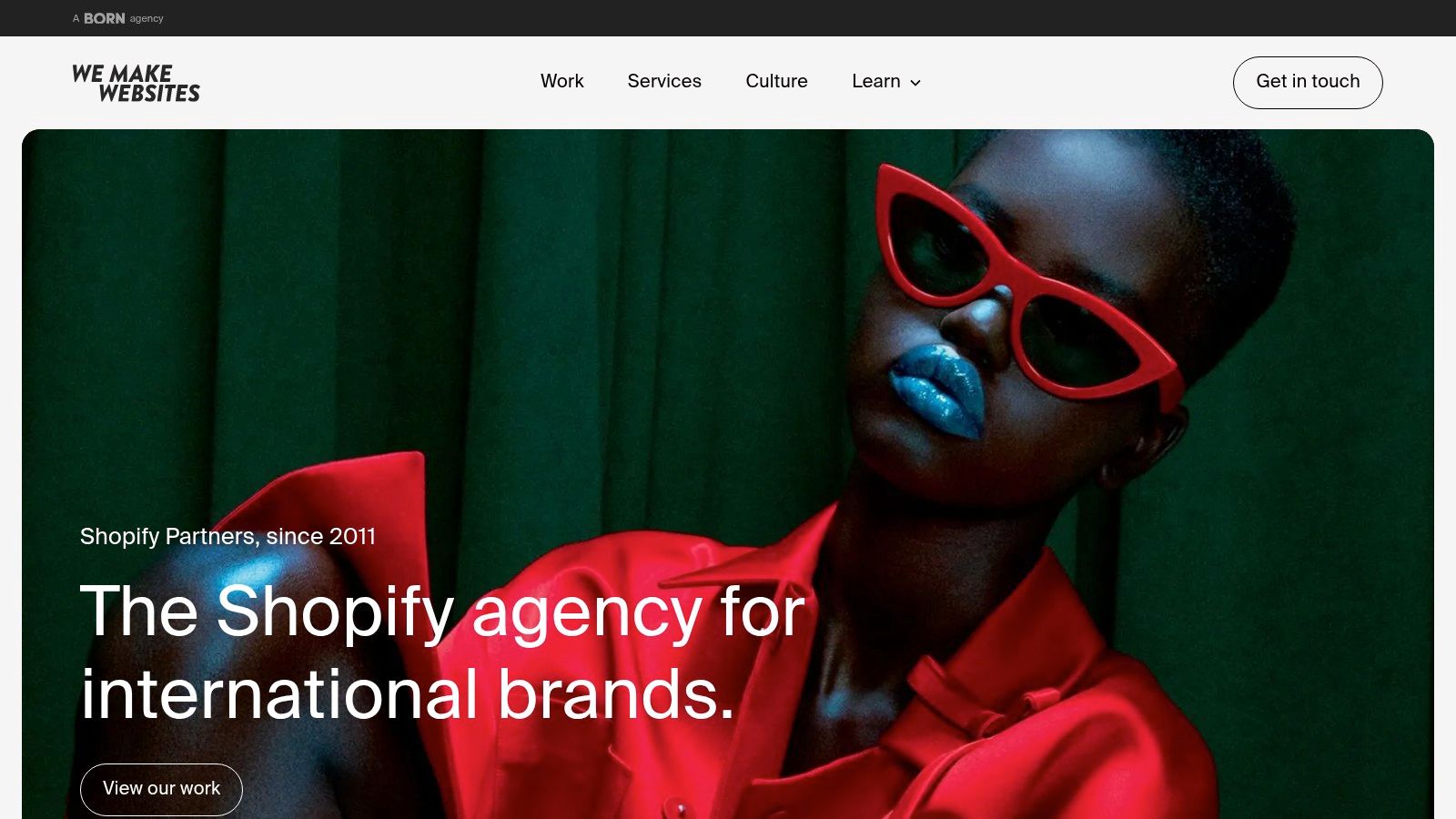
We Make Websites sits in a similar platform lane, but with a more established international profile. For premium ecommerce brands that want a Shopify Plus specialist with UK presence and broader global delivery experience, it's an easy shortlist candidate.
This is the agency to look at when internal stakeholders care about polish, platform confidence, and enterprise-grade ecommerce UX. It tends to appeal to teams that want a more formal agency setup and are comfortable with premium project structures.
Best for premium Shopify ecommerce
We Make Websites is strongest when the website isn't just a storefront but a core commercial system across multiple markets. Its positioning around migrations, optimisation, and premium Shopify design makes it relevant for larger retail operations and brands with more complex rollout needs.
What works well:
- Shopify focus: Stronger than agencies that only "also do Shopify".
- International experience: Useful when localisation, multi-market UX, or operational complexity enters the project.
- CRO mindset: Better agencies in this category think past launch and into merchandising, UX friction, and optimisation.
What doesn't:
- Limited platform range: Not a fit for businesses choosing WordPress or another CMS.
- Premium cost profile: Smaller merchants may find the engagement model heavy.
A practical distinction between this and a smaller Shopify specialist often comes down to operating style. We Make Websites may suit teams that want more formal process and global brand experience. Leaner operators may prefer a more direct, senior-led delivery model.
If you want a broader view of how specialist Shopify teams differ, this article on choosing a Shopify design agency is a useful comparison lens. The agency website is We Make Websites.
3. Propeller
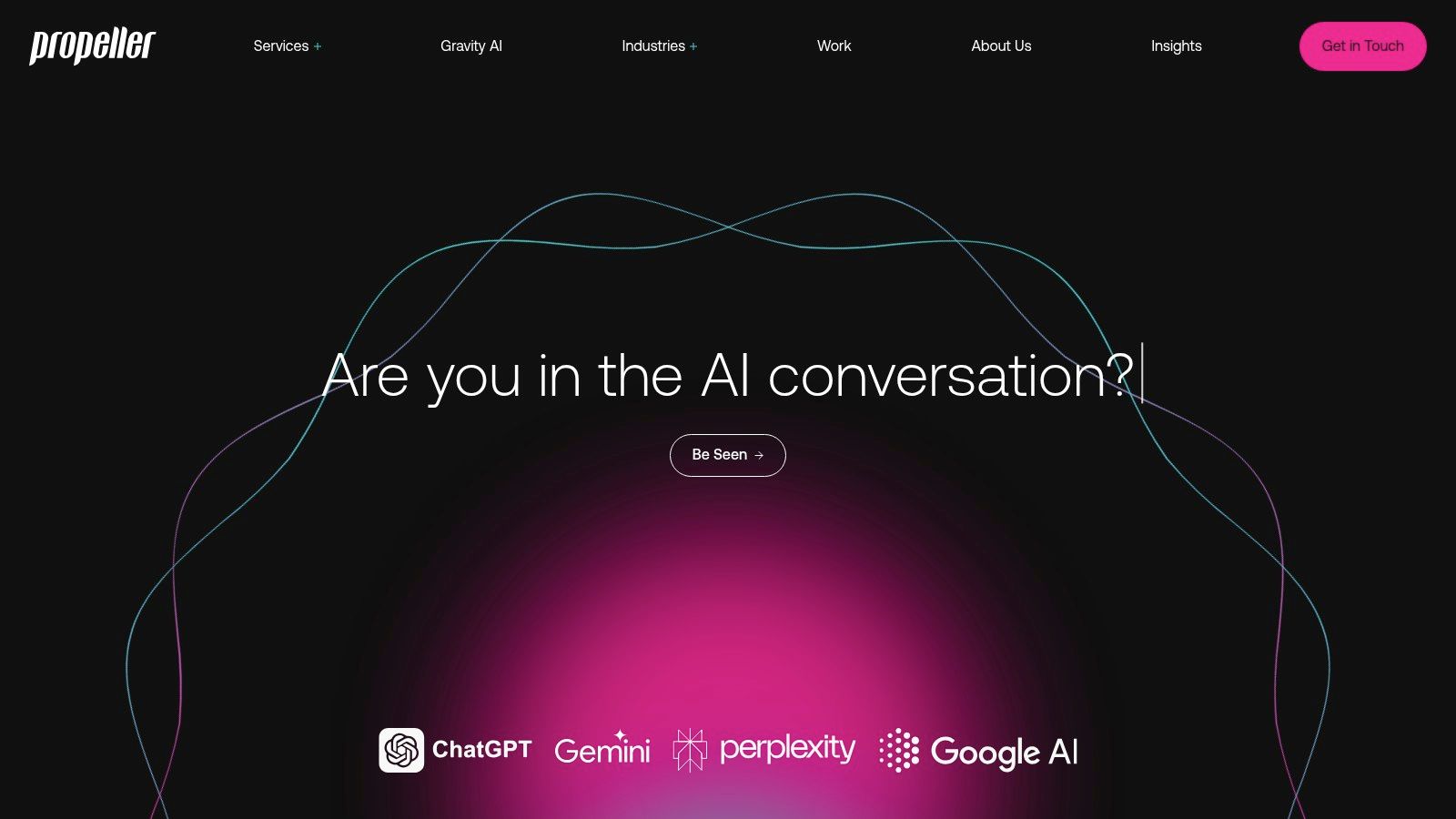
Propeller is a different proposition. Rather than owning one platform category, it works as a broader digital growth partner across strategy, UX, development, CRO, analytics, and paid media. That matters if your site doesn't live in isolation and your team wants one agency handling both build and performance work.
For hospitality, retail, and consumer brands, that joined-up model can be useful. You don't have to manage separate suppliers for design, analytics, CRO, and paid acquisition.
Better when the website is only one part of growth
Some businesses don't need the narrowest platform specialist. They need a competent digital partner that can redesign the site, measure user behaviour, improve landing page performance, and connect all that to paid media and reporting.
Propeller makes more sense in that scenario than a pure design boutique.
- End-to-end capability: Strategy, UX, development, CRO, analytics, and media can sit under one roof.
- Multi-channel thinking: Helpful when site decisions affect acquisition efficiency.
- Sector familiarity: Hospitality and retail brands often benefit from agencies that already understand booking flows, promotions, and conversion patterns.
The risk with broad agencies isn't that they're bad. It's that some become too broad. You need to test whether the actual project team can go deep where your site makes money.
The downside is platform depth. If your build depends on advanced Shopify implementation or a very specific enterprise CMS architecture, a specialist may beat a broader agency on execution detail. Propeller is better judged as a commercial growth partner than as a pure platform boutique.
If you're trying to sense-check proposals, this breakdown of Shopify website design cost helps clarify where agencies often hide complexity. Visit Propeller.
4. KOTA
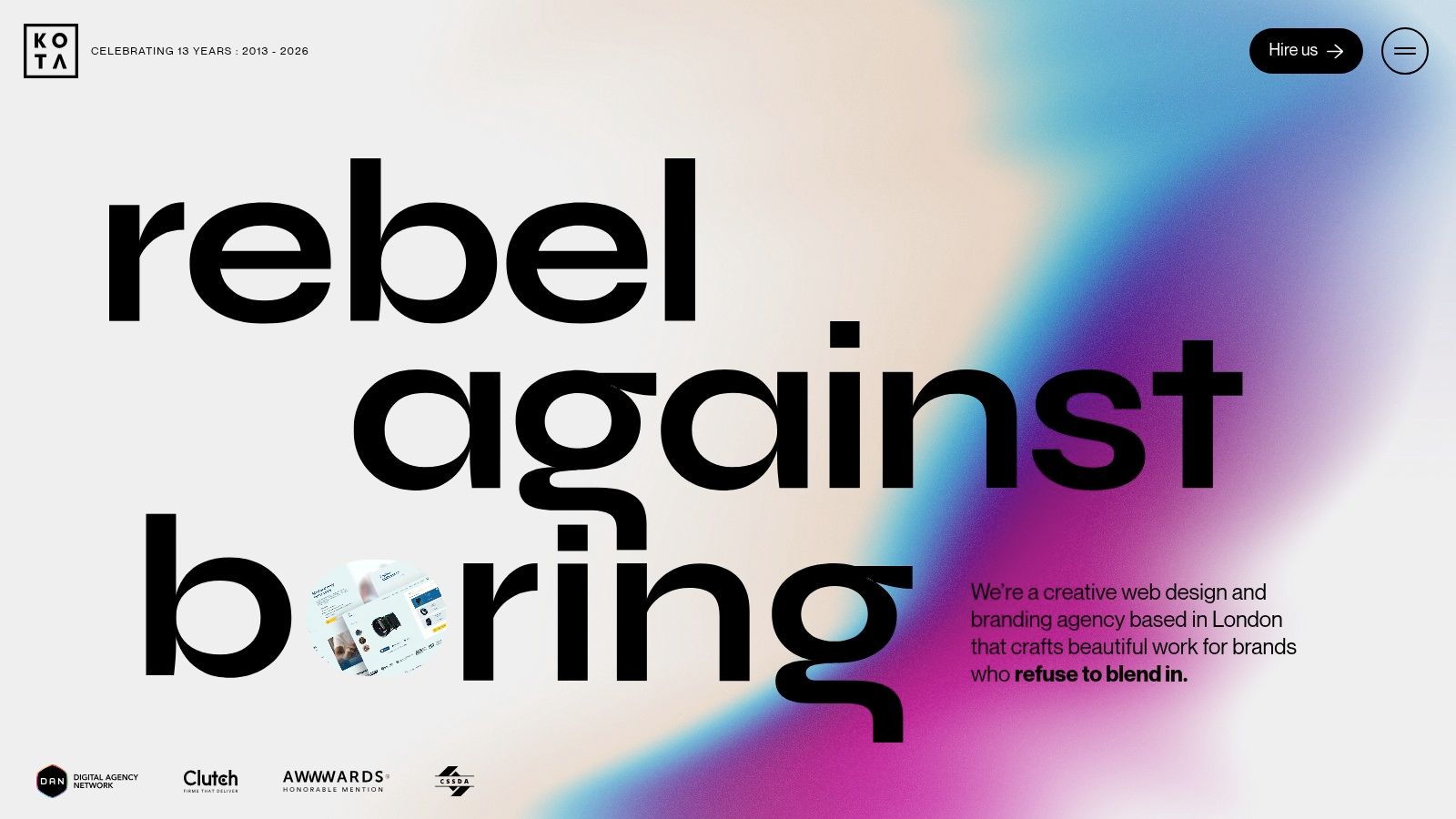
KOTA is the creative-led option on this list. If your brand competes on distinctiveness, visual identity, and digital presence rather than ecommerce operations alone, KOTA is one of the names worth considering.
This kind of agency wins when a generic-looking website would actively weaken your positioning. B2B brands with stale visual systems, lifestyle businesses, and companies preparing for a major brand refresh often need stronger creative direction than a performance-only agency can provide.
Choose KOTA for brand impact
KOTA's value is in creative execution that doesn't feel templated. The in-house blend of design and development is important because many visually ambitious agencies struggle once interactions, responsiveness, and production detail enter the picture.
Reasons brands choose KOTA:
- Creative direction: Stronger for visually differentiated brand work.
- Brand and web together: Better if your identity and site need to evolve in tandem.
- Award-recognised aesthetic sensibility: Relevant when stakeholder confidence is influenced by design craft.
The caution is equally clear. Creative-first agencies can over-rotate towards appearance if the brief isn't anchored in business outcomes. If you're hiring KOTA for ecommerce, make sure the conversation goes beyond homepages and motion references into template logic, conversion friction, content governance, and post-launch accountability.
A beautiful site can still underperform. Ask what they won't change if the current version already supports enquiry flow, sales, or search visibility.
Visit KOTA if brand-led differentiation matters more than platform-specific specialism.
5. Human Made
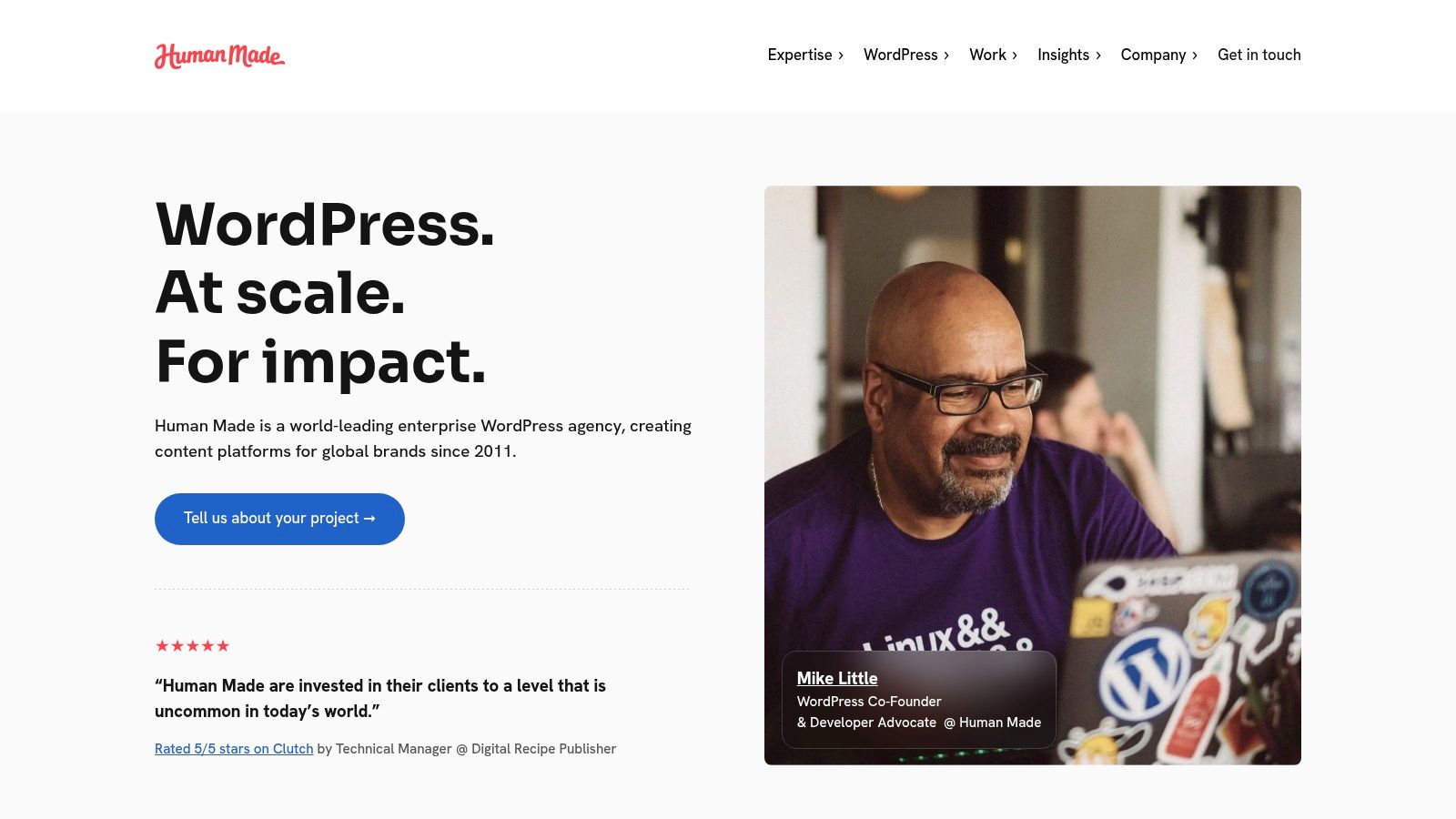
Human Made is the enterprise WordPress pick. It isn't aimed at small brochure sites or light marketing builds. It makes sense when the site is a large content platform, a complex publishing operation, or part of a wider WordPress estate that needs serious engineering.
That distinction matters because many agencies claim WordPress capability when they really mean theme customisation and plugin assembly. Human Made sits much further up the stack.
Best for enterprise WordPress environments
Human Made is a strong fit for organisations that need headless WordPress, large-scale migrations, accessibility and security discipline, or an agency that can extend an in-house product or engineering team. Publishers, media organisations, large brands, and content-heavy enterprises are the natural audience.
Key strengths include:
- Enterprise WordPress depth: Better suited to high-scale CMS work than generalist agencies.
- Headless capability: Useful where frontend flexibility and content infrastructure both matter.
- Retainers and staff augmentation: Practical for organisations with ongoing product roadmaps.
The trade-off is that Human Made is not trying to be your ecommerce boutique or your low-cost SME web partner. If the project is a Shopify rebuild, a compact DTC storefront, or a straightforward marketing site, it's likely too specialised in the wrong direction.
UK buyers should also keep the market context in mind. One UK industry estimate placed the web design market at £563 million and noted almost 2,000 web design companies serving more than 1.7 million active websites. In a market that broad, agencies with genuine enterprise platform expertise stand out because most firms don't operate at that level. Visit Human Made.
6. MadeByShape
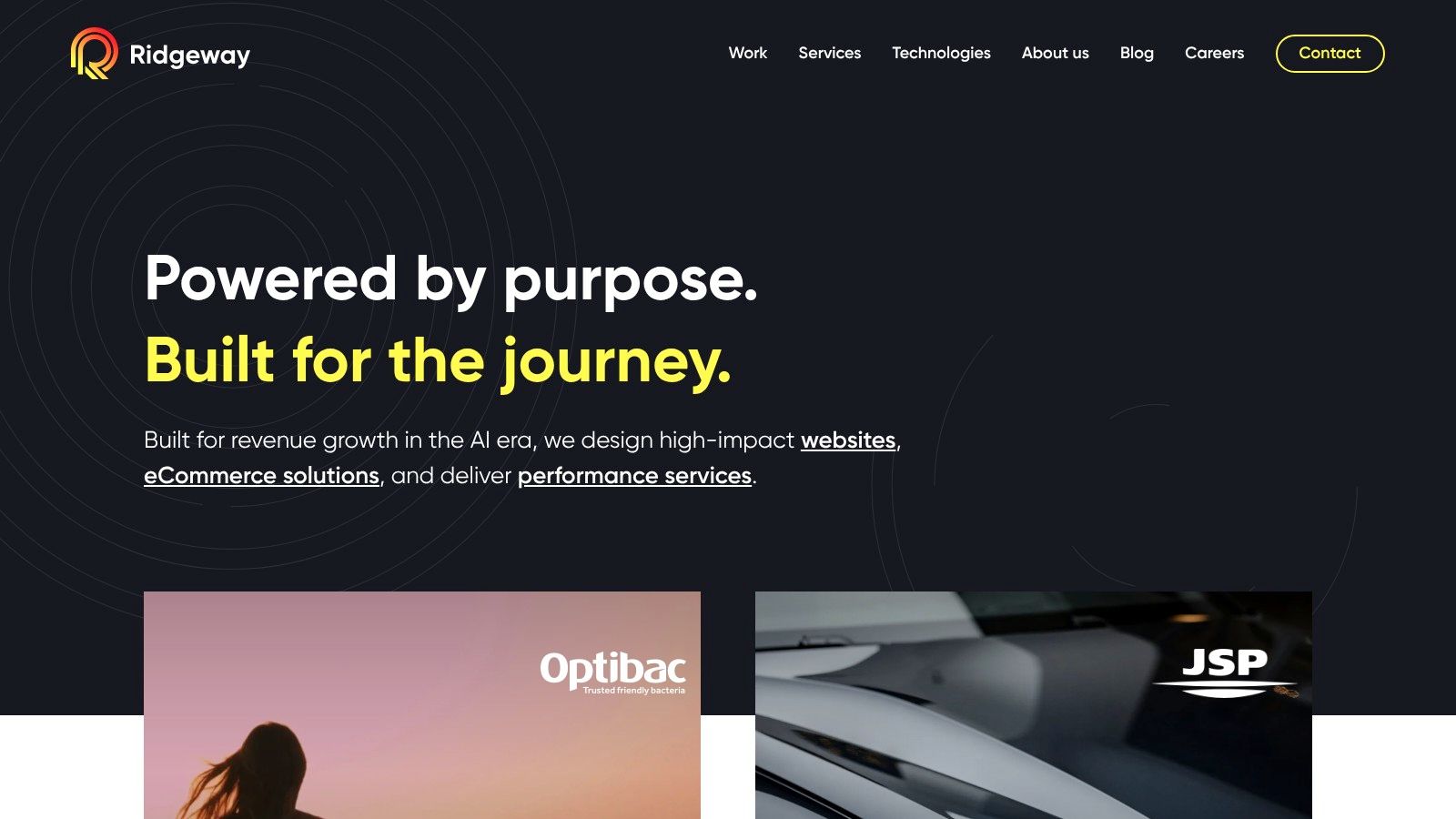
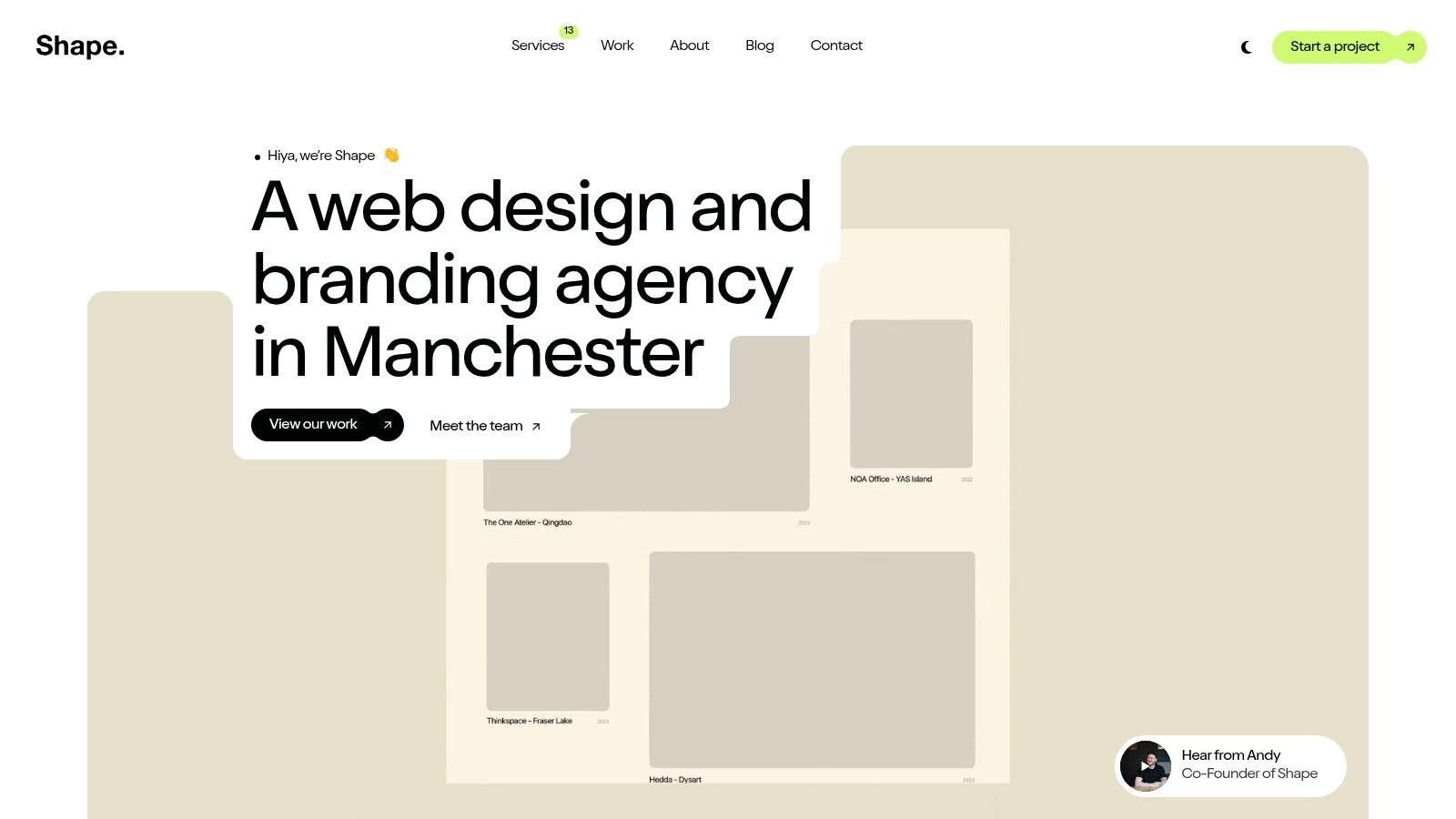
MadeByShape is a good example of a strong regional studio with a clear delivery identity. Based in Manchester, it has a reputation for bespoke websites, in-house execution, and particular strength in Craft CMS, with some ecommerce and Shopify work as well.
For SMEs and content-led brands, this is often a sweet spot. You get a team that's focused enough to care about craft and process, but not so large that the project disappears into layers of account management.
Strong option for SMEs and content-heavy builds
MadeByShape tends to suit businesses that want close collaboration and a more hands-on relationship with the people doing the work. If your site needs thoughtful UX, bespoke design, and a CMS your team can manage, that matters.
Where it fits well:
- Craft CMS expertise: Useful for businesses that want flexibility without the overhead of a larger enterprise stack.
- In-house delivery: Fewer handoffs usually mean clearer communication.
- Balanced capability: Branding, design, development, and SEO sit close enough together to keep projects coherent.
Where it may not fit:
- Limited enterprise scale: Large organisations with complex procurement and architecture requirements may want a bigger team.
- Platform preference: If your business has standardised on another CMS, the Craft specialism may be less compelling.
Independent UK data also supports why buyers need to be selective rather than defaulting to the biggest name. An industry estimate from 2021 valued the market at £563 million with almost 2,000 web design companies, while a later 2023 analysis put revenue at £621.3 million and counted 2,041 agencies. In a fragmented market like that, fit matters more than fame. Visit MadeByShape.
7. Rawnet
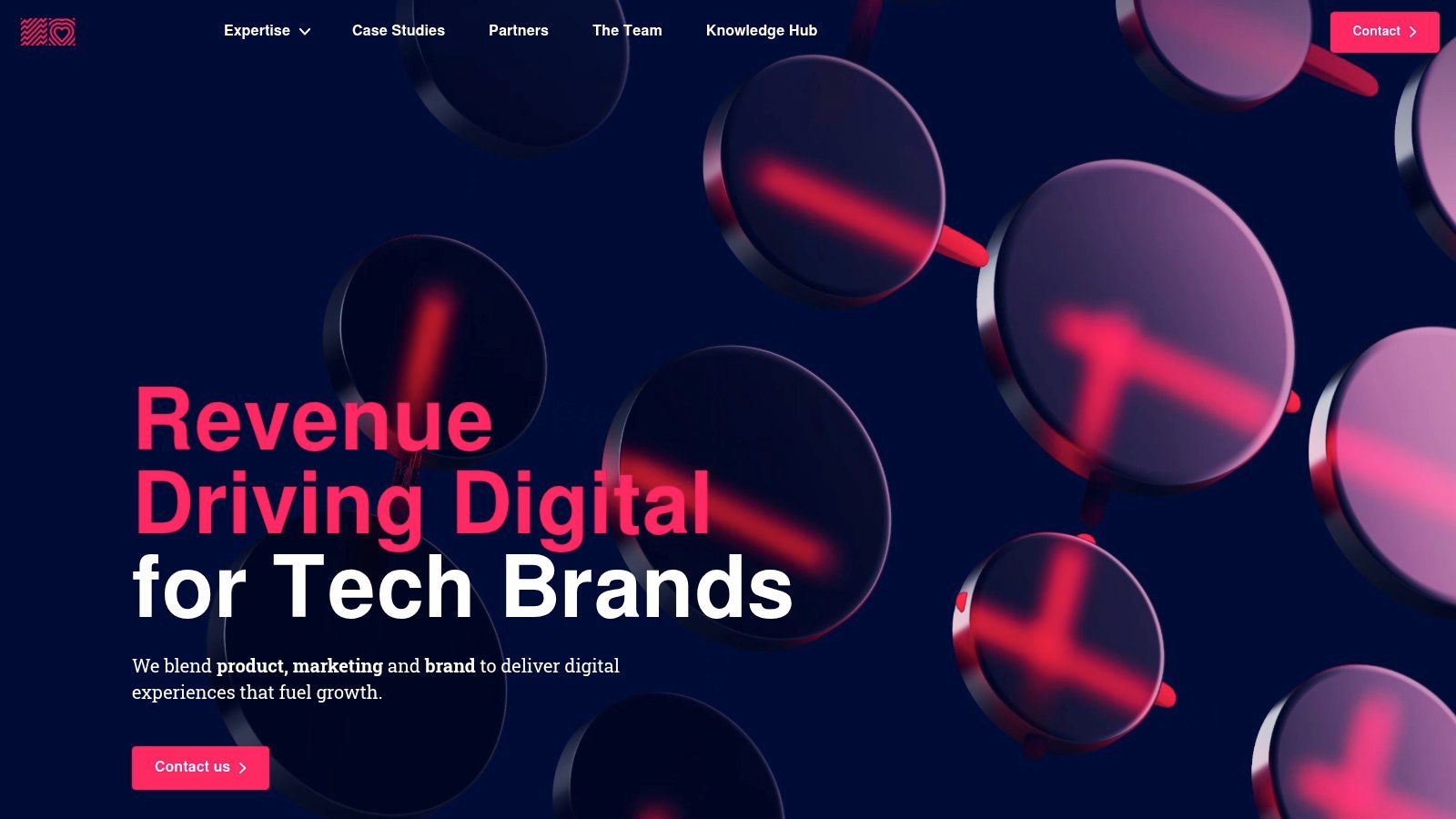
Rawnet is the B2B and tech-oriented option here. If your website needs to behave more like a product experience than a digital brochure, Rawnet is one of the more relevant UK agencies to review.
That usually applies to SaaS businesses, technology firms, and demand generation teams where the site has to explain a complex offer, support CRM and martech integrations, and convert traffic into qualified pipeline. In those situations, flashy visual work on its own won't carry the project.
Good fit for B2B demand generation
Rawnet's process maturity is part of the appeal. Partnerships with platforms like HubSpot, Bloomreach, and Sanity point to a team that's comfortable in a more technical digital environment, and its information security posture will matter for organisations with stricter internal governance.
Why Rawnet earns a place on the shortlist:
- B2B UX focus: Better aligned to lead generation and product storytelling than fashion-led DTC design.
- Operational maturity: Useful where security, compliance, and process discipline affect supplier choice.
- Platform ecosystem awareness: Important when the website has to connect cleanly to marketing and content systems.
Its limitations are mostly fit-related. A beauty brand looking for a visually expressive Shopify storefront may get more value from a specialist ecommerce partner. A small local business will likely find Rawnet heavier than necessary.
This broader market reality matters too. IBISWorld projects the UK web design services market at £658.2 million in 2026, with 2,206 businesses operating in the industry in 2025. With that many firms in play, buyers should screen for delivery quality, technical fit, and operational competence, not just agency visibility. Visit Rawnet.
Top 7 UK Web Design Agencies Comparison
| Agency | Implementation Complexity 🔄 | Resource Requirements ⚡ | Expected Outcomes 📊⭐ | Ideal Use Cases 💡 | Key Advantages ⭐ |
|---|---|---|---|---|---|
| Grumspot | High, Shopify Plus migrations, custom apps, CRO | Dedicated team or retainer; mid–high budget | Conversion rate and AOV lifts; faster revenue velocity 📊 | Established or scaling ecommerce brands on Shopify Plus | Deep Shopify Plus specialism, flat pricing, senior access |
| We Make Websites | Moderate–High, premium Shopify builds and optimisation | Project-based engagements; premium pricing | Polished storefronts and CRO improvements; award-level UX 📊 | International Shopify Plus retailers and brand-led ecommerce | Award-winning design, global delivery, Shopify focus |
| Propeller | High, end-to-end strategy, UX, analytics, media | Cross-discipline teams; analytics and media spend required | Multi-channel growth: conversion uplift and reduced bounce 📊 | Retail, hospitality, FMCG needing single partner for build+growth | Full-service stack with paid media and analytics integration |
| KOTA | Moderate, creative-led web design and branding | Boutique creative team; timeline constraints; premium fees | Strong visual differentiation and high-calibre UX 📊 | Brands prioritising distinctive creative design and branding | Award-winning creative direction with in-house execution |
| Human Made | High, enterprise WordPress and headless architectures | Enterprise teams, hosting partners; higher budget | Scalable, secure, performant content platforms 📊 | Large-scale WordPress estates, headless CMS, complex migrations | Deep WordPress/headless expertise and enterprise governance |
| MadeByShape | Moderate, bespoke Craft CMS builds and ecommerce | Compact in-house team; cost-effective for SMEs | Collaborative, content-heavy sites with rapid turnaround 📊 | SMEs and content-centric sites preferring Craft CMS | In-house delivery, tight collaboration, good value |
| Rawnet | Moderate–High, product-led UX for tech brands | Mature processes, security certifications; enterprise budgets | Lead and conversion uplifts for B2B tech/SaaS 📊 | B2B tech/SaaS needing demand-gen UX and platform integrations | ISO-certified processes, platform partnerships, process maturity |
Making Your Final Decision. The Right Fit for You
The hardest part of choosing the best web design agency UK businesses should hire isn't finding names. It's filtering them properly. Most agencies can show attractive work. Far fewer can explain how they'll protect search visibility during migration, improve conversion paths after launch, or work within the constraints of your platform, team, and roadmap.
A simple way to narrow the field is to score each agency against three questions. First, what are they specialised in. Shopify, WordPress, brand-led creative, or B2B demand generation all require different strengths. Second, what kind of client do they seem built for. Not the clients they want, but the ones their process, pricing, and team structure clearly support. Third, what are the likely failure points if you hire them. Creative overreach, weak platform depth, overbuilt enterprise process, or lack of post-launch optimisation are all common issues.
One point often gets missed in UK agency roundups. Many lists reward awards pages, review profiles, or visual polish, but they don't help buyers compare agencies on implementation risk, ecommerce readiness, or iteration speed. That gap matters, especially for online retail brands. As one UK-focused analysis notes, current agency roundups often fail to compare firms on the operational measures that matter most for ecommerce delivery, even though those choices can have direct commercial impact for brands evaluating redesigns or migrations (We Are Tenet's perspective on UK web design agencies).
That is why the "best" choice is never universal. KOTA may be the right move for a brand-led repositioning. Human Made may be the correct answer for a complex WordPress estate. Rawnet may fit a SaaS demand generation model far better than an ecommerce studio would. And if Shopify performance, migration discipline, and ongoing CRO are central to the brief, Grumspot is one relevant option to include in your shortlist.
Shortlist two or three agencies. Ask each one to respond to the same commercial brief. Compare how clearly they define scope, how they handle risk, who will do the work, and what happens after launch. The team that gives the clearest answers is usually safer than the one with the most polished pitch deck.
If your shortlist is leaning towards Shopify and you want a team that focuses on bespoke storefronts, Shopify 2.0 migrations, CRO, and custom app development, take a look at Grumspot. It's a practical option for brands that need senior Shopify design and development support without a generic full-service setup.
Let's build something together
If you like what you saw, let's jump on a quick call and discuss your project
Related posts
Check out some similar posts.
- web design agency southampton
Find the best web design agency Southampton. Our 2026 guide covers vetting, pricing, red flags & cho...
Read more
- web design agency derby
Find the perfect web design agency Derby. Our 2026 guide helps you vet portfolios, ask the right que...
Read more
- shopify store setup services
Looking for Shopify store setup services? Our 2026 guide covers deliverables, pricing, timelines, an...
Read more
- shopify migration experts
Moving to Shopify? Find the right Shopify migration experts with our guide. Learn the key stages, qu...
Read more