Choosing a Shopify CRO Agency to Grow Your Revenue
- Shopify CRO agency
- eCommerce CRO
- Shopify optimisation
- conversion rate optimisation
- Shopify Plus agency
Launched
March, 2026
So, what exactly is a Shopify CRO agency?
Think of them as performance specialists for your online store. Their job is to dive deep into your data, analyse customer behaviour, and use rigorous testing to turn more of your visitors into paying customers. It’s about making your existing traffic work much, much harder for you.
What a Shopify CRO Agency Really Does
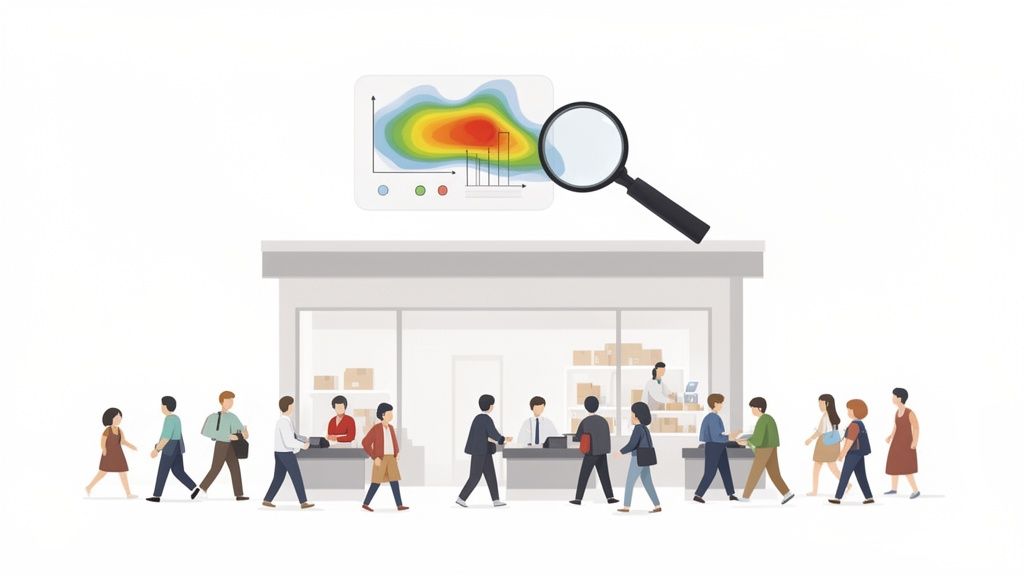
Let's use an analogy. Imagine your Shopify store is a physical shop on the high street. You're spending a good chunk of your budget on marketing to get people through the door (that’s your website traffic), but for some reason, very few are actually buying anything.
A Shopify CRO agency is like an expert retail consultant who comes into your shop. They don't just guess what's wrong. They watch how people move, see where they get stuck, and figure out why they're leaving without making a purchase. They then rearrange the store layout, clarify the pricing, and make the checkout process completely seamless.
Their entire focus is to systematically improve your store's conversion rate—the percentage of visitors who complete a key action, like making a purchase. This isn't about hunches or trendy designs; it's a science based on cold, hard data.
This data-first approach is becoming essential. The game has changed from simply getting more clicks to getting more value from every single click. As one industry expert put it, Amazon SEO Consulting Is Dead. Long Live Conversion Consulting., highlighting this critical shift in focus for online retailers.
The Shift from Guesswork to Data-Driven Growth
Too many store owners make changes based on what a competitor is doing or what they personally feel looks better. A proper Shopify CRO agency throws that guesswork out the window.
They replace intuition with a methodical, scientific process. They get into the weeds of your store's analytics to understand what’s really happening behind the scenes.
A data-driven CRO strategy is the difference between hoping for growth and engineering it. It systematically removes friction points in the customer journey, making it easier for shoppers to say 'yes' at every step.
This process isn't random. It follows a clear, repeatable framework:
- Deep-Dive Analysis: They use tools like heatmaps and session recordings to see exactly where users click, how far they scroll, and where they abandon their journey.
- Hypothesis Generation: Based on the data, they form an educated guess. For example, "We believe the lack of clear shipping information on the product page is causing high cart abandonment."
- A/B Testing: They create a new version of the page (the 'B' version) with the proposed fix and test it against the original ('A' version). The traffic is split, so they can see which one performs better.
- Implementation: Once a winner is declared, the successful changes are rolled out to 100% of your traffic, locking in that conversion lift.
Why This Matters for UK Shopify Merchants
In the fiercely competitive UK market, optimisation isn't just a nice-to-have; it's a necessity. With nearly 1,000 Shopify Plus stores operating here by 2023, you have to fight for every sale.
The data tells a compelling story. Average conversion rates for UK Shopify stores often hover between 1.4% and 1.8%. That’s a lot of missed opportunity. In contrast, the top-tier stores are hitting 3.2% and above, demonstrating the huge potential that expert CRO can unlock.
To see how even a small improvement can make a massive difference, look at the table below. It shows the impact of a modest 1% conversion rate increase for a store with 50,000 monthly visitors and a £100 average order value.
The Revenue Impact of a 1% Conversion Rate Increase
| Metric | Before CRO Agency | After CRO Agency |
|---|---|---|
| Monthly Visitors | 50,000 | 50,000 |
| Conversion Rate | 1.5% | 2.5% |
| Monthly Orders | 750 | 1,250 |
| Average Order Value | £100 | £100 |
| Monthly Revenue | £75,000 | £125,000 |
As you can see, that single percentage point improvement translates to an extra £50,000 in revenue every single month, without spending a penny more on advertising.
This is precisely why partnering with a skilled agency is such a powerful strategic move. Instead of just pouring more money into ads, you make the traffic you already have infinitely more valuable. You can get a more detailed look at the core principles in our guide on what is conversion rate optimisation. Ultimately, a great Shopify CRO agency turns your store into a highly efficient sales engine, ensuring every visitor has the best possible chance of becoming a customer.
Core CRO Tactics for Shopify Plus Stores
A top-tier Shopify CRO agency doesn’t just fiddle with button colours and call it a day. They dig deep into the platform’s unique architecture to re-engineer the entire customer journey, turning casual browsers into loyal customers. It’s a mix of savvy technical work, smart user experience design, and a real understanding of what makes people click ‘buy’.
The goal is to apply proven conversion rate optimization best practices in a way that makes sense for a Shopify store. Every tweak and adjustment has a purpose, connecting a technical change to a direct commercial win. It’s this strategic, data-led approach that separates the best from the rest.
Just look at the numbers. In the UK, the top 10% of Shopify stores hit conversion rates of 4.7%. That’s a world away from the average 1.4% to 1.8%. Expert CRO is what closes that gap, especially by focusing on critical areas like site speed, where Google data shows a 32% jump in bounce rate when load times slip from one to three seconds.
Engineering a Blazing-Fast Mobile Experience
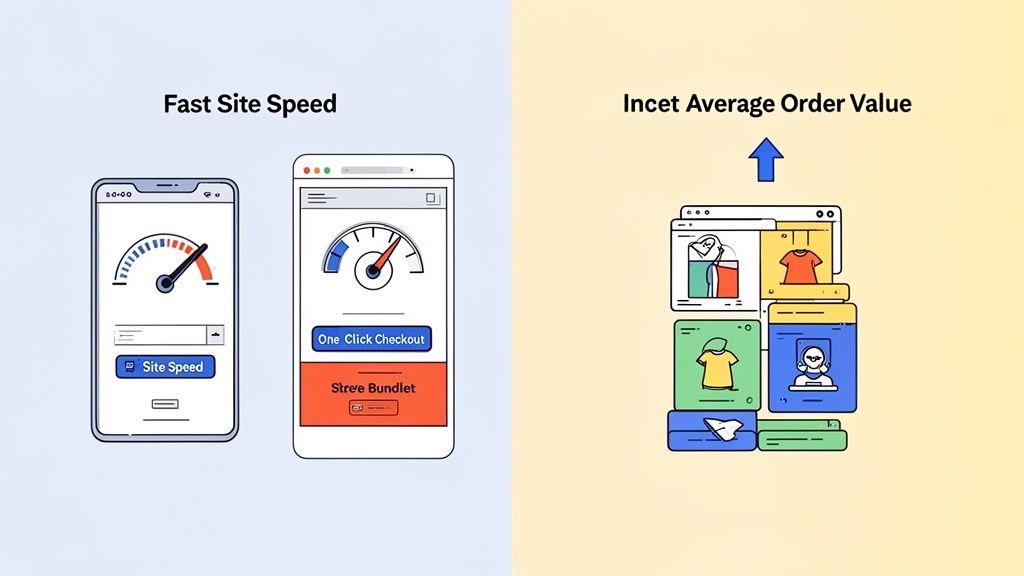
Most of your traffic is coming from mobile. That's a fact. If your mobile experience is clunky, you’re practically handing money to your competitors. A proper Shopify CRO agency lives by a 'mobile-first' mantra, understanding that the small screen is where the real conversion battle is won.
It all starts with speed. Google's Core Web Vitals aren't just technical jargon; they're a direct measure of how your site feels to a user. A deep technical audit will root out all the performance-killing culprits.
This usually means getting your hands dirty with:
- Image Optimisation: Squeezing every last kilobyte out of your images without making them look terrible.
- Code Minification: Tidying up your JavaScript and CSS files by removing all the junk characters.
- App Rationalisation: Performing a ruthless audit of your third-party apps and ditching any that are slow, bloated, or simply not pulling their weight.
Every single second counts. A faster site feels more professional and trustworthy, laying the groundwork for a successful conversion.
Streamlining the Path to Purchase
Think about the journey from landing on a product page to seeing that "Thank You" message. It needs to be as smooth and effortless as possible. Any friction—any moment of confusion or hesitation—is a chance for a customer to walk away.
This is where a tool like Shop Pay becomes so incredibly valuable. By enabling a one-click checkout, you slash the tedious process of typing in shipping and payment details. It’s a game-changer for reducing cart abandonment, particularly for returning customers who just want to get in and get out.
The checkout is the final hurdle. It’s not just about speed; it's about eliminating every last flicker of doubt and building trust when it matters most.
Beyond that, a great agency will fine-tune the entire checkout flow. Think clear progress bars, trust badges from well-known brands, and showing shipping costs upfront. No one likes nasty surprises at the final step.
Boosting AOV with Intelligent Merchandising
Getting more people to convert is fantastic, but getting each person to spend more? That’s where the real magic happens. A smart CRO strategy is just as focused on increasing the Average Order Value (AOV).
At Grumspot, we’ve had huge success with custom-built product bundlers. We’re not talking about clunky, off-the-shelf apps, but bespoke solutions that feel like a natural part of the brand's website. By offering curated bundles or "frequently bought together" prompts right on the product page, we’ve seen brands lift their AOV by as much as 61%.
Other powerful tactics include:
- Strategic Upsells: Gently suggesting a better, premium version of a product at the perfect moment.
- Tiered Shipping Thresholds: Using a "You're only £10 away from free shipping!" message to encourage adding one more item to the cart.
- Post-Purchase Offers: Hitting the customer with a compelling one-time offer right after they’ve bought something, when their trust is highest.
These aren't just tricks; they're strategies that guide the shopping experience, adding value for the customer while boosting revenue per visitor. If you’re keen to get started, our complete guide on https://grumspot.com/blog/conversion-rate-optimization-shopify is the perfect place to begin.
Measuring Success With KPIs That Actually Matter
So, how do you actually know if your investment in a Shopify CRO agency is money well spent? It's tempting to fixate on one big number: the conversion rate. But focusing on that alone is like judging a car purely on its top speed – you’re missing the bigger picture of performance, safety, and fuel economy.
A truly great optimisation strategy is about boosting your store's overall profitability, not just nudging a single metric upwards.
Think of it like a doctor giving your business a health check. They wouldn't just take your temperature (the conversion rate). They’d check your blood pressure, listen to your heart, and run a full panel of tests. In the same way, a sharp Shopify CRO agency looks at a balanced scorecard of Key Performance Indicators (KPIs) to get a true reading of your store’s financial health.
After all, just chasing a higher conversion rate can be dangerously misleading. An agency could slap a 50% off banner on your homepage and probably double your conversions overnight. But what would that do to your profit margins? It would likely tank them, cheapening your brand in the process. The real win is sustainable, profitable growth, which demands a much smarter way of measuring success.
Moving Beyond the Conversion Rate
The best agencies see the conversion rate as just the opening chapter. They immediately dive deeper, looking at the metrics that tell the real story of commercial impact. They know that a successful experiment doesn't just convince more people to click 'buy'; it improves the value of every single transaction.
These are the core metrics that paint a much clearer picture of your store's performance:
- Average Order Value (AOV): Simply put, this is the average amount a customer spends per order. A savvy agency will use tactics like product bundling, tiered discounts, and smart upsells to drive this number higher.
- Revenue Per Visitor (RPV): This is arguably the ultimate health metric for any e-commerce brand. It’s your conversion rate multiplied by your AOV, giving you the average revenue generated by every single person who lands on your site.
- Customer Lifetime Value (CLV): This KPI is all about the long game. It forecasts the total amount a customer is likely to spend with you over their entire relationship with your brand, giving you a powerful indicator of customer loyalty.
- Cart Abandonment Rate: This shows the percentage of shoppers who add items to their cart but bail before paying. Getting this number down is often one of the quickest wins for an optimisation team.
Benchmarking Your Key Metrics
Knowing what to track is one thing, but understanding what’s “good” is another. While every industry is different, having some general benchmarks helps you set realistic targets with your agency.
| KPI | Industry Average Benchmark | What It Tells You |
|---|---|---|
| Conversion Rate | 1.4% - 1.8% | The percentage of visitors who make a purchase. |
| Average Order Value | Highly variable (£50-£150) | The average spend per transaction. |
| Cart Abandonment | ~70% | The percentage of checkouts that are started but not finished. |
| Customer Lifetime Value | Variable by industry | The long-term value and loyalty of your customer base. |
A top-tier Shopify CRO agency doesn’t just send you reports with these numbers. They build their entire strategy around improving them. Every A/B test, every design tweak, and every copy change should be directly tied to one of these core business drivers.
The Right Questions to Ask an Agency
When you start talking to potential agencies, this is your chance to show you know your stuff. Don’t just ask them about their biggest conversion rate lifts.
Instead, dig deeper with questions that reveal how they really think:
- "How do you plan to increase our Average Order Value alongside our conversion rate?"
- "What's your process for tackling cart abandonment specifically within the Shopify checkout?"
- "Can you walk me through a case study where you successfully improved Revenue Per Visitor?"
- "Which of your strategies have you found have the biggest impact on Customer Lifetime Value?"
Asking these questions proves you’re focused on profitable growth, not vanity metrics. It helps you quickly spot the agencies that think like true business partners, ensuring you find a team that will deliver real, measurable, and lasting success for your Shopify store.
The CRO Agency Process: From Audit to Optimisation
Working with a Shopify CRO agency isn't about flicking a switch and seeing sales double overnight. It’s a proper partnership, a structured process that builds sustainable growth from the ground up. A good agency has a clear, repeatable playbook that takes them from deep analysis to continuous improvement. Knowing what that looks like helps you set the right expectations and ensures you're both on the same page.
It all starts long before the first A/B test is even considered. The first step is a deep-dive into your store’s entire world because you can't fix what you don't truly understand. This deliberate approach means every decision is backed by solid evidence, not just guesswork or what's currently trending.
Phase 1: The Comprehensive CRO Audit
Every solid optimisation plan is built on the bedrock of a thorough audit. And I don’t mean a quick glance at your homepage. We're talking about a forensic examination of your entire customer journey, from the moment they land on your site to the final thank you page. A skilled agency will look at your store from several angles to find every single point of friction that’s quietly costing you money.
This deep-dive usually involves:
- An Analytics Deep-Dive: The team will get into the nitty-gritty of your Google Analytics 4 data. They’re looking for the exact spots where users are dropping off, whether it's on a product page or right before hitting 'Pay Now'. They'll spot patterns across different devices, traffic sources, and customer groups.
- A User Experience (UX) Review: Using tools like heatmaps and session recordings, the agency literally watches how real people use your site. They see what gets clicked, what gets ignored, and where visitors get stuck or frustrated. It’s like looking over your customer’s shoulder.
- A Technical Performance Analysis: Site speed can be a silent killer for conversions. The audit will measure your store against Google’s Core Web Vitals, hunt down slow-loading scripts from third-party apps, and check for any technical glitches that are ruining the experience.
This first phase is all about gathering clues. The aim is to build a complete, honest picture of your store's strengths and, crucially, its weaknesses. If you're keen to get a head start, our e-commerce audit checklist is a great place to begin your own internal review.
Phase 2: Building and Prioritising Your Test Ideas
Once they have a mountain of data from the audit, it's time to turn those insights into practical ideas. This is where the agency develops data-backed hypotheses—basically, educated guesses about what specific changes will boost your conversion rate.
A weak hypothesis sounds something like: "Maybe a bigger button would work?"
A strong, data-driven hypothesis is much more specific: "Our session recordings show that mobile users are struggling to find the 'Add to Basket' button. We believe that increasing its size and changing its colour to a higher-contrast shade will make it unmissable, leading to a 5% increase in add-to-cart actions on mobile."
A good agency doesn't just hand you a random list of ideas. They build a strategic roadmap. Each hypothesis is scored and prioritised based on its likely impact, how confident they are it will work, and how easy it is to implement. This makes sure they're always working on the biggest opportunities first.
This focus on key metrics is what drives real growth, as you can see below. It’s not just about more sales, but about more profitable customers.
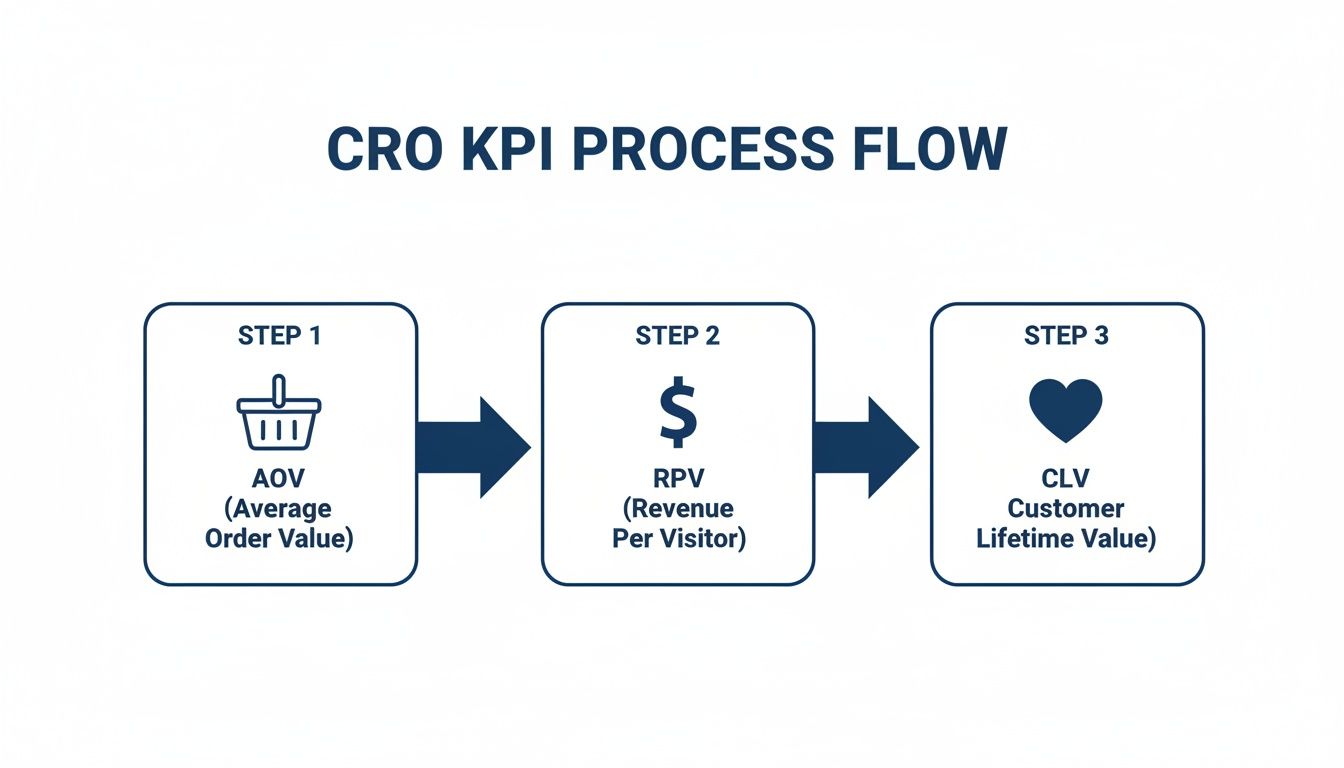
The whole point is to improve key metrics like Average Order Value (AOV), Revenue Per Visitor (RPV), and Customer Lifetime Value (CLV), leading to better profitability and customer loyalty in the long run.
Phase 3: Running the Tests
With a high-priority hypothesis chosen, it's time for action. Using specialised A/B testing software, the agency will create a new version of a page (the 'variant') to test against the original (the 'control'). Your website traffic is then split between the two, so they can directly compare which one performs better.
A test is left to run until it reaches statistical significance. This is a non-negotiable step that ensures the results are reliable and not just a fluke.
Phase 4: Learning and Repeating the Cycle
Once the test is over, the agency digs into the results.
- If the new version wins: Great! The change gets rolled out to 100% of your traffic, and you lock in that conversion lift.
- If the new version loses or makes no difference: This isn’t a failure; it’s a valuable lesson. The agency figures out why the hypothesis was wrong and uses that insight to come up with even smarter ideas for the next round of tests.
This whole process is a continuous loop. The findings from one test feed directly into the next, creating a cycle of ongoing improvement that steadily lifts your store’s performance month after month. A brilliant Shopify CRO agency acts like a true extension of your team, keeping you in the loop at every stage and turning your data into an engine for serious, sustainable growth.
How to Choose the Right Shopify CRO Agency
Picking a Shopify CRO agency is a huge decision for your brand. This isn't just about finding a contractor; it’s about bringing on a strategic partner you can trust to get under the hood of your business and drive real growth.
Get this right, and you can unlock significant new revenue. Get it wrong, and you’re looking at wasted time, a drained budget, and lost momentum. The trick is to look past the polished pitch and focus on what truly counts: their process, their platform expertise, and their proven results.
Vet Their Shopify and Shopify Plus Expertise
Let's be clear: not all CRO agencies are built the same. A generalist agency might know the theory of A/B testing, but a true Shopify CRO agency lives and breathes the platform's unique ecosystem. They understand its specific quirks and, more importantly, its hidden opportunities.
They’ll know the limitations of the native checkout, which apps will supercharge your store without killing site speed, and how to code changes that play nicely with your theme. This isn't just a 'nice to have'—it's essential.
When you're talking to potential agencies, dig into their hands-on experience with Shopify and Shopify Plus. Are their case studies full of stores on the same platform as yours? Can they talk confidently about Shopify 2.0 themes, headless builds, and checkout extensibility? This kind of specialised knowledge is non-negotiable.
Analyse Their Process and Methodology
The best agencies don't guess. They don't just throw trendy "best practices" at your store, hoping something will stick. They operate with a rigorous, data-led process that moves methodically from deep research to prioritised, high-impact testing.
Ask them to walk you through their entire workflow, from the moment they first look at your store to how they manage ongoing optimisation.
A solid, repeatable process should always include:
- Deep-Dive Research: They need to start by immersing themselves in your data—think analytics, heatmaps, and session recordings—to find the real friction points.
- Evidence-Based Hypotheses: Every test idea should come from an observation in your data, not just a hunch.
- Smart Prioritisation: They must have a clear framework for deciding which tests to run first to deliver the biggest return on effort.
- Clear, Actionable Reporting: You should get straightforward reports explaining what was tested, what was learned, and what the plan is for the next steps.
The mark of a great agency is how they document and learn from everything—especially the tests that don't produce a winning result. Their process should be a continuous feedback loop of learning and improvement.
This focus on structured improvement is where UK Shopify merchants are really winning. For example, B2B brands using CRO have boosted conversions by up to 83% just by optimising B2B-specific features. On top of that, simply integrating tools like Shop Pay can lift mobile conversions by a massive 91%—a critical advantage when 68% of transactions now happen on mobile. You can find more on this in Shopify's guide to B2B conversion optimisation.
Ask the Right Interview Questions
Once you have a shortlist, it’s time to get specific. The questions you ask now will reveal a lot about an agency's strategic thinking and whether they're the right cultural fit for your team.
Here's a quick reference table to help you keep track of what matters during your evaluation.
Shopify CRO Agency Vetting Checklist
| Evaluation Criterion | What to Look For | Red Flags |
|---|---|---|
| Platform Expertise | Deep knowledge of Shopify 2.0, checkout extensibility, and the app ecosystem. Case studies are all on Shopify/Shopify Plus. | Vague answers about the platform. Case studies feature mostly Magento, BigCommerce, or other platforms. |
| Process & Methodology | A documented, data-driven process for research, hypothesis, prioritisation, and testing. They value learning from all test outcomes. | A focus on "best practices" or a "secret playbook." They can't explain how they prioritise tests. |
| Team & Communication | You'll have a dedicated, experienced point of contact. Clear communication channels and a regular reporting cadence. | You're unsure who you'll be working with. The lead contact is a junior account manager, not a strategist. |
| Results & Case Studies | They can show you relevant case studies with similar business models (AOV, traffic) and clear, measurable results (not just vanity metrics). | Case studies lack specific data or are for businesses completely different from yours. They guarantee results. |
This checklist gives you a solid framework, but the interview is where you'll get a real feel for the agency.
Here are a few sharp questions to ask to get past the sales pitch:
"How do you handle a losing or flat A/B test?" This is a great one. A top-tier agency sees a losing test as a valuable insight that informs the next experiment, not as a failure.
"Can you show me a case study for a brand with a similar AOV and traffic level to ours?" This confirms their experience is directly relevant to your business.
"What's your approach to mobile-first optimisation?" With most of your customers on their phones, their strategy for small screens is absolutely critical.
"How do you balance quick wins with bigger, long-term strategic improvements?" This shows if they can deliver immediate value while building towards a larger vision.
"Who will be our day-to-day contact, and what's their background?" You need to know you'll be working directly with seasoned experts, not passed off to a junior account manager.
Armed with this approach, you can cut through the noise and find a Shopify CRO agency that doesn’t just talk about results but has the process, expertise, and mindset to actually deliver them.
Let's Answer Your Questions About Shopify CRO Agencies
You've seen what's possible and how the process works, but now it's time for the practical questions. Let's get into the details of cost, timelines, and how CRO fits in with your other marketing efforts. This is the final check-in to make sure a partnership is the right move for your brand.
How Much Does a Shopify CRO Agency Cost?
There's no one-size-fits-all answer here, as the investment really depends on your store's complexity and what you're trying to achieve. Generally, pricing models fall into two camps.
You could start with a one-off project, like a deep-dive CRO audit. These typically range from £3,000 to £10,000 and give you an incredible, data-backed roadmap full of opportunities. The catch is that you're then responsible for implementing the recommendations.
The more common approach is an ongoing partnership on a monthly retainer. For serious, continuous optimisation, expect to see retainers starting around £4,000 per month. A good agency will be upfront about their pricing and tie it directly to the value and ROI they plan to deliver.
How Long Until I Actually See Results?
This is the big one, isn't it? While some technical fixes or simple tweaks might give you a quick win in a matter of weeks, real CRO is a long game. It’s about building sustainable growth, not just finding a temporary lift.
Proper A/B tests need time to collect enough data to be statistically significant—otherwise, you're just guessing. You should start seeing meaningful, consistent improvements in your most important metrics (like Revenue Per Visitor) within the first three to six months of a dedicated optimisation programme.
What’s the Difference Between SEO and CRO?
It’s easy to get these two mixed up, but they play very different, complementary roles. The best way to think about it is with a physical shop analogy.
SEO (Search Engine Optimisation) is all about getting more of the right people to walk through your front door. It’s your location, your signs, and your local reputation that helps customers find you in the first place. CRO (Conversion Rate Optimisation) is about what happens once they're inside your shop. It’s the layout, the helpful staff, the clear pricing, and the smooth checkout that convinces them to buy something.
A top-tier Shopify CRO agency gets this relationship. The work they do to improve the user experience—making your site faster, easier to navigate, and more intuitive—often gives your SEO a nice boost. It creates a powerful cycle where better traffic meets a better experience, driving profitable growth.
At Grumspot, we build scalable, high-conversion Shopify Plus experiences that turn your traffic into revenue. If you're ready to unlock your store's true potential with a data-driven partner, let's talk.
Let's build something together
If you like what you saw, let's jump on a quick call and discuss your project
Related posts
Check out some similar posts.
- headless commerce agency
Discover what a headless commerce agency does, when to choose headless over Shopify Plus themes, typ...
Read more
- ecommerce ab testing
Master ecommerce AB testing with a revenue-first playbook. Learn to build hypotheses, calculate samp...
Read more
- conversion rate optimisation
Benefits of conversion rate optimization. Discover the real benefits of conversion rate optimisation...
Read more
- conversion rate optimisation
Looking for a conversion rate optimization consultant? This 2026 guide covers their role, process, K...
Read more