10 Best Shopify Email Templates for Every Store
- Shopify email templates
- Shopify email marketing
- ecommerce email design
- Shopify automations
- welcome email templates
Launched
October, 2026
You've just refreshed your product pages, tightened your delivery messaging and polished checkout. Then a new subscriber gets a plain welcome email, a shopper who left a £120 basket gets a generic reminder, and a first-time buyer receives an order confirmation that looks nothing like your store. The sale happened, but the follow through feels borrowed.
That's the practical problem behind Shopify email templates. A polished layout still depends on the platform sending it, the customer and product data available to personalise it, and the job it's doing. Welcome, cart recovery, transactional updates and promotions shouldn't share one interchangeable design, even if they share brand blocks, footers and buttons.
UK benchmarks help you judge what happens after you send. The Data & Marketing Association's 2025 benchmark reported an average open rate of 35.9% and a unique click rate of 2.3% in UK email performance data covering six UK email service providers. Opens get attention, but clicks move people back to a product, collection or checkout. Pair template choices with retail email conversion strategies and you'll think less about decoration and more about hierarchy, preview text, mobile readability and one clear action.
The ten options below cover built in tools, notification specialists, lifecycle platforms and portable design systems. Each earns its place for a different job, team size and level of design control.
1. Shopify Messaging (formerly Shopify Email)
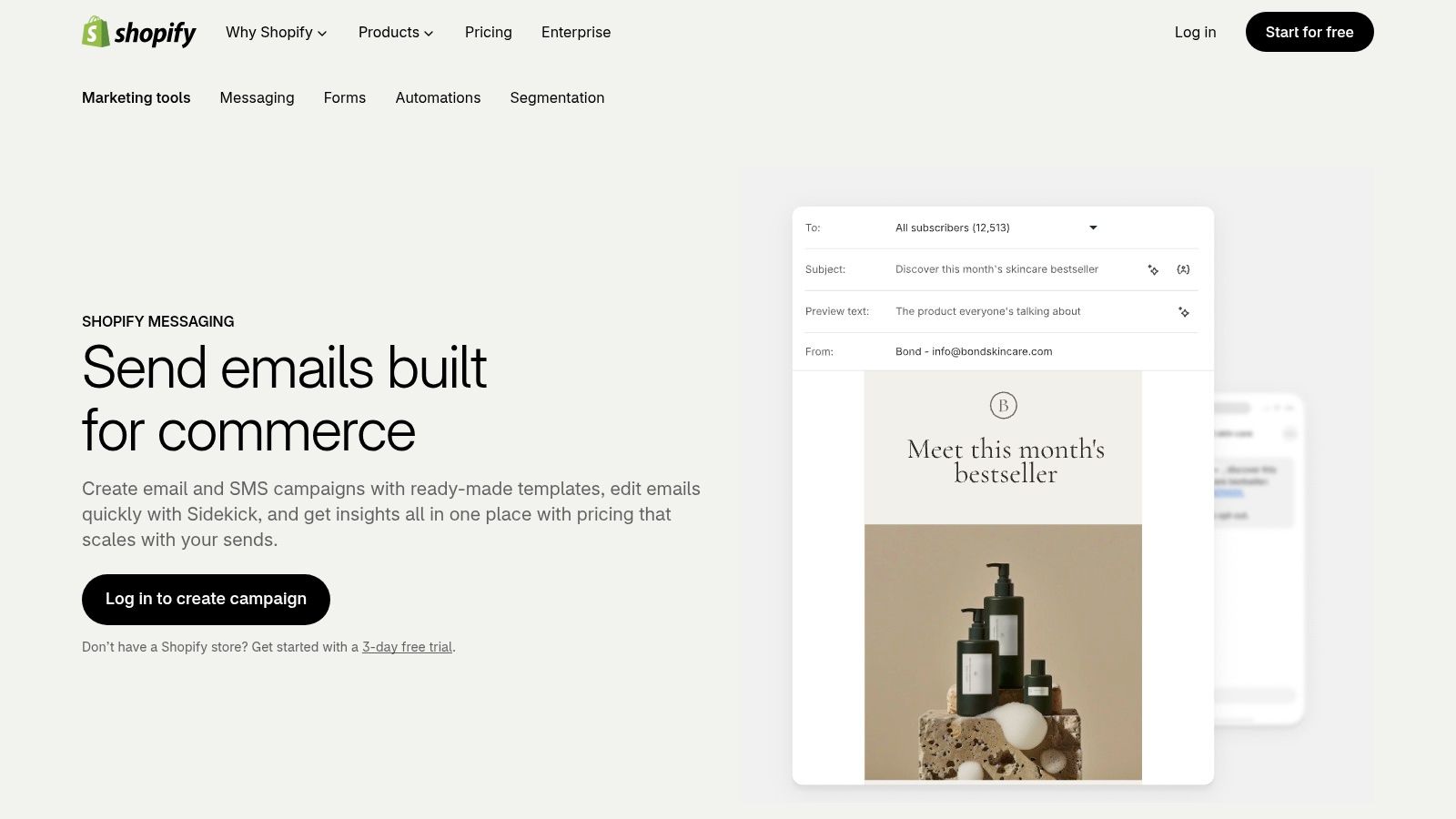
A store can go from install to first branded campaign in under an hour here. Shopify Messaging sits inside Shopify Admin, pulls in your logo, colours and products, and covers campaigns plus automations such as abandoned checkout. For early stage stores, that convenience often matters more than a vast template library.
What You Get in Admin
- Automatic branding: Templates apply your store logo, colours and product details, so you aren't rebuilding basics each time.
- Product and checkout blocks: You can add products and express checkout buttons that shorten the route back to purchase.
- Sidekick assisted editing: Built in help and performance insights support quick campaign production.
- Included sends: Up to 10,000 emails per month free, with send based pricing after that.
The trade off is depth. You get fewer advanced templates and less flexibility than specialist platforms, and you can't import raw HTML for fully custom coded emails. Design control stops at what the editor exposes, which is fine for standard campaigns and limiting the moment you want a bespoke layout.
Deliverability still needs attention too, whether that's authentication, suppression lists or understanding routes such as SMTP Relay in a wider sending setup. Native integration doesn't exempt you from the technical basics.
Choose it when speed, global availability including the UK, and minimal setup beat granular control. Outgrow it when segmentation, testing or portability becomes the bottleneck.
2. OrderlyEmails by FORSBERG+two
Order confirmations, dispatch notices, refunds and POS receipts get opened because customers need them, yet many stores leave that operational layer visually disconnected from the storefront. OrderlyEmails is built for that narrow email job.
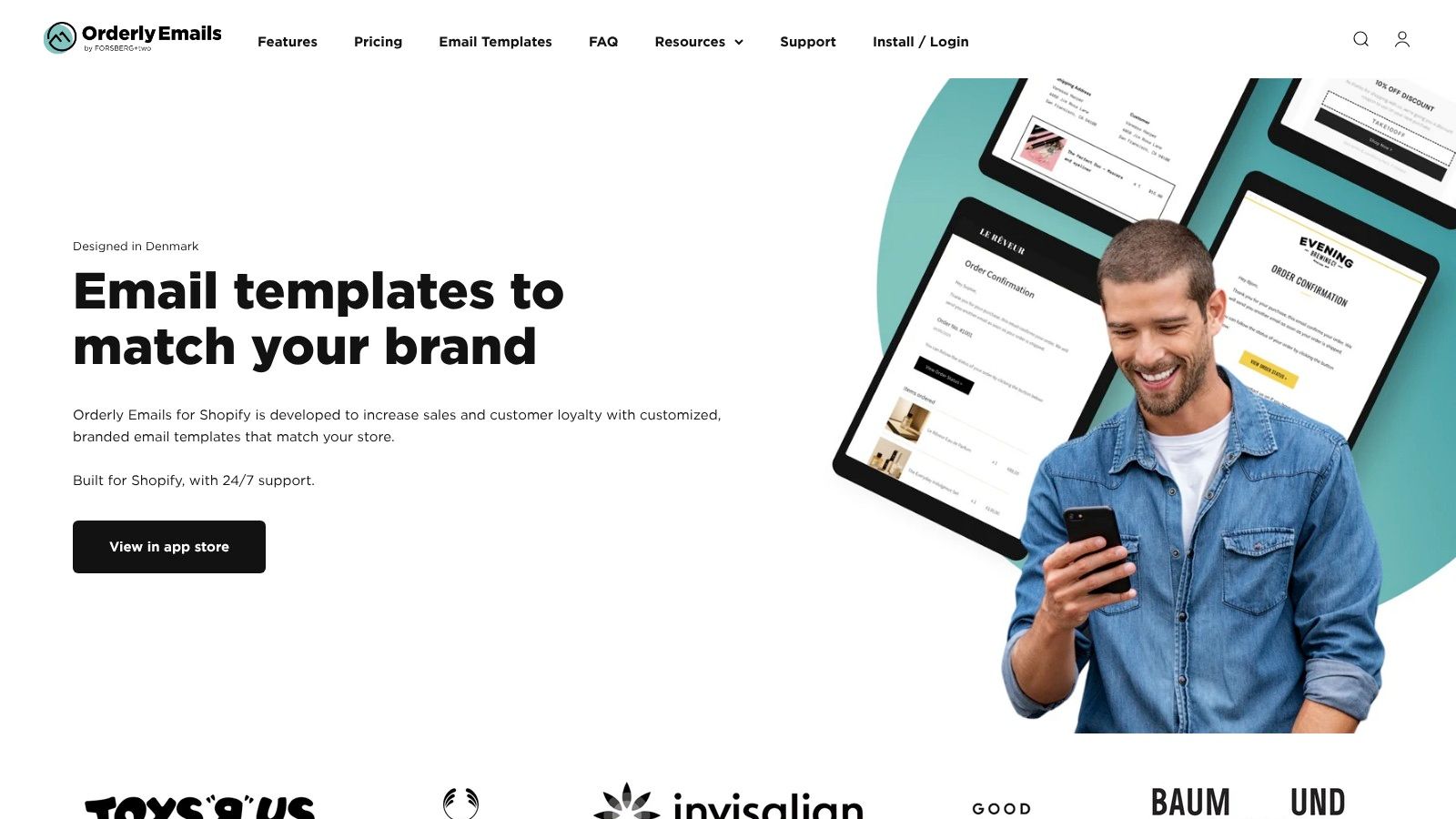
Its themes cover more than 40 Shopify notification types, as described on its product page, so one theme can bring confirmation, dispatch, refund and receipt emails into the same system. Magic Designer and the drag and drop editor give reasonable design control without hand coding every template, and multi currency plus translation support helps stores selling beyond one market.
Implementation is a copy and paste workflow rather than a full build: design the theme, then move the generated Liquid or HTML into Shopify notification settings. Portability is better than a closed editor because you can inspect the code, but the licence is still per store, so multi brand setups need to budget for each storefront. I have seen teams put this off for quarters because they assume it needs developer time; the work is testing variables, fallback text, gift cards, refunds, partially fulfilled orders and dark mode before publishing.
Practical rule: Test transactional templates with real order data, gift cards, refunds and partially fulfilled orders. Pretty previews hide edge cases.
The boundary is scope. OrderlyEmails strengthens transactional consistency and scales across notification volume, languages and currencies, while lifecycle campaigns, segmentation and sends remain with your email platform. At approximately $99 USD per year, it earns its place when branded operational messages matter more than another campaign builder.
3. Klaviyo
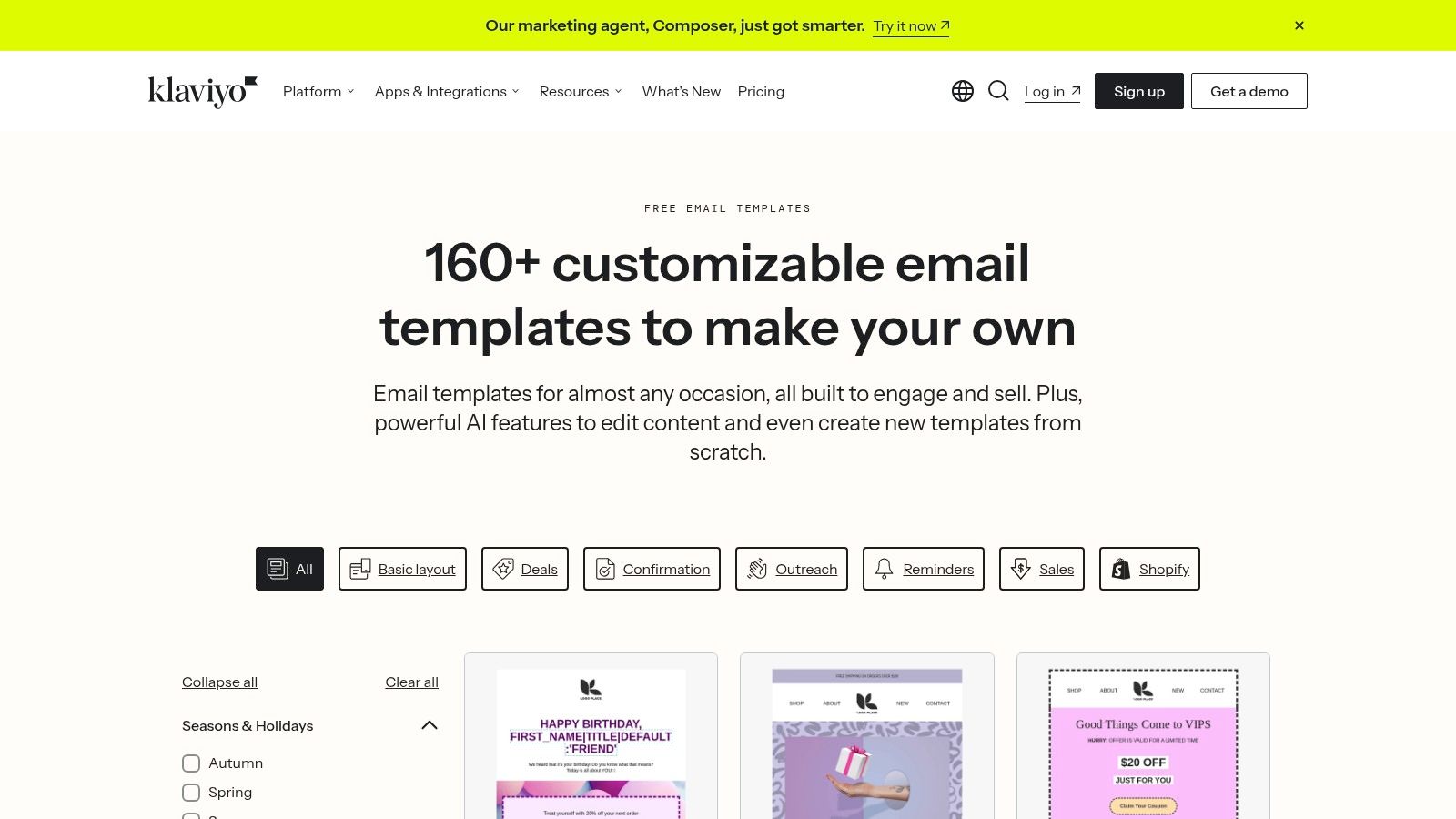
Klaviyo earns its place when email has to react to browsing, buying and order events across welcome, browse abandonment, cart recovery, post purchase and win back jobs. The Shopify sync feeds dynamic product blocks, predictive segments and flow triggers, so templates can change content per customer rather than stay fixed after import.
Design control sits between code freedom and guardrails. Drag and drop blocks cover most campaign work, saved sections help repeat headers and footers, and AI assisted image edits can speed up production. I still treat prebuilt flows as a draft: rewrite the first viewport, check feed logic, and suppress products that are out of stock or already purchased.
Implementation effort is the trade-off. Search results report a free tier typically covering up to 250 profiles and 500 emails per month, with paid pricing scaling by active profiles, so costs rise if imports include unengaged contacts without suppression rules.
The commercial upside is real: UK email ROI is reported at approximately £38.33 per £1 spent in Charle's UK email marketing statistics roundup. Reaching that level needs ownership of segmentation, testing and list health. Portability is limited and the learning curve is steeper than a newsletter tool, which suits teams ready to run lifecycle messaging as an ongoing program.
4. Omnisend
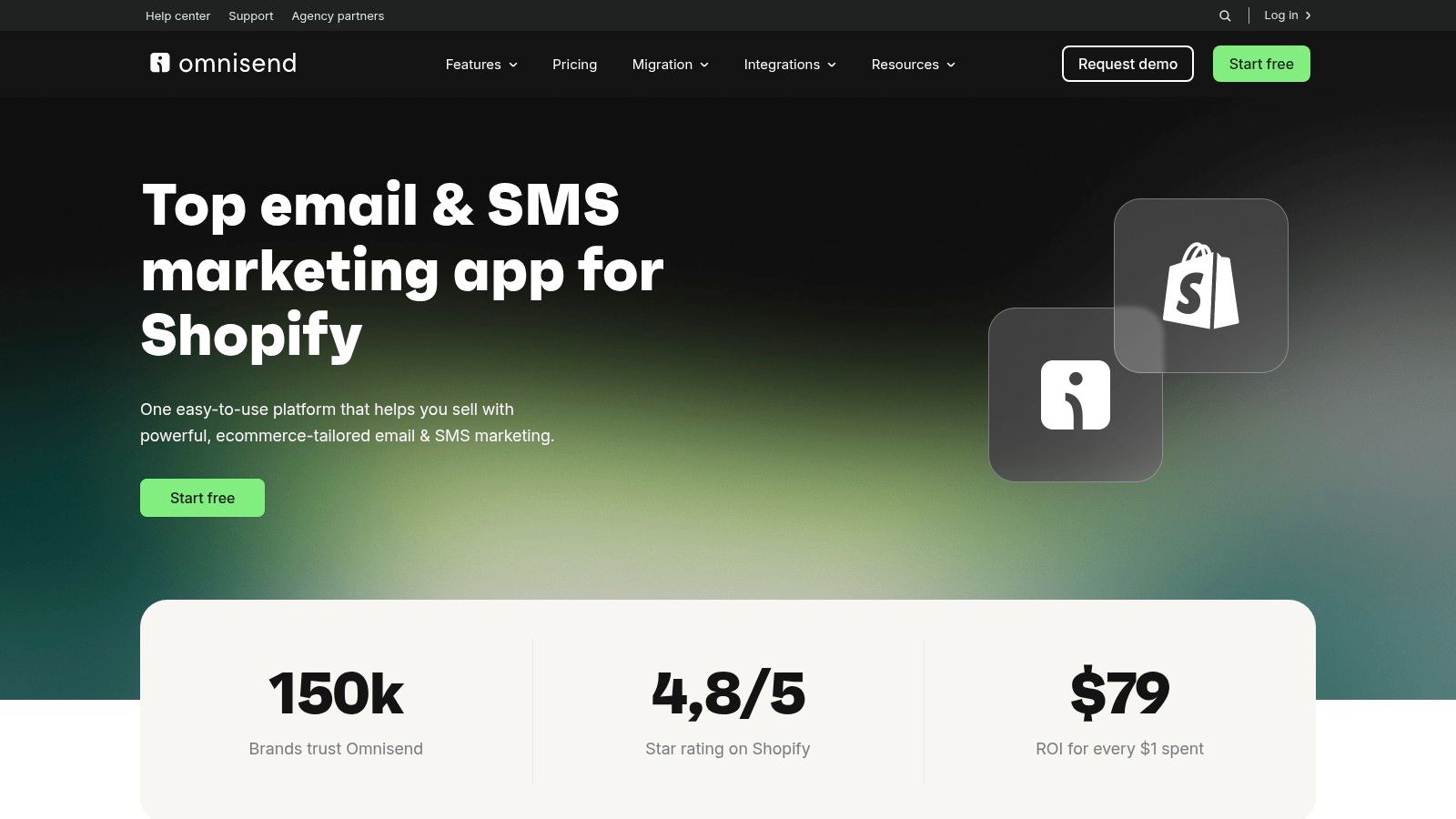
Some teams need Klaviyo style ecommerce flows without living inside a data platform all week. Omnisend sits in that gap. It is built for ecommerce, with Shopify product picking, prebuilt welcome and abandonment journeys, and email plus SMS in shared workflows.
Where It Speeds You Up
- Template library: more than 250 customisable templates, useful when design resource is thin.
- Prebuilt automations: cart, browse abandonment and welcome flows are ready to adapt rather than assemble from blank logic.
- Shared channel workflows: email and SMS can support the same journey, which helps with timely cart reminders.
- Free starting point: a free plan covers up to 250 contacts and 500 emails per month.
Speed only pays off if the journeys are mapped properly. Pair these prebuilt flows with a clear lifecycle email marketing plan for Shopify stores so welcome, replenishment and win back messages do not overlap or cannibalise each other.
The compromise is ceiling. Template customisation is less granular than a custom coded build, and the data and experimentation features trail top tier customer data platforms. For a growing store that wants credible automations running in days rather than weeks, I usually call that an acceptable trade.
5. Dotdigital
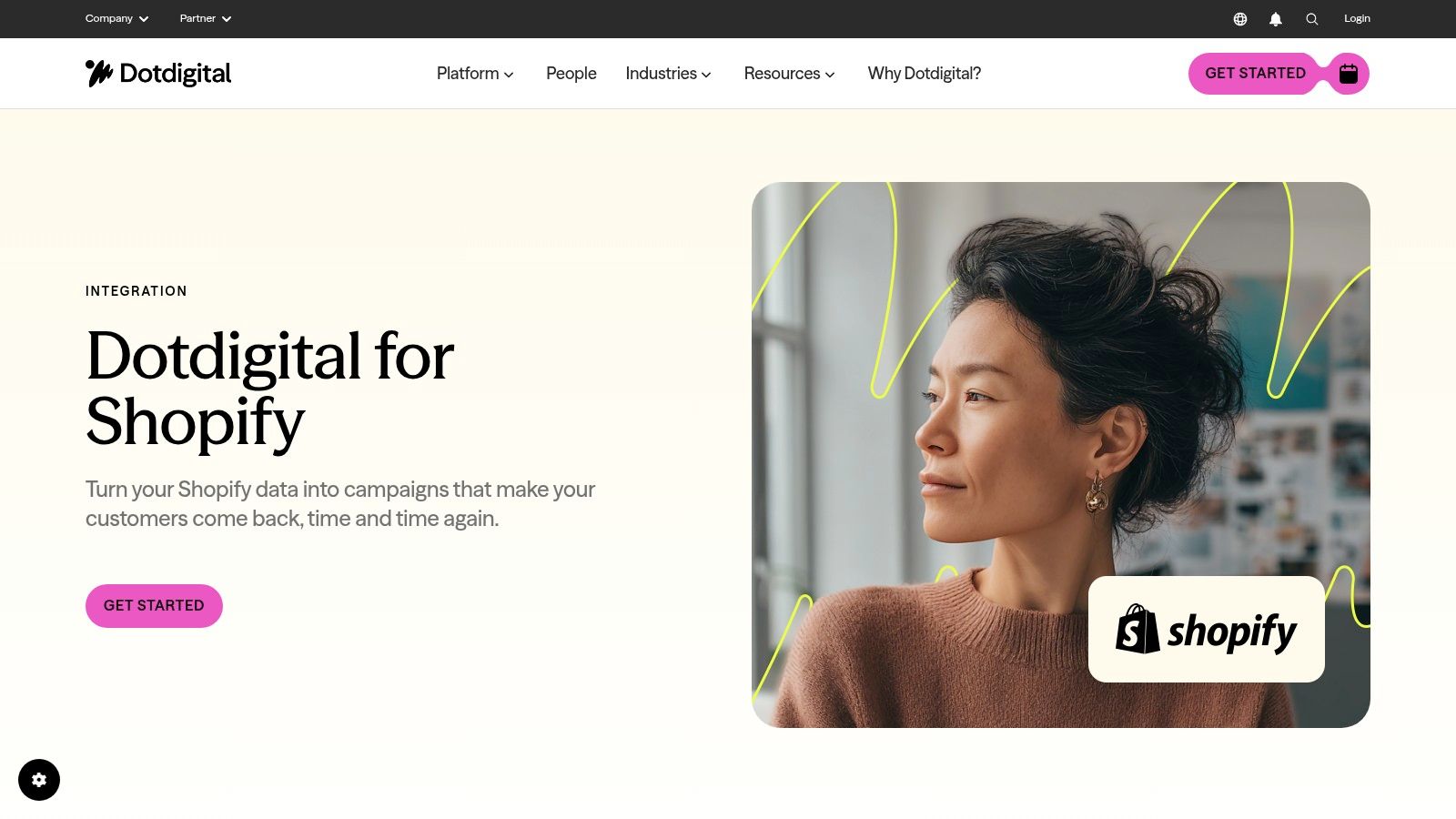
A retailer running three regional storefronts off one Shopify backend needs more than a template gallery. Dotdigital is built for that scale. The UK headquartered platform offers a Shopify app, real time data sync and journeys across email, SMS and WhatsApp, which matters when several brands, regions or approval layers share one customer dataset.
Ecommerce content blocks keep templates tied to live catalogue information, and mature segmentation supports more controlled journeys than SMB tools usually allow. That discipline pays off at peak. A well governed template system makes planning Black Friday campaigns for Shopify Plus brands easier because offers, exclusions and delivery cut offs do not get reinvented in every send.
The economics explain why larger teams invest in this infrastructure. The DMA Marketer Email Tracker reported UK email ROI rising to £32.28 per £1 in 2017, cited in Marketing Week's email marketing coverage. Industry benchmark, not a promise. Still, it shows why reliable personalisation and reporting can justify heavier implementation.
And implementation is heavier. Pricing is typically quote based and generally higher than entry level apps. Skip it if you only need a monthly newsletter. Buy it when multi region data, support, compliance expectations and cross channel orchestration are genuine operational needs.
6. Mailchimp for Shopify
A small team already using Mailchimp can build welcome emails, newsletters and promotions without learning another editor. Its Creative Assistant and template gallery make campaign production familiar, while Shopify data can support product recommendations and promotional code blocks. See the Mailchimp for Shopify pricing page for current plan details.
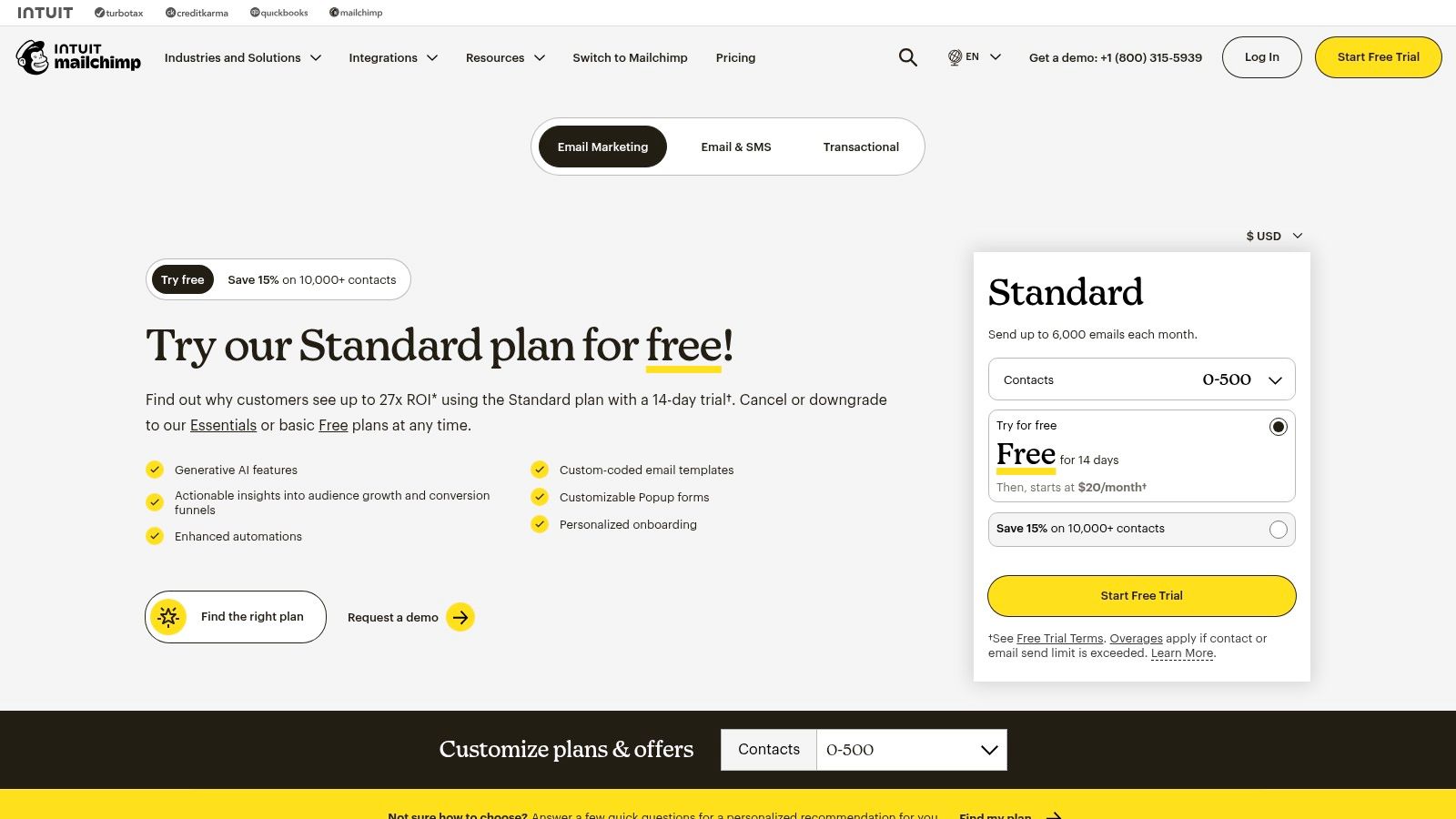
Synced Shopify events can power prebuilt customer journeys, making Mailchimp useful for welcome messages and basic cart recovery as well as batch promotions. Its templates are practical for teams that value speed and an editor they already know. The trade-off is portability: Mailchimp is an email platform, not a standalone template builder, so templates and workflows are tied more closely to its system than designs exported from a dedicated production tool.
Check the Fit Before Migrating
Map the journeys you need before moving your list. If your roadmap includes predictive segments, complex post-purchase branching or carefully timed replenishment, Klaviyo may offer more ecommerce automation depth. For help prioritising workflows, use this guide to marketing automation for ecommerce teams.
Pricing is based on contacts and sends, with free and paid plans. Free-tier limits and plan structures can change, so check current terms before budgeting. Mailchimp fits stores that want familiar campaign design and straightforward Shopify-connected messaging; teams with more demanding lifecycle automation should compare the implementation effort and capabilities of specialist platforms.
7. Stripo
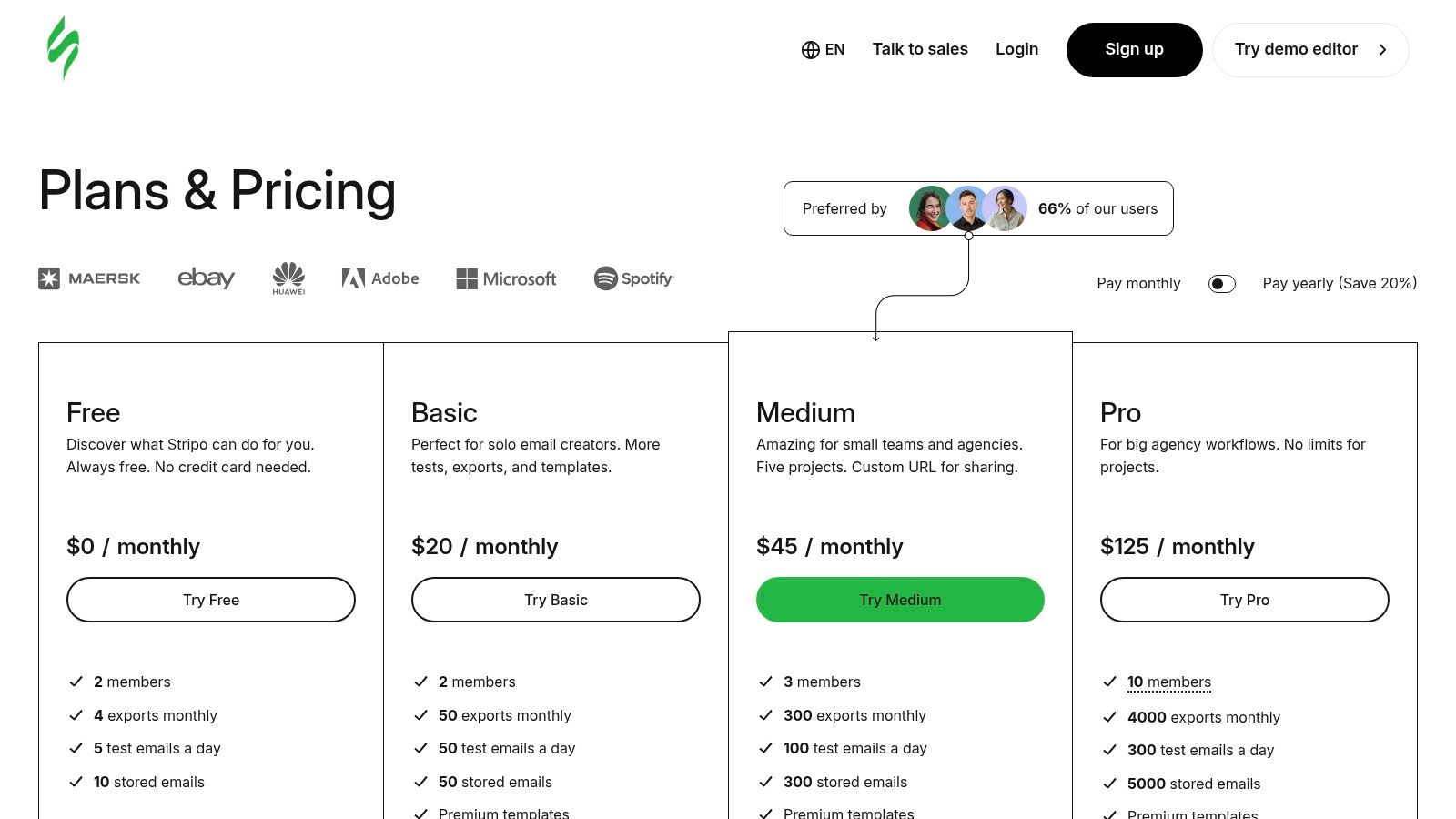
A welcome series, cart recovery email or promotion may need different layouts, but each still has to work across inboxes and markets. Stripo is a design and production tool, not an email-sending platform. Build reusable content blocks, then export templates to an ESP such as Klaviyo, Mailchimp or Omnisend.
Its visual editor suits marketers, while HTML editing gives developers more control over the final code. Teams can reuse approved modules and produce versions for different languages, regions or brands. The trade-off is extra setup: templates must be exported and tested in the sending platform, and dynamic content needs to be mapped there.
Accessibility belongs in the module design. A 2025 industry summary reported that 97% of marketers use at least one interactive email element, while only 47% apply basic accessibility practices such as alt text, a gap noted alongside Shopify's accessibility guidance referencing WCAG 2.2. Use live text, descriptive alt text, logical headings and strong contrast from the start.
Your template isn't finished when it looks right in one inbox. Check it with images blocked, text enlarged and colours inverted.
Search results describe free and paid tiers, with paid plans starting at roughly $20 per month. Stripo has no native Shopify data blocks or Liquid awareness, so you'll need an ESP and someone to connect exported templates to product and customer data.
8. RGE Studio (formerly Beefree)
RGE Studio, formerly Beefree suits teams that want to design welcome emails, promotional campaigns and other branded messages outside their sending platform. Its block editor and template gallery support no-code production, with connectors, webhooks and HTML export for moving designs into an email service provider.
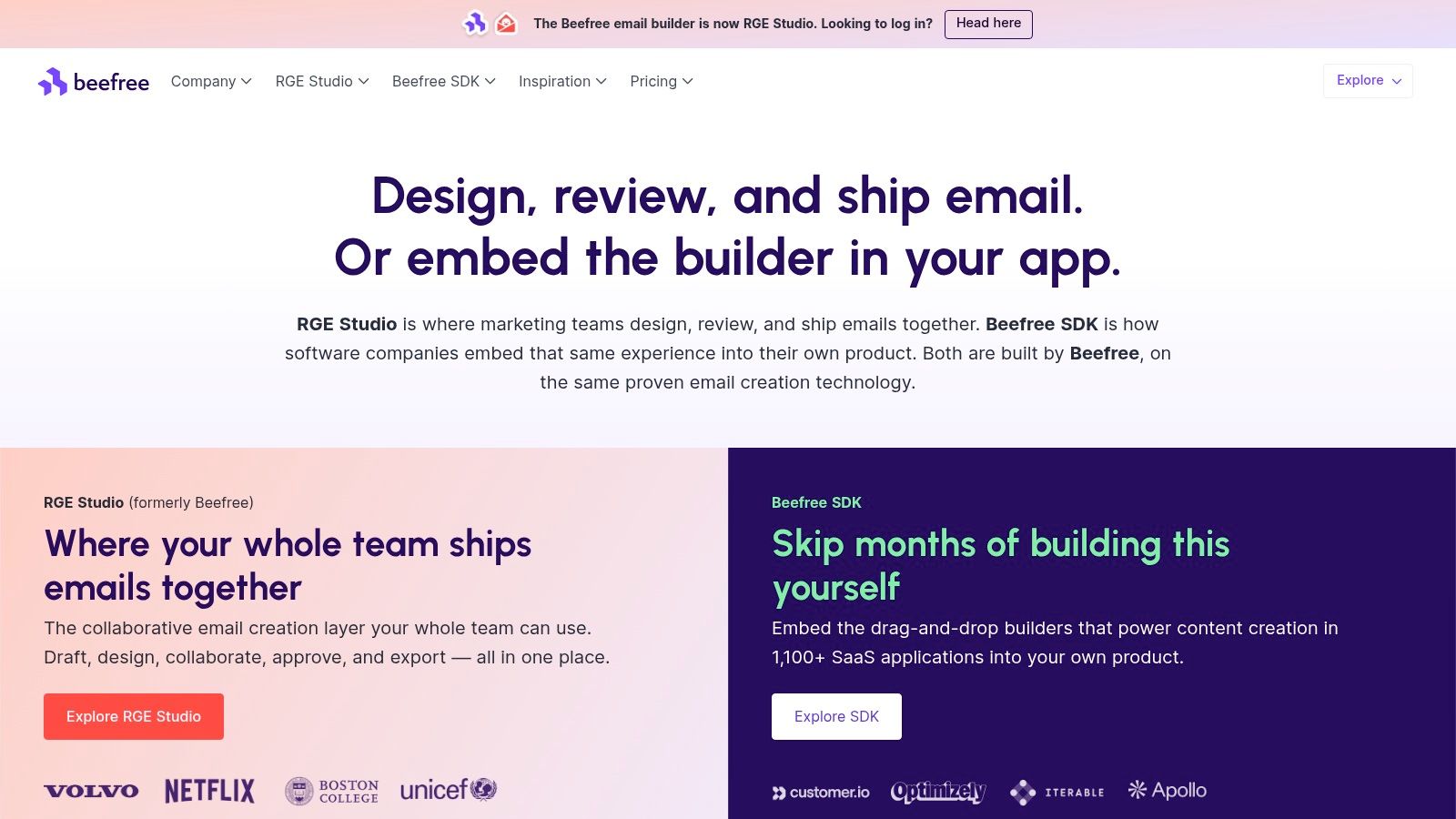
The separation from an ESP gives agencies and merchants more control over design ownership and portability. Collaboration and approval features on higher tiers can also help teams keep brand, legal and trading reviews within one workflow. The trade-off is implementation work: exported designs still need to be tested and connected to the sending platform's data.
Check seat limits and export options before choosing a plan. Search results list a free Starter tier, Professional plans from about $30 per month and Business plans from about $160 per month, with Enterprise by quote. Those costs may suit teams producing email regularly, but can be hard to justify for occasional campaigns.
RGE Studio does not send campaigns or provide Shopify-native data blocks. Product links, customer personalisation and dynamic content must be connected in your ESP, then checked in the rendered email, including Outlook and dark mode.
Choose it when design control and review workflows outweigh the convenience of building directly in a Shopify-connected platform. It is a production tool, not a lifecycle marketing system.
9. Avada Marketing Automation
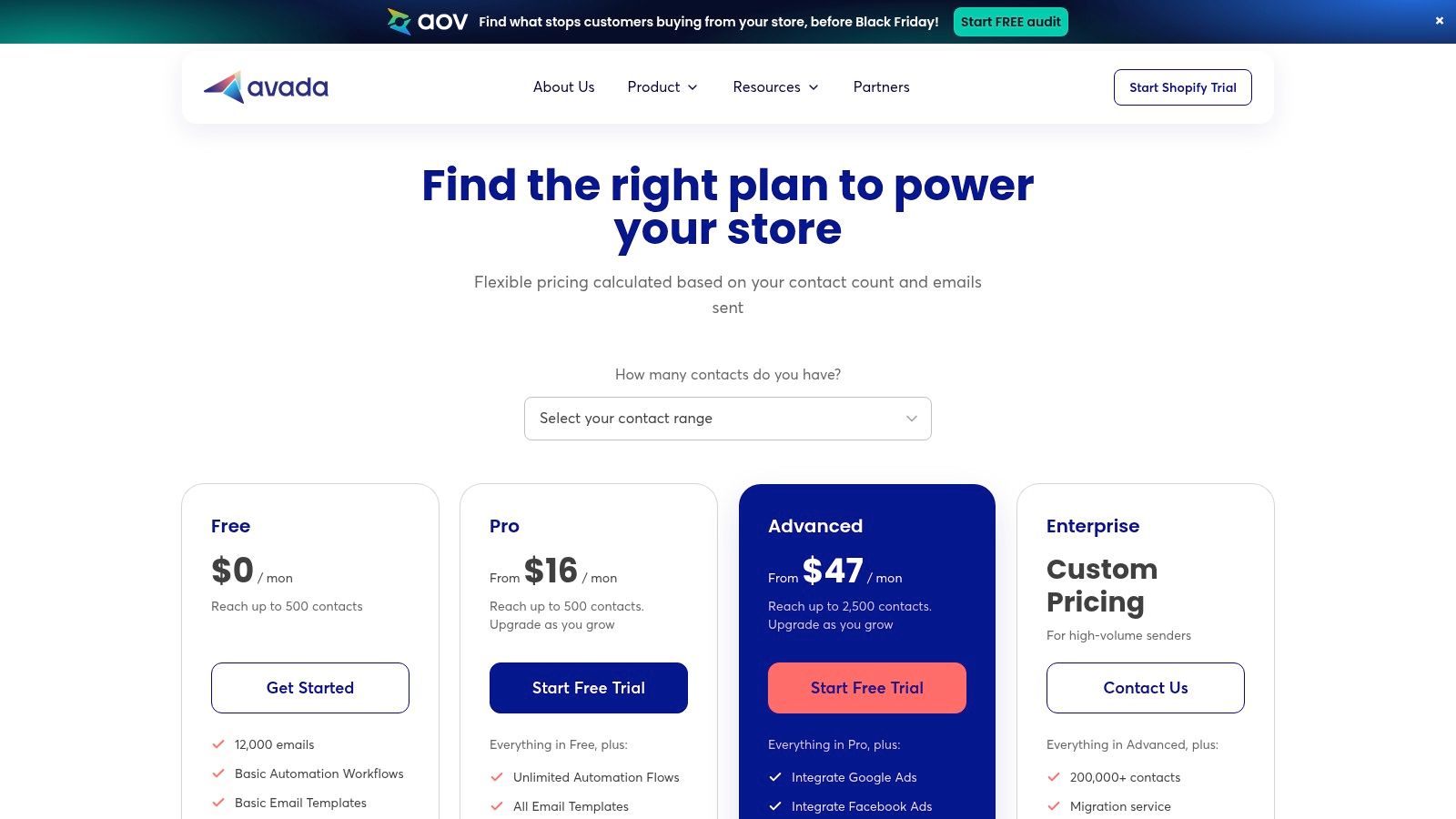
A new Shopify store can start with a welcome offer, a cart recovery email and a few promotional campaigns. Avada brings email and SMS, templates, popups and common ecommerce automations into one Shopify app, which can keep early setup manageable for a small team.
Search results describe free and paid plans priced by sendable contacts and channels, with 24/7 support on paid tiers. That can make Avada a practical way to test basic messaging without taking on a larger platform. The trade-off is less room to refine segmentation, reporting and design as campaigns grow.
Be Honest About the Ceiling
Avada's template depth and analytics are less advanced than Klaviyo's or Omnisend's. Limited reporting can make it harder to compare flow revenue, spot subscriber fatigue or find where customers abandon a purchase. Review feedback is mixed, so check billing terms, export options and support responsiveness before committing.
Avada suits stores that need a low-cost starting point for welcome, cart recovery and promotional messaging. For a more complex Shopify Plus lifecycle programme, its reporting and customisation may fall short. Document your flows and confirm you can export customer data before building more of your marketing around the app.
10. SmartrMail
A small Shopify team preparing welcome, cart recovery and post-purchase emails may prefer a focused tool over a larger marketing platform. SmartrMail offers an approachable drag-and-drop editor, Shopify product inserts and prebuilt flows for common ecommerce jobs.
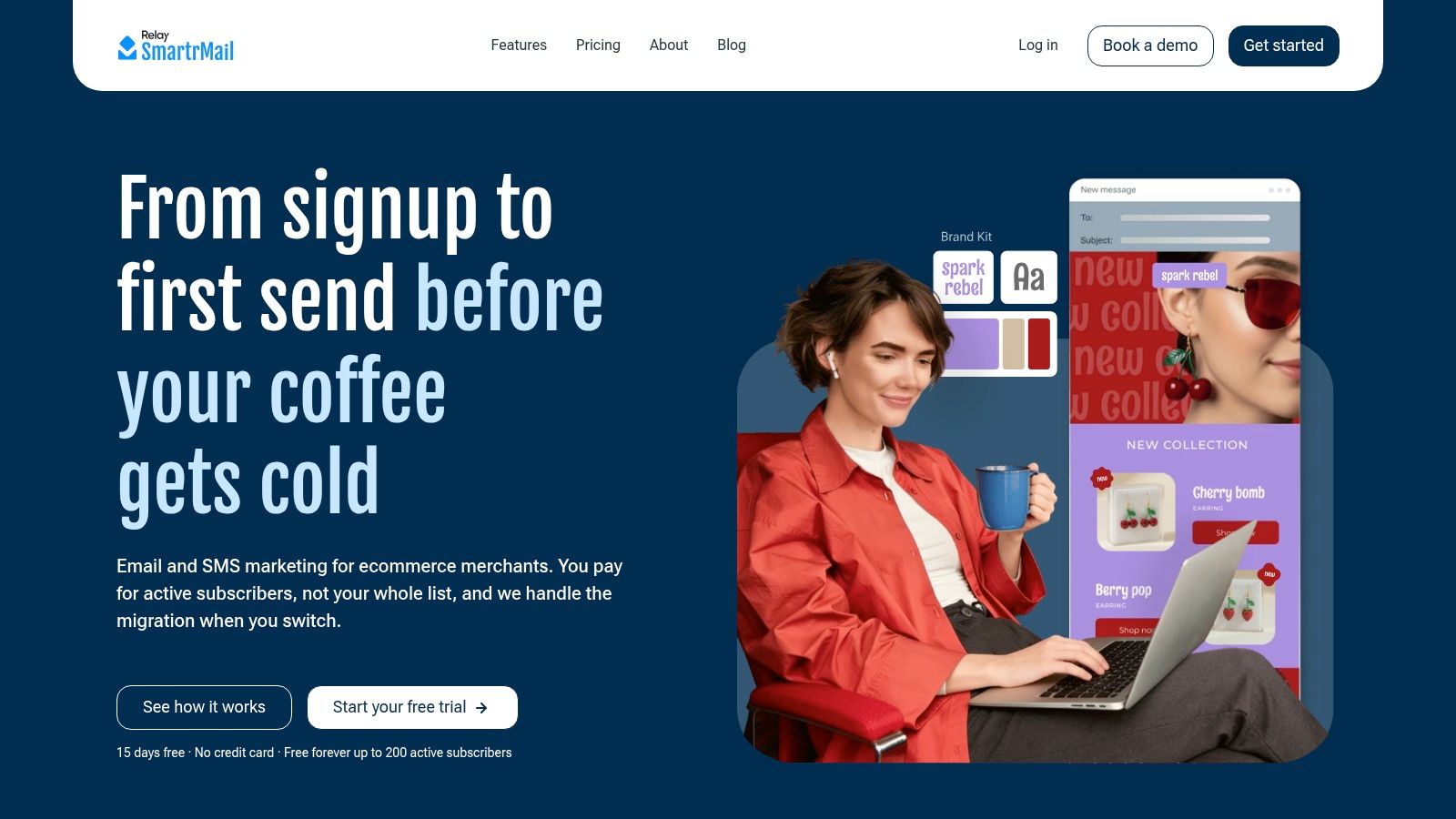
Search results describe more than 50 templates, along with Send at Best Time and revenue attribution reporting. Product inserts can reduce manual work when building campaigns. Revenue attribution gives teams a way to assess sales alongside email engagement.
Shopify setup is straightforward, and the subscriber-based Essential and Pro tiers are described with annual discounts. Check which automations, segments and support options each tier includes before choosing a plan. Annual billing may lower the cost, but it makes a trial period and a clear exit plan more important.
SmartrMail's smaller ecosystem means fewer specialist partners and community examples than Klaviyo or Omnisend. That can matter as lifecycle programmes expand and require more detailed experimentation or data modelling. Community feedback is mixed, so test support responsiveness, deliverability guidance and billing terms before committing.
SmartrMail suits stores that want Shopify-aware flows with limited setup work. Teams expecting complex segmentation or a broad partner network should compare those requirements against the platform's capabilities before building their email programme around it.
Top 10 Shopify Email Template Tools Compared
| Platform | Core capabilities | Shopify fit & standout | Best for | Pricing / value |
|---|---|---|---|---|
| Shopify Messaging (formerly Shopify Email) | Email and SMS campaigns, automations, templates | Native Shopify Admin; product blocks and checkout buttons ✨ | 👥 Merchants wanting a simple, built-in tool | 💰 Up to 10,000 emails/month free; then pay by sends |
| OrderlyEmails by FORSBERG+two | Branded templates for 40+ transactional notifications | Drag-and-drop editor; translations and multi-currency ✨ | 👥 Stores upgrading order and shipping emails | 💰 About $99/year per store |
| Klaviyo | Email, SMS, segmentation, lifecycle automations | Deep Shopify data sync and personalized flows 🏆 | 👥 Brands focused on advanced lifecycle marketing | 💰 Free tier; paid pricing scales with active profiles |
| Omnisend | Email, SMS, 250+ templates, ecommerce automations | Shopify product picker and shared-channel workflows ✨ | 👥 Growing stores launching campaigns quickly | 💰 Free tier; up to 250 contacts and 500 emails/month |
| Dotdigital | Email, SMS, WhatsApp journeys and segmentation | Real-time Shopify sync; mature multi-channel automation ★ | 👥 Mid-market and enterprise brands | 💰 Quote-based |
| Mailchimp for Shopify | Campaigns, templates, journeys, product recommendations | Shopify event syncing and familiar design tools | 👥 Teams already using Mailchimp | 💰 Free and paid plans; based on contacts and sends |
| Stripo | Reusable email design with code and no-code editing | Export templates to multiple ESPs; does not send email ✨ | 👥 Teams needing portable, brand-consistent designs | 💰 Free and paid tiers; paid from about $20/month |
| RGE Studio (formerly Beefree) | Drag-and-drop email and page builder; HTML and ESP export | Platform-independent design; collaboration on higher tiers ✨ | 👥 Creators and teams building templates outside an ESP | 💰 Free Starter; paid from about $30/month; enterprise by quote |
| Avada Marketing Automation | Email, SMS, popups, and basic automations | Budget-friendly Shopify app for common flows | 👥 Small teams starting with ecommerce marketing | 💰 Free and paid plans; varies by contacts and channels |
| SmartrMail | Templates, product feeds, prebuilt flows, revenue reporting | Shopify-friendly setup; product inserts and send-time optimization ✨ | 👥 Smaller stores wanting approachable email automation | 💰 Subscriber-based Essential and Pro tiers |
Build a System That Scales With Your Store
The strongest option isn't the prettiest gallery. It's the template system your team can maintain when products change, regions expand, offers expire and a campaign needs to ship today. Start by giving every message a distinct job. A welcome email builds confidence and sets expectations. Cart recovery removes friction and restores intent. Transactional email answers practical questions fast. Promotions earn the click without training customers to wait for discounts.
Then choose the smallest platform that can support those jobs properly. Shopify Messaging may be enough for straightforward campaigns. OrderlyEmails can solve notifications without a rebuild. Klaviyo, Omnisend, Dotdigital, Mailchimp, Avada and SmartrMail offer different balances of data, automation and ease. Stripo and RGE Studio make sense when you want a portable design system above whichever platform sends the email.
Build reusable blocks before you build more campaigns. Lock down headers, footers, product cards, delivery and returns modules, trust signals, unsubscribe and preference controls. For UK stores, check pound sterling pricing, local delivery wording and consent language in every reusable footer. Each template should have one dominant call to action, concise product modules, visible fallback text and a first mobile viewport that shows the value proposition before decorative imagery takes over.
Deliverability and measurement need equal discipline. The DMA's 2025 report recorded a 98% overall delivery rate in 2024, with B2C email reaching 99.2%, in the DMA Email Benchmarking Report 2025. If you're materially below that kind of level, investigate list hygiene, authentication, suppression and sender reputation before redesigning buttons. A visual refresh won't fix a reputation problem.
Measure by message type, not one blended dashboard. Compare welcome, cart recovery, post purchase and promotional emails on click rate, revenue per delivered email, click to purchase rate, unsubscribe rate and downstream orders. Opens still offer directional clues, but Apple Mail Privacy Protection can inflate them. A template that lifts clicks without improving product page engagement or completed orders may be generating curiosity, not commercial intent.
Accessibility and resilience should be part of QA, not a specialist afterthought. Use live text instead of words baked into images, write descriptive alt text, keep heading order logical, maintain strong contrast and test focus states. Review every template with images blocked, in dark mode, at enlarged text sizes and with a screen reader. Click every Shopify powered link, confirm currency and availability logic, and test personalisation fields with incomplete customer data. Missing first names and empty product recommendations are where polished systems become embarrassing.
For Shopify Plus stores with complex catalogues, markets or integrations, bespoke design and implementation can stop template work becoming a constraint. Grumspot can help design, build and scale email experiences as part of wider Shopify Plus design and development work. Start with the jobs that drive retention and repeat purchase, prove the system on mobile, then expand. That's how Shopify email templates become revenue infrastructure, not a folder of attractive one offs.
Grumspot designs, builds and scales Shopify Plus stores, including the branded email experiences, integrations and conversion work that support repeat revenue long after checkout. If your templates need to work across complex catalogues, markets or platforms such as Klaviyo, talk to the team about a system your marketers can maintain. Visit Grumspot to discuss your store, your current email setup and the fastest route to a cleaner, more scalable template framework.
Let's build something together
If you like what you saw, let's jump on a quick call and discuss your project
Related posts
Check out some similar posts.