How to Hire the Right Shopify Agency in 2026
- shopify agency
- shopify plus agency
- ecommerce agency
- hire shopify experts
- shopify development
Launched
March, 2026
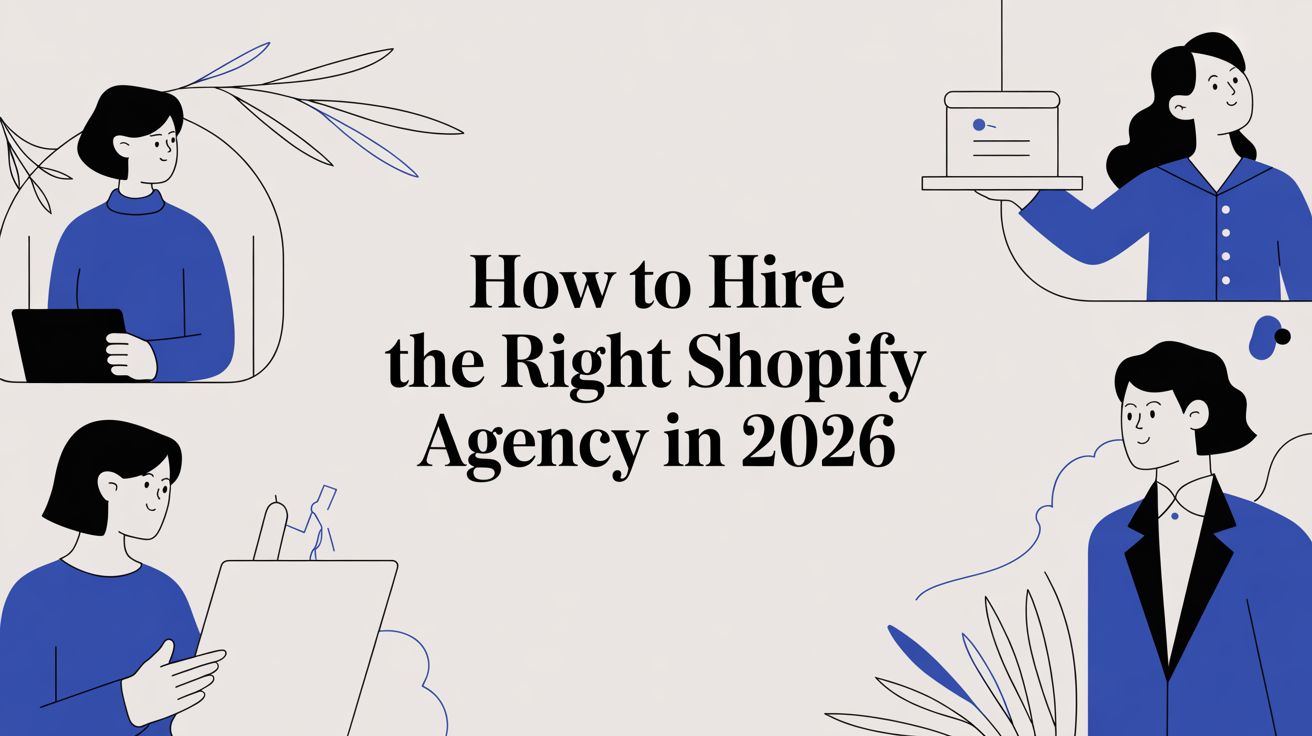
At its core, a Shopify agency is a team of specialists—think strategists, designers, and developers—all focused on one thing: building and growing your online store on the Shopify platform. They’re like an expert pit crew for your ecommerce business, handling all the technical work behind the scenes so you can stay focused on the bigger picture.
Your Ecommerce Store Construction Firm
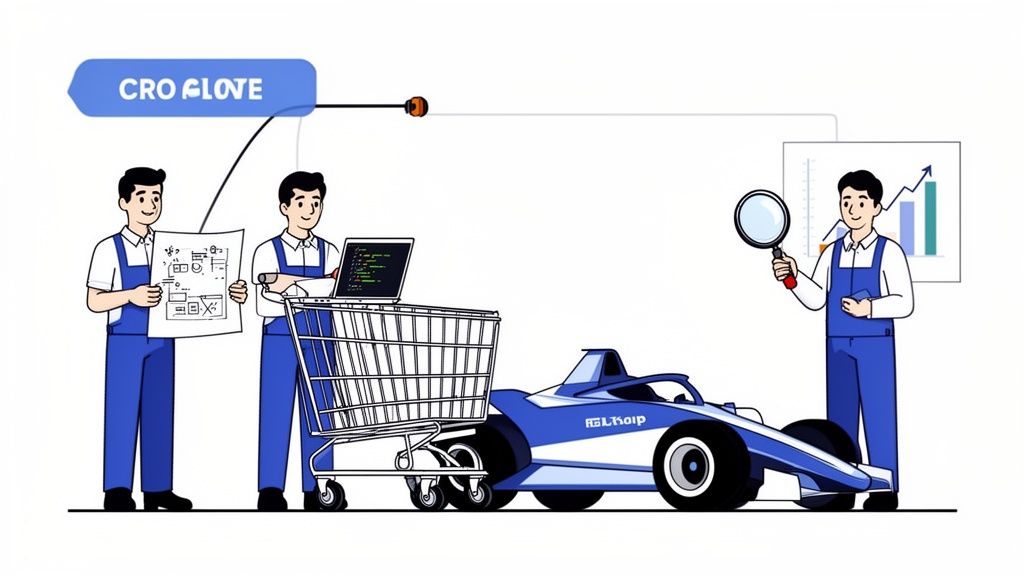
Here’s another way to think about it. Your online store isn't just a website; it’s a complex digital property. You could try to draw up the blueprints, pour the foundation, and handle the wiring yourself. But to build something that’s both beautiful and built to last, you’d hire a professional construction firm. A Shopify agency is exactly that for your brand.
They bring a whole crew of experts to the table, where each person has a specific, crucial role. This isn't just about 'building a website'—it's about strategic problem-solving from the ground up.
The Specialised Crew Members
A great agency doesn’t do one-size-fits-all. Instead, they provide a tight-knit team to manage every aspect of your digital storefront. Their real job is to solve your business challenges, find opportunities for growth, and build a store that’s truly engineered to sell.
This team almost always includes:
- The Architects (UX/UI Designers): They map out the entire customer journey and design the visual layout. Their goal is to make sure the store feels intuitive, is a breeze to navigate, and perfectly reflects your brand’s look and feel.
- The Engineers (Developers): These are the builders. They’re the ones writing the code, implementing custom features, and making sure every part of your site is fast, secure, and reliable.
- The Interior Designers (CRO Specialists): Once the structure is built, they focus on making the space as effective as possible. By analysing user behaviour, they find ways to boost your conversion rates and increase what customers spend on average.
A Shopify agency’s true value is its role as a strategic partner. They don't just tick off tasks on a list; they bring the expertise and a clear roadmap to turn your online store into a serious revenue engine.
This kind of partnership is what sets you up for long-term success. As you grow, having a team that deeply understands your business and the platform becomes invaluable. An experienced partner guides you toward becoming a successful ecommerce growth agency in your own right by helping you fine-tune every customer touchpoint.
In the end, a Shopify agency delivers a storefront that doesn't just look good—it's built to perform, scale with your business, and deliver results you can actually measure.
The Core Services of a High-Impact Shopify Agency
While plenty of firms can put together a basic website, a top-tier Shopify agency offers something entirely different. They provide a range of specialised services aimed squarely at solving complex business challenges and fuelling real, measurable growth. Their work isn't just about looks; it’s about engineering an ecommerce machine that performs flawlessly under pressure.
Think of it like this: a standard car will get you from A to B, but a Formula 1 vehicle is meticulously crafted for peak performance. Both have an engine and wheels, but one is built to win races. That’s the kind of strategic thinking a great agency brings to the table. They don’t just build stores; they build powerful revenue streams.
To understand how they do this, let’s look at the connection between the services they offer and the direct impact these have on a business.
Shopify Agency Services and Their Business Impact
| Service Offered | What It Involves | Primary Business Impact |
|---|---|---|
| Bespoke Theme Development | Creating a unique theme from the ground up, focused on brand identity and user experience (UX). | Increases brand memorability and conversions by creating a seamless, intuitive customer journey. |
| Platform Migration | Moving a store from another platform (e.g., Magento, WooCommerce) to Shopify with no data loss. | Prevents revenue loss and SEO damage, unlocking Shopify's powerful features without disruption. |
| Custom App Development | Building private apps to solve unique business needs not covered by the App Store. | Creates a competitive advantage, improves operational efficiency, and can significantly lift Average Order Value. |
| CRO & Technical SEO | Using data to fix friction points in the buying process and optimising the site for search engines. | Maximises revenue from existing traffic and drives a consistent, profitable stream of new customers. |
Each service is a tool designed to produce a specific, tangible outcome, turning technical work into genuine business momentum.
Bespoke Theme Design and Development
Off-the-shelf themes are a fantastic starting point, but ambitious brands quickly outgrow them. A premier Shopify agency excels at creating bespoke themes from scratch. This is much more than tweaking colours and fonts; it's about building a completely custom user experience that reflects your brand’s personality and guides customers effortlessly towards making a purchase.
For instance, a luxury skincare brand might need a theme with elegant animations, detailed ingredient information, and a sophisticated "find your routine" quiz. These are features that standard themes simply can't handle without feeling clunky or slow. A bespoke theme ensures your design is not only beautiful but also optimised for speed and conversions right from the very beginning.
Seamless Platform Migrations
Moving your entire online business from a platform like Magento, BigCommerce, or WooCommerce over to Shopify is a high-stakes operation. A specialised agency takes control of this entire process, ensuring a seamless migration with zero data loss and minimal downtime. They handle everything—transferring customer data, order histories, and, crucially, preserving hard-won SEO rankings by implementing proper redirects.
This technical expertise is what prevents the catastrophic revenue drops that often come with a poorly planned migration. The goal is a smooth transition that, to your customers, feels like a simple upgrade, while your business gets to unlock the full power of the Shopify ecosystem.
A key part of this is making sure all visual assets, like product images, are perfectly set up for the new platform. For example, understanding proper Shopify image sizes is vital for both page load speed and a professional look on all devices, which directly impacts user experience and SEO.
Custom App Development and Integrations
Sooner or later, you'll run into a business need that the Shopify App Store can't solve. This is where custom app development becomes a real game-changer. An agency’s developers can build private apps designed for your exact operational requirements.
Imagine a furniture retailer wanting to offer complex product customisations—letting customers pick fabrics, leg styles, and finishes, with the price updating in real-time. A custom app delivers this unique experience, setting the brand far apart from its competitors. In the same way, agencies build apps for unique bundling strategies, like a "build your own box" feature that has been shown to boost Average Order Value (AOV) by over 60% for some brands.
They also manage complex system integrations, connecting your Shopify store to the other tools that run your business, such as:
- Enterprise Resource Planning (ERP) systems: To automatically sync inventory, orders, and financial data.
- Customer Relationship Management (CRM) software: To get a single, clear view of all customer interactions.
- Third-Party Logistics (3PL) providers: To automate order fulfilment and shipping processes.
Conversion Rate Optimisation and Technical SEO
Getting traffic to your store is only half the job. A leading Shopify agency places a heavy emphasis on Conversion Rate Optimisation (CRO). By analysing data and tracking user behaviour, they find and fix friction points in the buyer’s journey. This might mean redesigning a confusing checkout process, improving product page layouts, or optimising site speed to stop people from leaving.
Working hand-in-hand with CRO is technical SEO. The agency will perform deep audits to ensure your site is perfectly structured for search engines. This covers everything from optimising site architecture and fixing broken links to improving mobile performance and implementing structured data so your products stand out in search results. These efforts deliver a steady flow of high-intent organic traffic, which is almost always your most profitable source of customers.
When Should You Hire a Shopify Agency?
Figuring out the right time to call in the experts is one of the most important decisions a growing ecommerce brand can make. Move too soon, and you could burn through cash you don’t have. But wait too long, and you risk leaving serious money on the table while your competitors pull ahead. The trick is learning to spot the signals that your business has outgrown its current setup and is ready for professional help.
Think of it like taking your car to a garage. You wouldn't hire a mechanic to wash the windows, but the moment you hear a worrying rattle from the engine, you get a specialist involved. The same principle applies to your online store. Certain challenges are clear warning signs that your internal team or existing systems are stretched to their breaking point.
This decision tree can help you map out where you're headed. Whether your goal is growth, better efficiency, or launching something new, it clarifies the points where an agency's expertise becomes a game-changer.
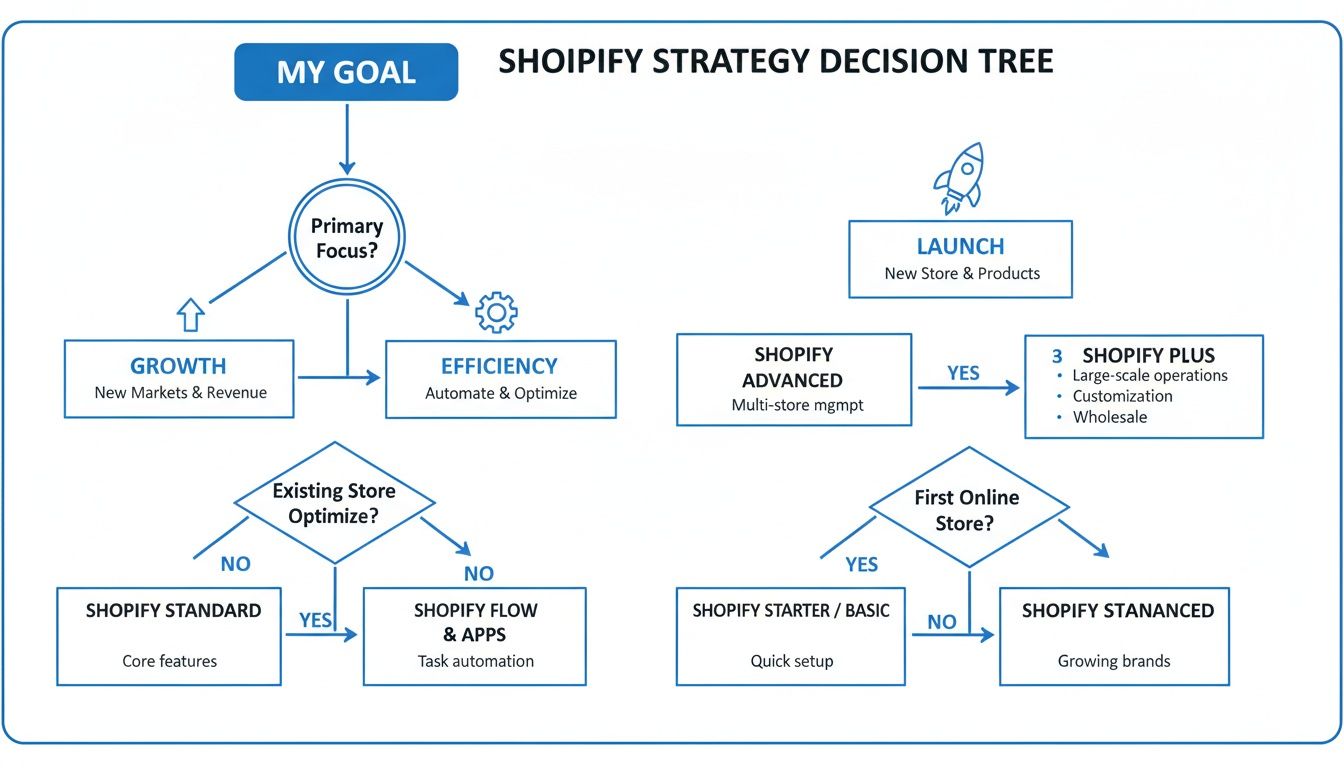
As you can see, no matter if you're looking to launch, scale, or streamline, there are specific moments where bringing in an agency is the most direct path to success. Let's dig into what those moments look like.
Your Conversion Rate Has Plateaued
It's a familiar and incredibly frustrating story: your website traffic is holding steady, maybe even climbing, but your sales have hit a complete standstill. This is a classic symptom of a conversion problem. Your marketing is doing its job getting people in the door, but something about the experience is preventing them from making a purchase.
You're often too close to your own website to see the flaws. An agency brings a fresh, expert perspective to diagnose the real cause of the stagnation, using data analysis and user behaviour tracking to uncover friction points you've likely missed.
Symptom: You're pouring more money into ads just to maintain the same sales figures, and your conversion rate is flat or, even worse, declining. Diagnosis: It's time for professional Conversion Rate Optimisation (CRO). An agency can systematically test and fix issues with your site's navigation, product pages, or checkout process to turn more of those hard-won visitors into paying customers.
You Are Stuck on an Outdated Platform
Are you still wrestling with an older platform like Magento 1, or trying to make a non-specialist system like WordPress with WooCommerce work for a growing store? These platforms can quickly become a massive drain on your resources, demanding constant maintenance and security patches just to keep the lights on.
This is what we call technical debt, and it actively holds your business back. Every hour your team spends fixing bugs or navigating a clunky admin panel is an hour they aren't spending on marketing, product development, or talking to customers.
- You can't adapt quickly: Adding new features requires slow, expensive custom development work.
- The site is slow and unreliable: You suffer from frequent downtime or sluggish performance during busy periods.
- Security is a constant headache: You’re solely responsible for applying security updates to protect customer data.
A Shopify agency lives and breathes platform migrations. They have a proven process for moving your entire business—products, customers, and order history—onto a modern, stable platform like Shopify. This frees your team to finally focus on growth, not just survival.
You Need Custom Functionality
As your brand matures, your needs become more specific. You might want to launch a "build-a-box" subscription, a detailed product customiser, or a rewards programme that truly reflects your brand. While the Shopify App Store has thousands of apps, you'll often find that off-the-shelf solutions can't deliver the exact functionality or branded experience you envision.
Trying to shoehorn a generic app into your unique workflow often results in a clunky customer experience and inefficient internal processes. When you find yourself constantly saying, "If only we could just...", it's a sure sign you need a custom-built solution.
A good Shopify agency can develop private apps tailored precisely to your business needs. This doesn't just create a seamless experience for your customers; it builds a powerful competitive advantage that can't be copied by competitors who are all using the same public apps.
Shopify Agency vs. Shopify Plus Agency: What Is the Difference?
As your brand gathers steam, you'll inevitably face a critical decision: choosing between a standard Shopify agency and a certified Shopify Plus agency. It's a choice that might seem subtle at first, but getting it right is fundamental to your long-term growth. The two are built to solve entirely different sets of problems, and understanding which one you need is key.
Let's put it this way. Think of the difference between your local GP and a hospital specialist. Your GP is fantastic for a huge range of common issues and general advice. But if you needed complex heart surgery, you wouldn't hesitate to seek out a surgeon who has dedicated their entire career to that one specific, high-stakes procedure.
A standard Shopify agency is that brilliant, highly capable GP. They excel at launching beautiful, effective stores for new and growing businesses. A Shopify Plus agency, on the other hand, is the specialist—an officially certified partner, recognised by Shopify for mastering the intricate world of high-volume, enterprise-level commerce.
The Specialised Toolkit of a Plus Agency
A Shopify Plus agency brings a set of exclusive tools and capabilities to the table that simply aren't available on standard Shopify plans. These aren't just minor perks; they're powerful features designed to solve the unique challenges that crop up when you're processing thousands of orders and expanding internationally.
These elite agencies are vetted and trained directly by Shopify, ensuring they have mastered this advanced toolkit. Their expertise opens up a whole new level of customisation, automation, and performance that is essential for enterprise merchants. We dive deeper into the specific skills needed for this work in our guide on finding the right Shopify Plus development agency.
Some key differentiators include:
- Custom Checkout Logic: Using Shopify Scripts, a Plus agency can build highly tailored checkout experiences. Imagine offering unique shipping options just for your VIP customers or automatically applying complex bundle discounts that a standard Shopify checkout simply can't handle.
- Advanced Automation: With access to Shopify Flow, they can construct custom workflows that automate countless repetitive tasks. For instance, they can build a flow that automatically flags high-risk orders for review, tags customers based on their spending habits, or even sends restocking alerts directly to your procurement team.
- Headless Commerce Expertise: For brands that demand total creative control and blazing-fast performance, Plus agencies are the go-to for building headless commerce experiences. Using Shopify’s Hydrogen framework and Oxygen hosting, they can develop completely bespoke storefronts that feel as fast and fluid as a native app.
When Do You Need a Plus Specialist?
The moment you need a Shopify Plus agency becomes obvious when you start bumping up against the limitations of the standard platform. These frustrations are the classic signs that your brand has graduated to enterprise-level challenges and needs a specialist team to match.
You've likely outgrown a standard agency if you're wrestling with:
- High-Volume Sales: Your store struggles to handle the massive traffic spikes from flash sales or product launches without slowing down or crashing. Plus agencies are experts in performance optimisation for these high-pressure environments.
- Complex Integrations: You need to connect your store with sophisticated back-end systems, like an Enterprise Resource Planning (ERP) or a bespoke Customer Relationship Management (CRM) platform, which requires deep API knowledge.
- Multi-Store and Multi-Currency Operations: Your brand is going global, and you need a way to manage multiple storefronts for different regions and currencies from a single, centralised dashboard.
The demand for these specialised services is climbing fast. With the streamlining of Shopify Plus implementation, the average onboarding time has been cut to just 3-5 weeks. There are now over 250 certified Shopify Plus agencies worldwide meeting a 31% increase in demand for enterprise-level services. In fact, more than 5,000 Plus merchants are now using Hydrogen and Oxygen for custom front-end experiences. You can explore more on these trends and their impact on scaling brands at Weframetech.com.
Ultimately, opting for a Shopify Plus agency is about future-proofing your business. It's an investment in a partner who not only gets where you are today but has the certified expertise and advanced tools to get you where you want to go tomorrow.
How to Evaluate and Choose the Right Shopify Agency
Choosing a Shopify agency is one of the most important decisions you’ll make for your brand. Get it right, and you’ve found a partner who can fuel serious growth. Get it wrong, and you could be looking at wasted money, frustrating delays, and missed targets. This isn't just about hiring a team to build a website; it’s about finding a strategic ally for your business.
To find that perfect fit, you need a solid evaluation process. It’s time to look past the slick sales pitches and dig into what really matters. Think of yourself as a detective, piecing together the evidence to find a team that not only understands your vision but has the chops to make it a reality.
Examine Their Portfolio and Case Studies
Any agency can show you a portfolio of pretty websites. What you really need to see are their case studies, because that’s where the story is. A portfolio shows you what they can build, but a great case study tells you how they think, why they made certain decisions, and most importantly, what results they delivered.
As you look through their past work, keep an eye out for these clues:
- Industry Relevance: Have they worked with brands in your sector before? It’s not a deal-breaker, but an agency familiar with your market will already have a head start on understanding your customers and your challenges.
- Problem-Solving Skills: Does the case study set the scene? A good one will clearly state the problem the client was facing—maybe a poor conversion rate or clunky back-end operations—before explaining the solution.
- Real, Measurable Results: Vague claims like "improved sales" aren't good enough. Look for hard numbers. A top-tier agency will be proud to show off metrics like a 35% increase in conversion rate, a 20% lift in Average Order Value (AOV), or a 50% reduction in page load time.
A key part of vetting an agency's ability to deliver sales is understanding their approach to conversion rate optimisation. It’s crucial to know how to choose the right Conversion Rate Optimization agency because this skill is what turns website visitors into paying customers.
Ask the Right Questions During Discovery
Those initial discovery calls are your best chance to vet an agency’s expertise, communication style, and technical depth. Going in with a list of smart questions is the best way to cut through the fluff and get straight to what matters.
Don't hold back or be afraid to get into the details. A professional agency will welcome your questions because it shows you’re a serious and invested partner. Pay attention not just to what they say, but how they say it. Are they confident, transparent, and clear?
To make sure you're covering all your bases, it’s helpful to use a checklist of questions. This ensures you can compare different agencies fairly and consistently.
Agency Evaluation Checklist Key Questions to Ask
| Area of Inquiry | Sample Question | What a Good Answer Looks Like |
|---|---|---|
| Project & Process | How do you manage projects and keep clients in the loop on progress? What tools do you use? | A clear, structured process using tools like Asana, Trello, or Jira. They should promise regular, scheduled updates and define who your point of contact will be. |
| Team & Expertise | Who exactly will be working on my project? Will I have direct access to the developers and designers? | A defined team structure. They should introduce you to the project manager and explain how you can communicate with the core team, avoiding a single, overwhelmed point of contact. |
| Technical Skill | What's your approach to site speed and performance optimisation from day one? | A proactive strategy. They should talk about code optimisation, image compression, and performance testing as an integral part of their development process, not an afterthought. |
| Scope & Flexibility | How do you handle new ideas or requests that fall outside the original project scope? | A transparent change-request process. A good agency will have a clear system for evaluating, quoting, and integrating new requests without derailing the project timeline. |
| Long-Term Partnership | What kind of support, maintenance, or ongoing optimisation do you offer after the site goes live? | A variety of post-launch support plans. They should offer options ranging from basic maintenance to ongoing retainer-based partnerships for growth and optimisation. |
Having these questions ready helps you move beyond a gut feeling and make a data-driven decision based on how each agency truly operates.
Understand Engagement and Pricing Models
Finally, you need to make sure their partnership model works with your budget and how you like to operate. Most agencies offer a couple of common ways to work together, and the best one for you will depend entirely on your specific project and long-term goals.
For a clearer picture of what to expect financially, you can review our guide on what a Shopify website design costs.
Here are the two main models you'll encounter:
- Project-Based Fees: This is a fixed price for a clearly defined project, like a complete store migration or a theme customisation. This model is perfect when you have a specific outcome in mind, a clear start and finish, and a set budget.
- Monthly Retainers: This is a recurring monthly fee for ongoing work, such as conversion rate optimisation, SEO, or continuous development. It's the ideal choice for brands looking for a long-term partner to act as an extension of their team, driving growth month after month.
A trustworthy agency will always provide a detailed proposal that breaks down all the costs, timelines, and deliverables. This level of transparency is the bedrock of a strong, successful partnership, ensuring there are no nasty surprises down the line.
Partnering for Success and Taking the Next Steps

Choosing a Shopify agency isn't just about outsourcing a task; it's about finding a true partner. Think of them less as a supplier and more as an extension of your own team—a group of specialists just as invested in your brand’s success as you are. Approaching it this way, as a genuine collaboration, is the secret to getting the most out of the relationship.
This mindset makes all the difference, especially in the UK’s bustling e-commerce market. By 2025, the UK had become Shopify's second-largest market, home to over 208,000 live stores. With the total UK e-commerce pie now worth over £120 billion and Shopify claiming a huge 23% of that, you need more than just a good-looking site to stand out. An expert agency is your guide through this crowded space, as this UK Shopify market report makes clear.
Preparing for Your Kickoff Meeting
You've done the hard work and picked your agency. Now, the focus shifts to making sure you get off to a flying start. A well-planned kickoff meeting really does set the tone for the entire project. If you can get your house in order before that first call, your new partners can get to work and start making an impact right away.
Think of the kickoff meeting as handing over the keys and the architectural drawings. The more organised and comprehensive your information is, the faster your new team can begin building and start driving results.
A little bit of prep goes a long way. Pulling together the right information not only saves time but also gets everyone on the same page from the very beginning.
Your Final Preparation Checklist
Before that all-important first meeting, try to have these items ready to go:
- Brand & Style Guides: Get all your brand assets in one place—logos, colour palettes, fonts, and any documents on tone of voice. This gives them the creative toolkit they need to work with.
- Full Analytics Access: Provide access to your Shopify Analytics and Google Analytics 4. Without solid data, any strategy is just guesswork.
- Key Business Goals: Be specific about what you want to achieve. Is it a 20% bump in conversion rate? A smooth launch into a new international market? Or maybe cutting down manual admin by 50%? Clear goals are crucial.
- List of Key Stakeholders: Let them know who from your team will be involved, what their roles are, and, most importantly, who has the final say on approvals. This avoids confusion later on.
With this groundwork done, you're in the best possible position to forge a strong, productive partnership with your new Shopify agency and start building some serious momentum for your brand.
Frequently Asked Questions About Shopify Agencies
Even with all the benefits laid out, it’s completely normal to have a few lingering questions before you commit to a Shopify agency. Making the decision to hire an agency is a big one, so let's clear up some of the most common queries we hear from brands.
Getting these details sorted helps you move forward with confidence. You'll know what to expect in terms of cost, timelines, and the kind of team you actually need to hit your targets.
How Much Does It Cost to Hire a Shopify Agency?
This is the big question, and the honest answer is: it depends entirely on what you need. A small, one-off job like tweaking your theme or adding a specific feature could be just a few thousand pounds. It's a common way for brands to start a relationship with an agency and see how they work.
On the other hand, a full-scale custom store build is a serious investment. You can expect these projects to start from around £20,000 and climb higher, particularly for complex Shopify Plus sites needing bespoke integrations or unique design work from scratch.
For ongoing work like conversion rate optimisation (CRO) or SEO, most agencies use a monthly retainer model. These typically fall between £3,000 and £10,000+ per month, depending on how much support you need. A good agency will always give you a detailed proposal with a full cost breakdown, so there are no surprises.
Should I Hire a Freelancer Instead of an Agency?
A freelancer can be a brilliant choice for smaller, well-defined tasks. If you just need a quick bug fix or a single landing page designed, hiring a specialist freelancer is often the most cost-effective way to get it done.
However, when you hire an agency, you're not just getting one person—you're getting an entire, integrated team. You get a developer, a designer, a strategist, and a project manager all working together. This is absolutely essential for complex projects like a full site redesign or migrating from another platform. An agency ensures every piece of the puzzle, from user experience to the underlying code, fits together perfectly.
With an agency, you’re not just hiring a single specialist to complete a task; you are partnering with a strategic team organised to solve complex business problems and drive growth. This structure provides built-in redundancy and a broader range of expertise.
How Long Does It Take to Build a New Shopify Store?
Just like cost, the timeline is tied directly to the complexity of the project. A fairly straightforward store built on a pre-existing Shopify theme can often be up and running in 4-6 weeks. This is perfect for new businesses or brands that need to get to market quickly.
A completely custom Shopify store, designed and developed from the ground up, takes more time. You're typically looking at 10 to 16 weeks from the first meeting to launch day. For major projects, like a Shopify Plus migration involving large amounts of data and tricky system integrations, the timeline can easily extend to 4-6 months. Any reputable Shopify agency will provide a clear project plan with milestones, so you always know what’s happening and when.
At Grumspot, we build, fix, and scale high-performing Shopify stores with transparent pricing and senior-level expertise. Whether you need a full site build or an expert team to accelerate your growth, we provide the skills and strategy to turn your store into a revenue engine. Explore our work and see how we help brands like yours succeed.
Let's build something together
If you like what you saw, let's jump on a quick call and discuss your project
Related posts
Check out some similar posts.
- recently viewed items
Build and optimise recently viewed items on Shopify with code patterns, localStorage, server-side tr...
Read more
- web design agency southampton
Find the best web design agency Southampton. Our 2026 guide covers vetting, pricing, red flags & cho...
Read more
- web design agency sheffield
Find the best web design agency Sheffield. Our 2026 guide covers vetting portfolios, pricing, Shopif...
Read more
- ecommerce development uk
Your complete guide to ecommerce development UK. Learn to plan, hire an agency, choose a tech stack ...
Read more